China-Russia Dashboard: Facts and figures on a special relationship (Copy)

China-Russia Dashboard: Facts and figures on a special relationship

Sino-Russian relations are closer today than they have been in decades. In these times of historic geopolitical tensions, it is all the more important to understand the nature and elements of the relationship of two of the world’s most influential powers. This dashboard aims to contribute to a better understanding by tracking and analyzing the economic, political, security, and societal dimensions of China-Russia relations and their changing quality over time. It is a collaborative research effort of the Centre for Eastern Studies (OSW), the Mercator Institute for China Studies (MERICS), and the Swedish National China Centre (NKK) and Stockholm Centre for Eastern European Studies (SCEEUS) at the Swedish Institute of International Affairs (UI).
China Russia flags

Economics

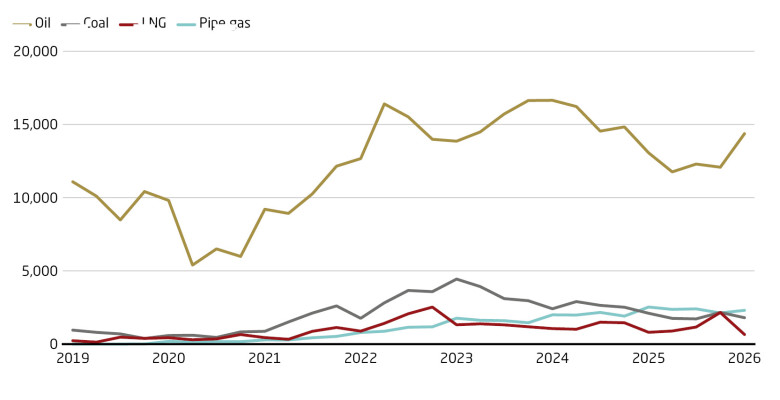
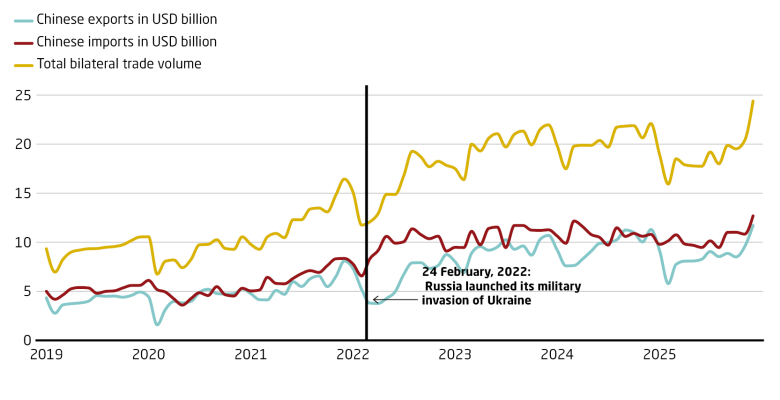
China-Russia trade has surged since Ukraine invasion
China-Russia trade has surged since Ukraine invasion. Development of monthly bilateral trade volumes since 2019.

China-Russia bilateral trade has grown steadily over the last decade and has intensified since the Russian invasion of Ukraine. Following a sharp surge in 2022 and 2023, China–Russia bilateral trade stabilized in 2024 at USD 245 billion, more than double its 2020 level. In 2025, total trade declined 6.9 percent year-on-year, despite record monthly trade levels in December.
The trade balance has been relatively even in value terms, with only a slight Russian surplus. However, it is structurally imbalanced in the types of goods traded. Russia’s exports to China mainly consist of fossil fuels and other natural resources, while China’s exports consist of manufactured goods such as cars, tractors, electronics, and other consumer products. The value of Russian exports is thus sensitive to volatile energy markets, and a large part of the initial post-invasion increase was due to higher energy prices.

Note: Nominal values

Last updated: January 21, 2026

Russian natural resources in exchange for Chinese manufactured goods
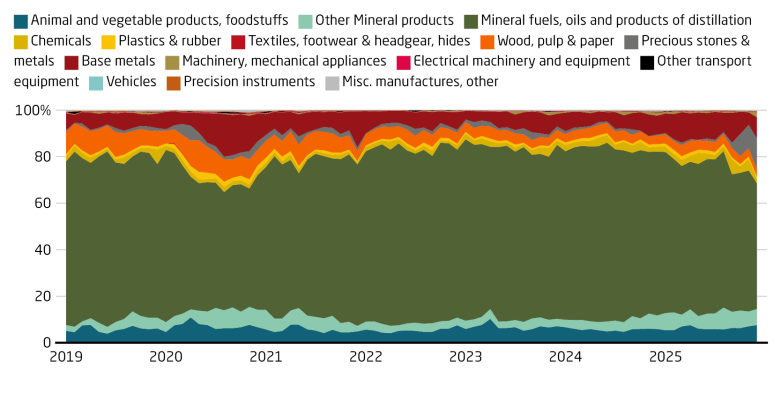
Russian natural resources in exchange for Chinese manufactured goods. Chinese imports from Russia by category, percentage of total imports from Russia.

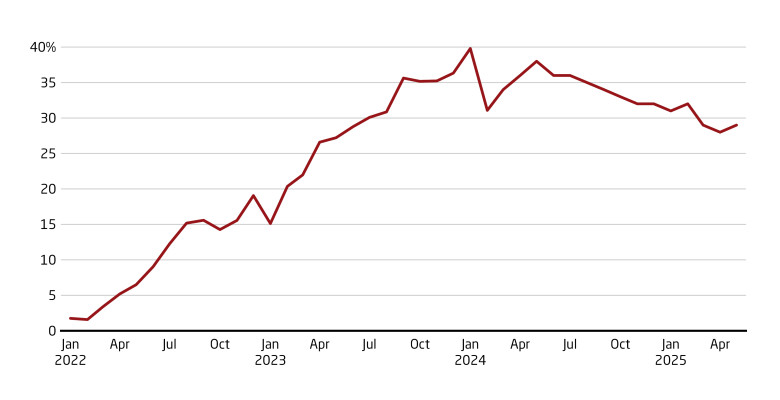
China’s imports from Russia mainly consist of natural resources. Since February 2022, on average, more than 70 percent of the total trade value has been composed of mineral fuels (primarily crude oil). Other mineral products accounted for a further five percent, base metals seven percent, animal and vegetable products and foodstuffs six percent, and wood and paper four percent. Due to falling global oil prices and higher sanction-driven discounts on Russian oil, the value of mineral fuel exports declined in 2025, while the shares of other categories grew correspondingly.

China’s exports to Russia are more diversified and consist primarily of manufactured goods. Since February 2022, on average, machinery and mechanical appliances made up around 24 percent of the total trade value. Vehicles (mainly passenger cars) accounted for 16 percent, electrical machinery and equipment 15 percent, and textiles, footwear, and headgear  approximately 11 percent.

Last updated: February 11, 2026

China has become a key market for Russian fossil fuel exports
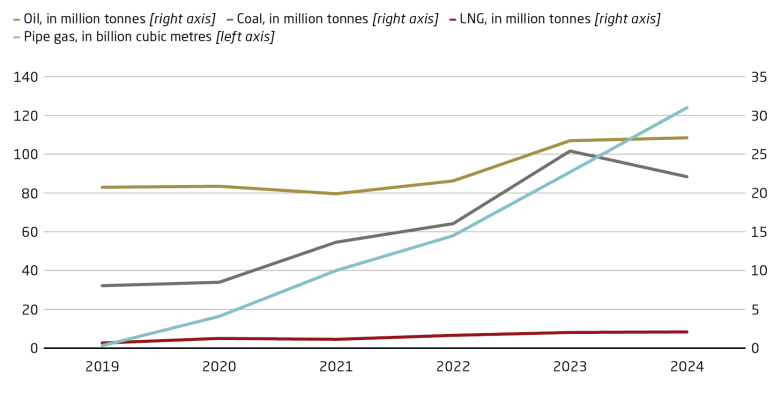
China has become a key market for Russian fossil fuel exports. Russian energy exports to China, in USD million.

Russia’s energy exports to China form the backbone of their bilateral trade, steadily increasing in both value and volume. After 2022, China’s market acted as a safety net, allowing Russia to redirect fossil fuel exports from the West. However, the substantial decline in their value since 2024 – especially in the case of oil flow – shows how highly dependent this trade is on global energy prices, highlighting the constraints on further expansion.

Last updated: January 21, 2026

Security

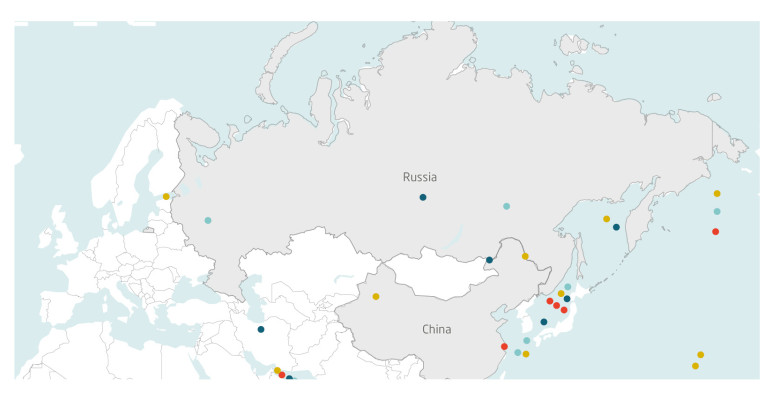
China-Russia military exercises peak in 2024, but decrease in 2025
China-Russia military exercises peak in 2024, but decrease in 2025. Bi- and multilateral exercises of naval, ground and aerial troops.

Explainer paragraph: Joint Russia-China military exercises have grown significantly in number, size, complexity and geographic scope since Russia’s invasion of Ukraine. Since their first joint exercise in 2003, the two countries have conducted 96 joint exercises – 31 of them, or one third since the war began on February 24, 2022. 

In 2024, they held 11 joint exercises across ground, naval and aerial domains, including their first joint naval patrol in the Arctic Ocean, the first joint coast guard patrol, and the first joint aerial patrol that entered the US air defence identification zone. In September, China participated in Ocean-2024, Russia’s largest naval exercise since the collapse of the Soviet Union. 

In 2025, the number of joint drills was lower – seven in total – but these broke some new territory.  Russia and China held their first joint submarine patrol in August. In multilateral formats, they conducted a joint border defense drill with Mongolia in September, and held the first-ever multilateral Shanghai Cooperation Organization (SCO) exercise in Iran in December. At the same time, joint exercises are becoming more routine, with some exercises now taking place annually.

Last updated: February 10, 2026 

Russia-China military exercises are now mainly naval
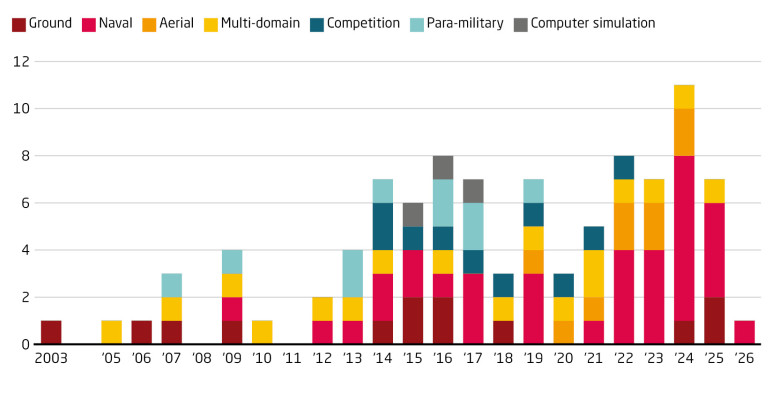
Russia-China military exercises are now mainly naval. Joint exercises by type since 2003.

Since 2003, Russia and China have conducted 96 joint military exercises across various domains and formats. These include ground, naval, aerial, para-military and multi-domain exercises, as well as army competitions and computer simulations. The number of exercises per year has increased in recent years, reaching an all-time high of 11 in 2024, although decreasing in 2025.

Since 2022, a large majority of joint exercises – 20 of 33 – have consisted of naval drills and patrols, accounting for all the recent growth in joint exercise activity. Starting from their joint naval exercise in 2009, Russia and China conducted only a few such exercises annually. However, in 2024 alone, 7 out of 11 total exercises were naval, and in 2025, 4 of 7 have been naval drills and patrols.

Last updated: November 6, 2026

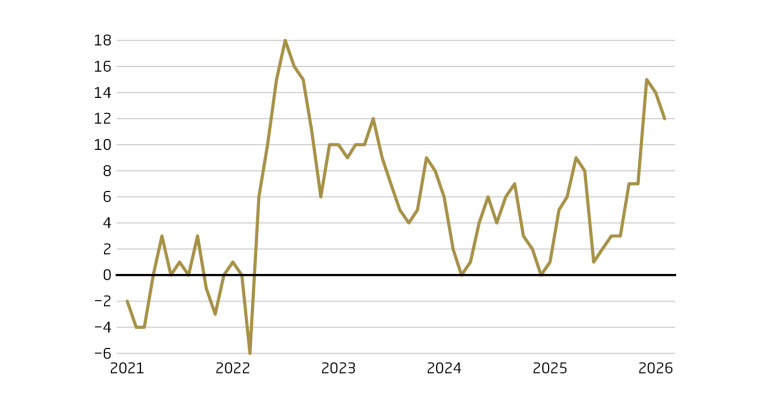
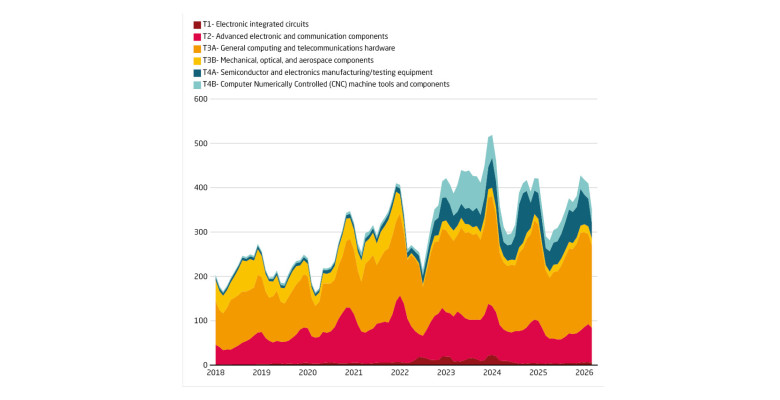
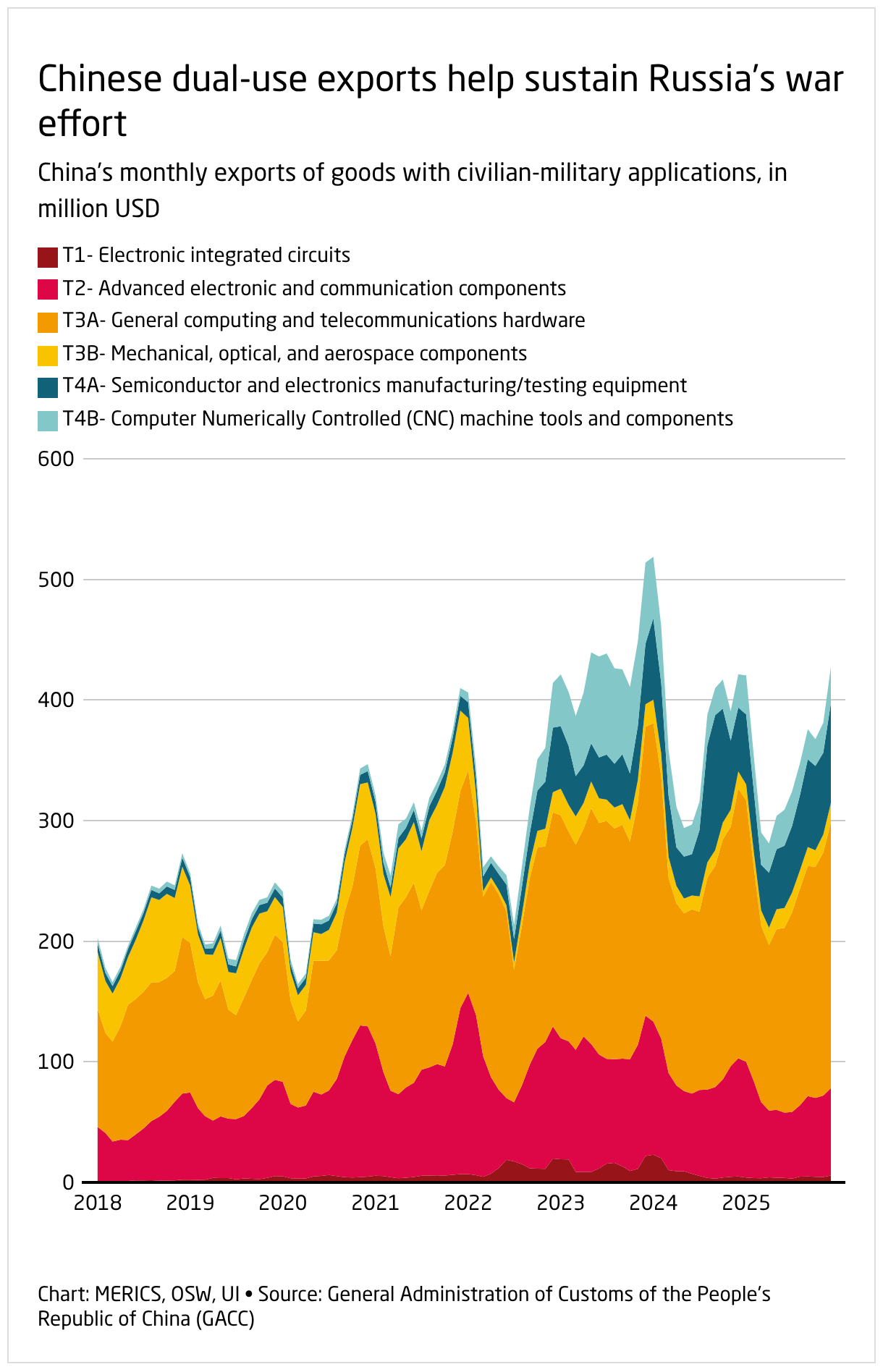
Chinese dual-use exports help sustain Russia’s war effort

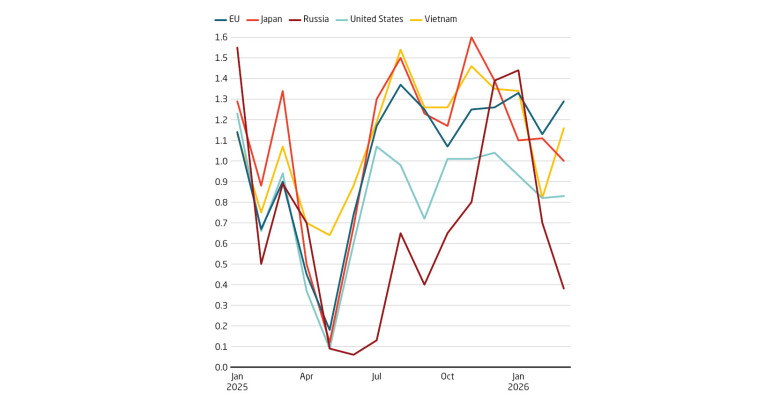
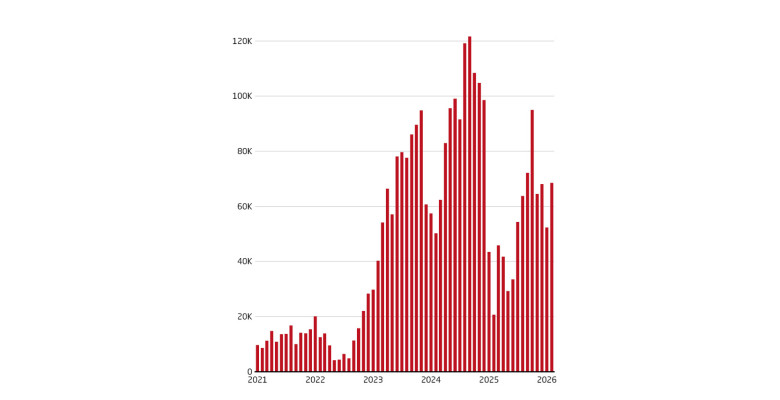
Shipments of dual-use items from China to Russia surged in late 2021, likely driven by stockpiling and year-end production peaks. Exports then fell sharply after the February 2022 invasion of Ukraine amid concerns about sanctions, yet quickly recovered, remaining historically high throughout 2022 and 2023. A renewed decline occurred following the US Treasury’s announcement in December 2023 of potential secondary sanctions on entities assisting Russia’s military-industrial base. However, Chinese exports rebounded in the second half of 2024, suggesting adjustments to circumvent these restrictions. As a result, dual-use shipments from China to Russia once again exceeded USD 4 billion in 2024. At the beginning of 2025, they declined again — mirroring the overall trend in China-Russia trade — but rebounded in the following months, and over the full year rose back above USD 4 billion.

Note: The data refers to dual-use goods included in the Common High Priority List, developed jointly by the United States, the European Union, Japan, and the United Kingdom. The list categorizes 50 items, each identified by a six-digit Harmonized System (HS) code, into four tiers. The full list is available on the website of the US Bureau of Industry and Security. The values represent a 3-month moving average and have been adjusted to reflect the HS 2022 Nomenclature amendments.

Last updated: January 21, 2026

Politics

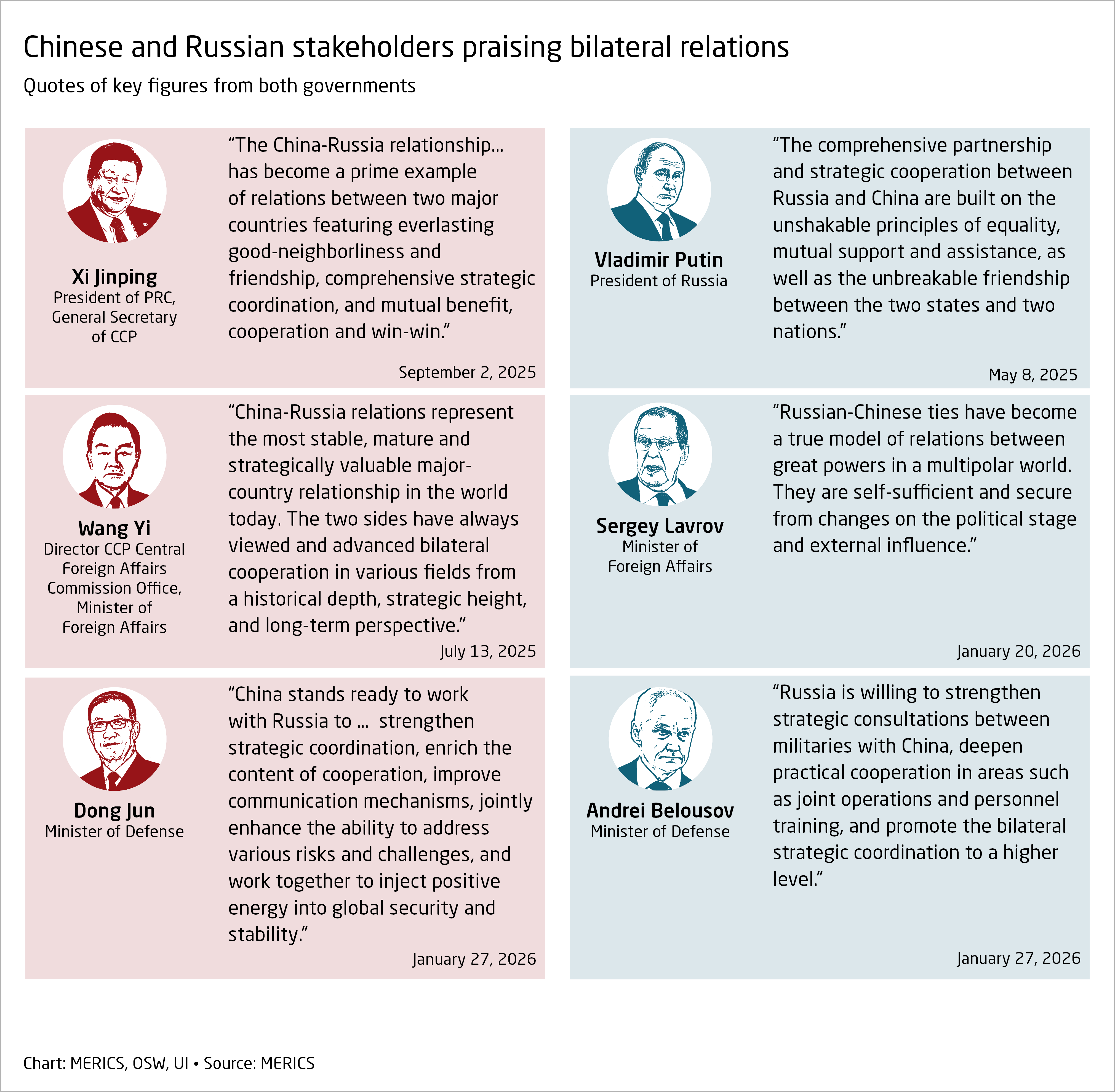
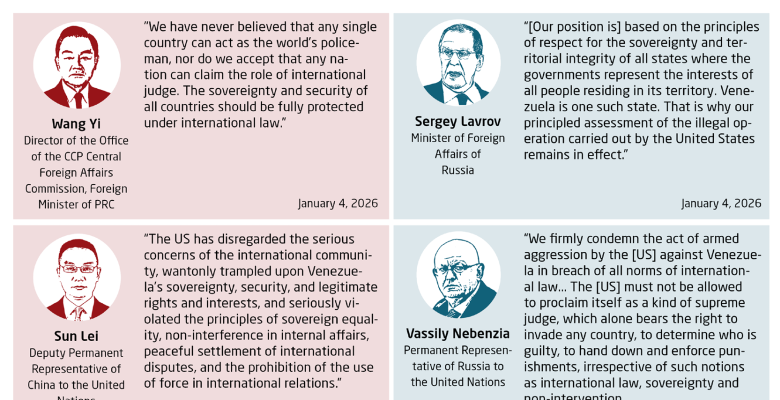
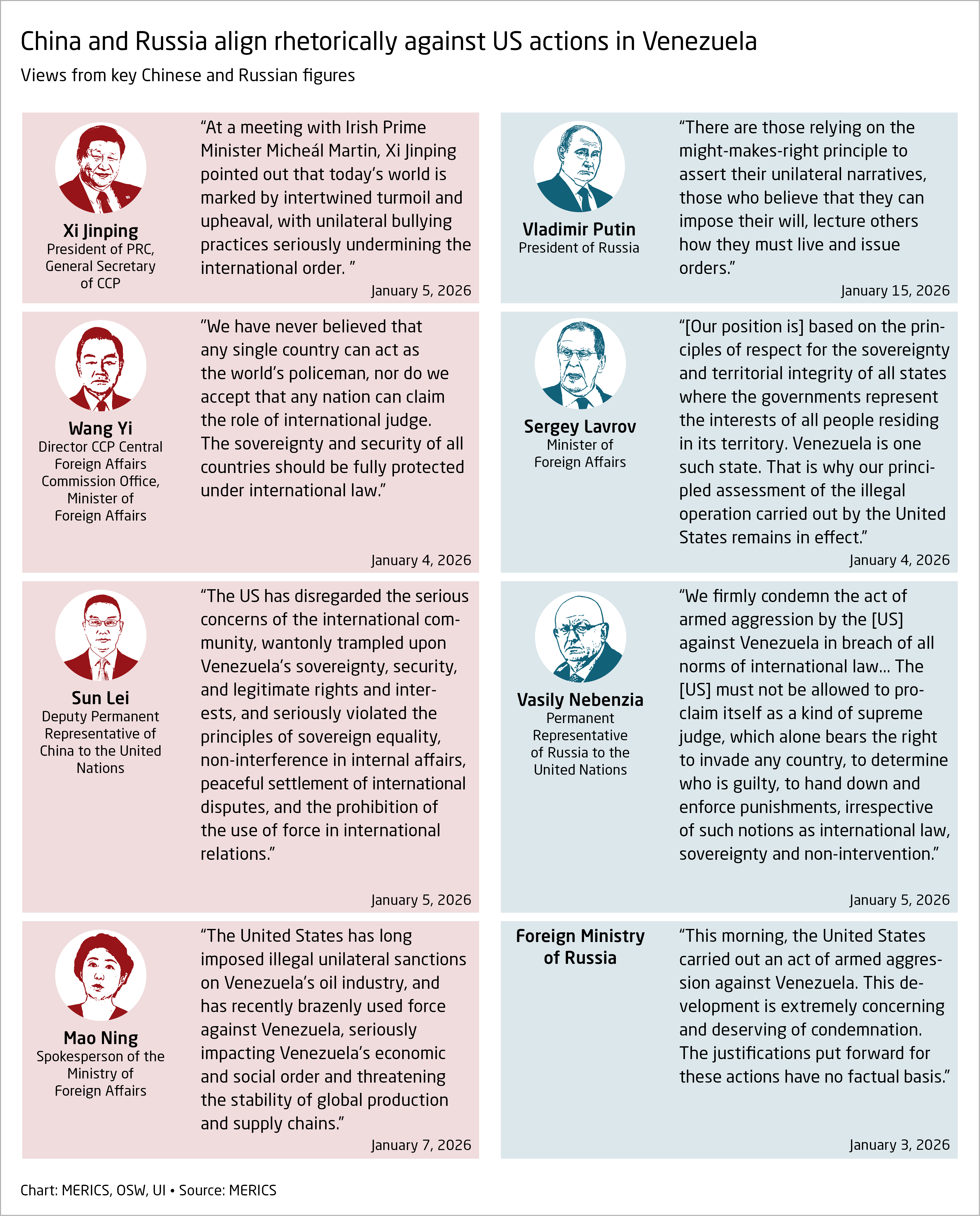
Chinese and Russian stakeholders praising bilateral relations
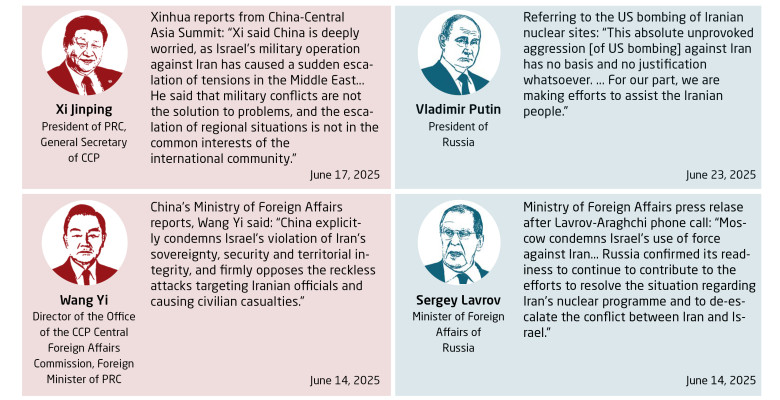
Chinese and Russian stakeholders praising bilateral relations. Quotes of key figures from both governments.

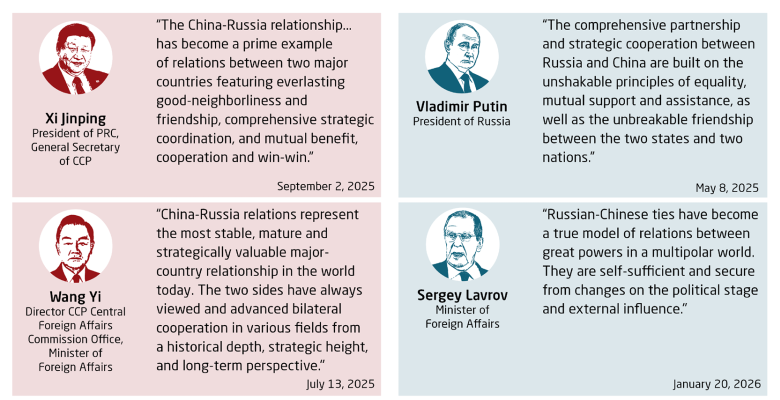
Key figures in China-Russia bilateral relations indicate a closer alignment across various domains, highlighting stronger strategic coordination in political narratives and military cooperation. Both Xi Jinping and Vladimir Putin have set the tone for these relations, not only based on their respective geopolitical positions but also by promoting a shared worldview and ambition to build an alternative global order – one in which China and Russia play a greater role as stabilizing powers. This ambition is further articulated by their chief diplomats, Wang Yi and Sergey Lavrov, who emphasize the goal of establishing a multipolar world order and the democratization of international relations. Military leaders from both sides have also called for deeper cooperation, aiming to enhance stability not only between China and Russia but also within the broader global system.

Sources:

Quotes from Chinese representatives: PRC MFA, PRC MFA, Guancha
Quotes from Russian representatives: Kremlin, RUS MFA, PRC Ministry of National Defense

Last updated: February 1, 2026

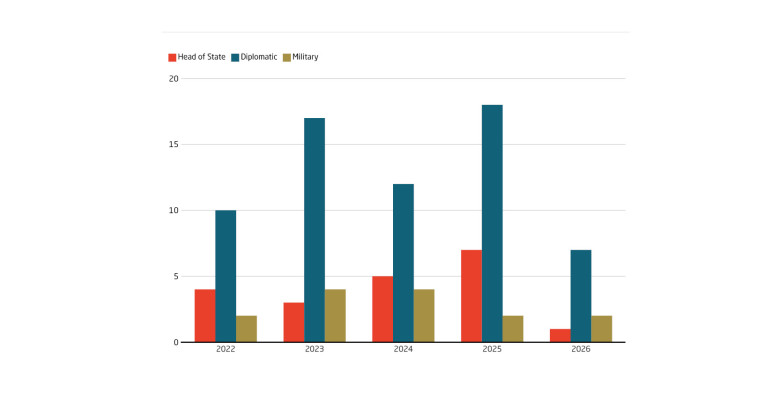
China and Russia have expanded their bilateral relations

This timeline tracks China-Russia bilateral engagements in three key domains – heads of state, diplomatic, and military – since Russia’s full-scale invasion of Ukraine starting on February 24, 2022. The frequency of these interactions surpasses that of any other bilateral relationship for both China and Russia. Between February 2022 and February 2026, Xi Jinping and Vladimir Putin interacted 19 times through in-person meetings or phone calls. Top diplomats Wang Yi and Sergey Lavrov met 30 times, including bilateral discussions and within multilateral settings. Military leaders from both sides – such as Sergei Shoigu, Andrey Belousov, Dong Jun, Li Shangfu, and Wei Fenghe – held 14 engagements during this period. Other than the frequency of engagements, the trend in key messaging shows growing alignment on strategic coordination in multilateral platforms and a stronger tone in opposing unilateral actions such as sanctions and military interventions by the United States.

Last updated: February 10, 2026.

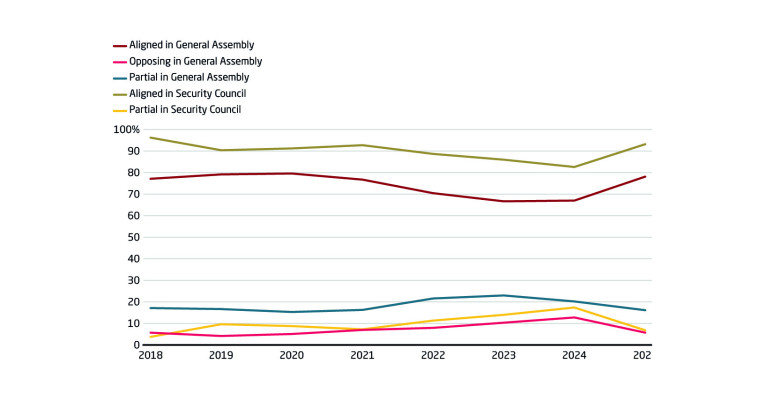
Voting alignment between China and Russia has declined in the United Nations

The graph shows that voting alignment between China and Russia declined in both the General Assembly and the Security Council from 2018 to 2024, with the steepest drop after Russia’s invasion of Ukraine in 2022. In 2025, however, this trend reversed, and voting alignment increased in both bodies. The number of adopted resolutions in the General Assembly also increased sharply that year to 192, up from around 85 to 100 in the years prior.

Voting coordination remains stronger in the Security Council, where the two countries almost never cast directly opposing votes, though one such case occurred in November 2024. Resolutions rarely proceed to a vote when a permanent member has signaled its intention to veto, meaning some disagreements are not shown in recorded voting. In this graph, which only shows adopted resolutions, divergence in the Security Council occurs when one votes yes and the other abstains.

Last updated: February 10, 2026

Society

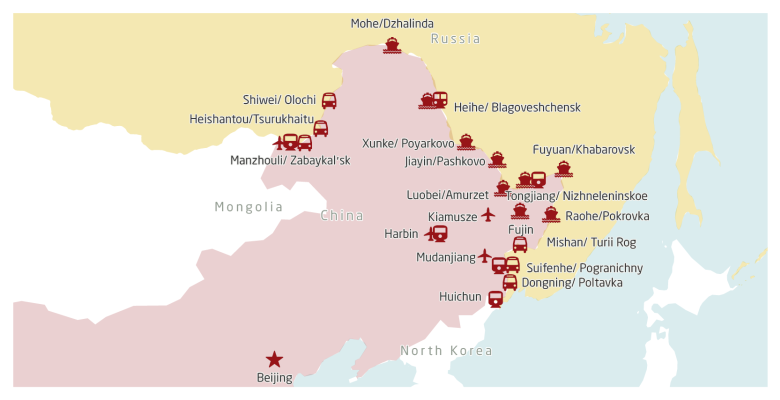
Checkpoints between China and Russia have become busier

The operation of border checkpoints serves as a barometer of China-Russia bilateral relations. Traditionally, the Chinese side has been more proactive in promoting trade through these checkpoints, while the Russian side has shown more caution, primarily due to concerns over China’s growing role in the development of the Russian Far East. As a result, infrastructure improvements on the Russian side have progressed slowly. However, since Russia’s invasion of Ukraine and the end of China’s COVID lockdowns, these checkpoints have become significantly busier, with trade volumes reaching record highs. There has also been notable progress in expanding capacity to facilitate bilateral trade – for instance, the construction of bridges across the Amur River and the expansion of checkpoint facilities. The increasing activity at these checkpoints reflects a broader trend of China-Russia alignment and highlights Russia’s growing dependency on China, suggesting Moscow is now prioritizing its relationship with Beijing, while becoming less concerned about China’s influence in the development of the Russian Far East.

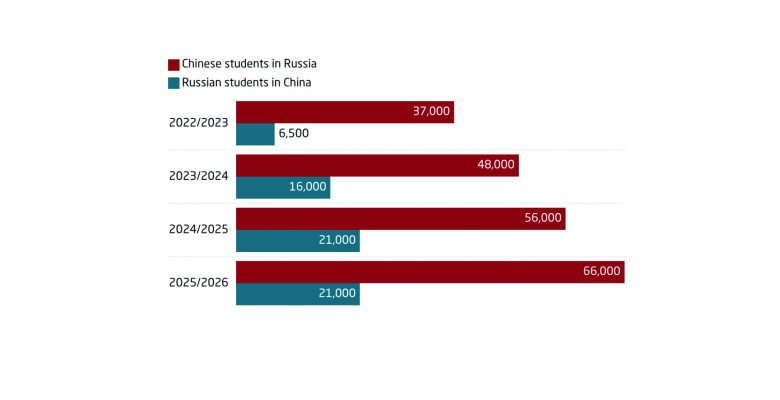
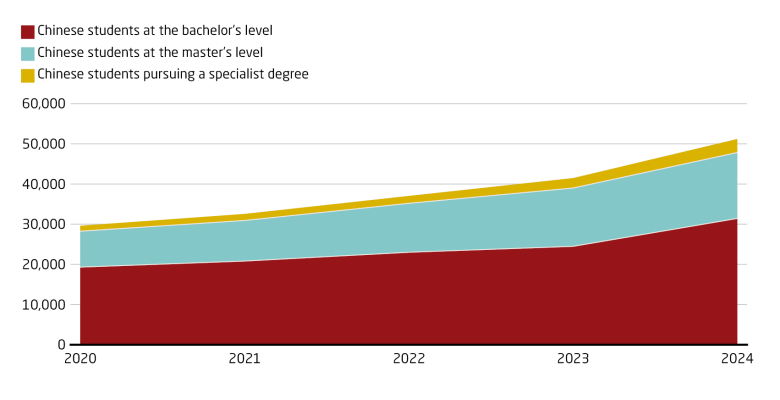
Chinese exchange students in Russia increase steadily every year

The number of Chinese exchange students in Russia has grown steadily over the years, increasing from approximately 30,000 in 2020 to over 50,000 in 2024, a 72% increase. Similarly, Chinese students have accounted for a growing share of all foreign exchange students in Russia, rising from 9.4% in 2020 to 13.6% in 2024. As a result, China has surpassed other countries and is now the third-largest country of origin – its student numbers nearly matching those of the top two, Kazakhstan and Turkmenistan. While Chinese students at the bachelor’s level make up the largest group in absolute numbers, China is by far the leading country of origin for master’s students. In 2024, its 16,411 master’s students represented approximately 36% of all master’s students in Russia.

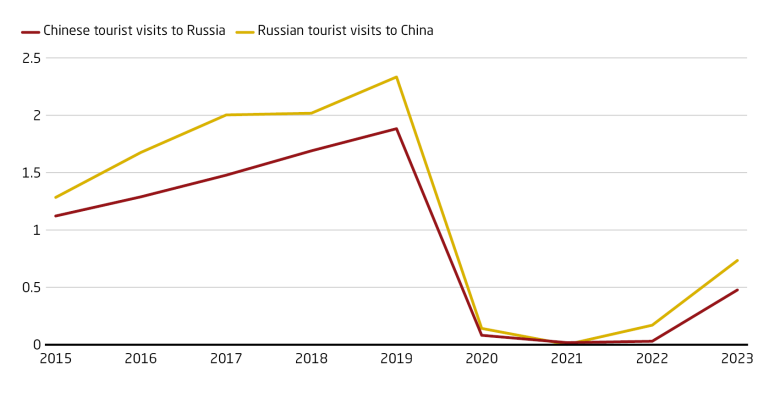
Russia-China tourist visits still not near pre-pandemic levels

The number of tourist visits between Russia and China grew steadily for years, peaking in 2019 with nearly 2.3 million Russian visits to China and over 1.9 million Chinese visits to Russia. However, tourism between the two countries collapsed during the COVID-19 pandemic and further declined following Russia’s full-scale invasion of Ukraine in 2022, with visits dwindling to just a few thousand in 2021 and 2022.

In 2023, tourism rebounded significantly in both directions, though it remained far below pre-pandemic levels – less than a third of the peak recorded in 2019. As a share of total tourist visits to Russia, Chinese tourist visits peaked at 7.7% in 2019, plummeted to 0.3% in 2021 and 2022, and recovered to 5.8% in 2023.