
picture alliance / REUTERS | Go Nakamura
Comment
Why is China a football World Cup no-show?
Despite sky-high ambitions, China was a no-show at the 2026 World Cup tournament and has only once qualified for the world’s premier football festival, says Andrew Scobell.
With the World Cup just concluded and a new champion crowned, it seems like a good time to step back and recall the thrilling moments delivered by the 48 national teams in the tournament, while also reflecting on the countries that did not qualify. One glaring absence was Italy. Another noteworthy absentee was China. But in contrast to four-time world champion Italy, the People’s Republic of China (PRC) has made only one underwhelming tournament appearance.
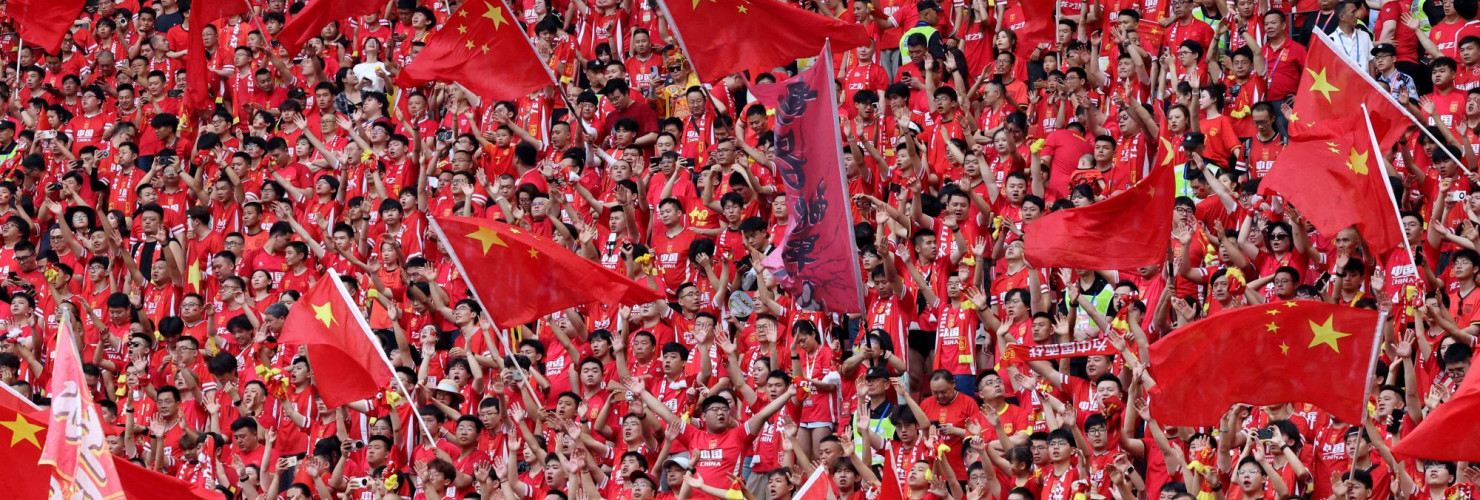
When the PRC team qualified in late 2001 for the 2002 World Cup, the achievement sparked rapturous celebrations nationwide, including the only spontaneous popular gathering in the center of Beijing permitted by authorities since the 1989 Tiananmen Square protests. Yet, jubilation turned to anguish after China’s national team failed to advance from the group stage after playing three games without winning a point or scoring a single goal.
What explains the PRC’s lack of success in international football? Despite paramount leader Xi Jinping prioritizing football success on the world stage, formulating an ambitious masterplan to transform China into a “world-class soccer superpower,” and marshalling massive resources, results have been underwhelming. While no single factor likely accounts for China’s remarkably dismal track record in global football, the outcome to date suggests that there may be limits to what central planning and unlimited resources can produce in a Leninist system.
Size and scale ≠ success
Of course, being a large country does not guarantee global success. The most populous country in the world is India but success in football has long eluded it. While football is extremely popular in India, it does not attract children to play the sport the way that cricket and field hockey do. While football is a tremendously popular spectator sport in China, children are more likely to grow up playing table tennis or basketball.
Yet, unlike India, China has prioritized the development of football by establishing a countrywide network of football academies to identify and nurture young talent. Beijing has also devoted considerable effort to developing a national professional league, the China Super League (CSL). Teams are bankrolled by corporate sponsors with deep pockets, who splash out big money to attract overseas talent. By the mid-2010s, CSL clubs’ spending on international transfer fees rivaled that of top European leagues.
The goal of bringing in big-name players from other countries was both to fill stadiums and raise the quality of the game played in China. While the former goal may have been achieved, the latter was not. Moreover, illicit gambling corrupted the league as players, coaches and referees took bribes to throw games. With corruption so pervasive in China, it should come as no surprise that professional football also succumbed to graft.
The PRC men’s football disappointment is fueled by its team's own failures, magnified by the history of success enjoyed by the PRC women’s team, and exacerbated by the impressive records of rival Japanese and South Korean men’s teams in Asian and global competitions.
Both of China’s northeast Asian neighbors routinely qualify for the World Cup tournaments – including the 2026 tournament – and South Korea achieved a fourth-place finish in 2002. But China’s greatest humiliation in recent years on the football pitch was inflicted by Japan. In September 2024 China’s national team was decisively beaten by Japan 7-0, producing tremendous anguish among Chinese football fans. It was China’s heaviest defeat in World Cup qualification matches and its second-worst thrashing in an international game.
No silver bullet
It remains puzzling that a country with a massive sports development infrastructure that routinely produces Olympic champions seems unable to field a successful squad of world-class male footballers. One possible explanation can be inferred from the research of political scientist James Q. Wilson who found that organizations can get particularly good at one thing quite quickly if they focus their concerted effort and devote vast resources to it. Applying this insight to Leninist political systems and competitive sports, certain sports, such as some Olympic individual events, are highly specialized and success can be achieved with Herculean organizational effort. But team sports like football are less about doing one specific thing very well and more about doing many things very well.
There appears to be no single silver bullet able to elevate China’s performance in international football. There is no shashoujian (杀手锏), a Chinese term often translated as “assassin’s mace.” The term has been touted by some US security analysts as an ominous code word used to refer to one or more top-secret PRC weapons programs. But, as China scholar Alastair Iain Johnston notes, this term tends to be most widely used in Chinese sporting circles to describe a gifted football player who is capable of single-handedly turning the tide of a game.
Xi: It might take a long time
None other than Xi Jinping himself seemed to recognize the challenge several years before he became China’s top leader. Speaking in 2009, while visiting Germany, Xi said: “The level of Chinese football is relatively low, but there's a huge football fan base and a potential football market in China […] China is determined to make its football go to the top level. But this might take a long time.”
Indeed, there is still time to realize Xi’s ambitious football masterplan, with its official target date set for 2050. In the meantime, China’s most visible presence at future World Cup tournaments is likely to continue to be corporate advertising and sponsorship, as it was at the just-concluded 2026 extravaganza.
The views expressed in this piece are those of the author.
Author(s)

Senior Associate Fellow
Author(s)
Senior Associate Fellow