
picture alliance / Xinhua News Agency | Gao Zeming
Comment
How combat ready is China’s military? The puzzle of the PLA
The country’s armed forces are more capable than ever but in turmoil. Whatever their shortcomings, Andrew Scobell says they are likely to prove a formidable adversary in any war.
The Fifth Plenum of the 20th Central Committee of the Chinese Communist Party (CCP) in late October elected the vice chair of the Central Military Commission (CMC), General Zhang Shengmin, to the CCP Politburo. The party leadership also confirmed the September expulsions of top generals from the CMC, but did not appoint any replacements. This left China’s rough equivalent to the US military’s Joint Chiefs of Staff with just two members, down from its usual seven: Xi Jinping as its civilian chair and one single uniformed officer, General Zhang.
The People’s Liberation Army (PLA) is by many accounts the most modern, capable, professional and best equipped military in the history of the People’s Republic of China (PRC). But it is also enduring its greatest upheavals in six decades—since the turmoil of Mao Zedong’s Cultural Revolution in the 1960s. Purges have swept away more than 100 senior officers since 2022 as part of Xi Jinping’s anti-corruption crusade. Remarkably, between 50 and 80 percent of these ousted general officers have been operational commanders at various levels.
Purges have rocked the defense establishment
At the same time, China’s defense establishment is still absorbing the shock of the most thoroughgoing organizational restructuring in four decades. This revamping, launched in 2016, was not only intended to make the PLA more capable of waging twenty-first century joint warfare, but also to streamline and centralize it under the direct chain of command of CMC chairman Xi. This reorganization, dubbed “China’s Goldwater-Nichols” to underscore the parallels with the US military’s post-Vietnam War era initiative to compel separately stovepiped services to fight jointly—an effort that took decades to fully implement.
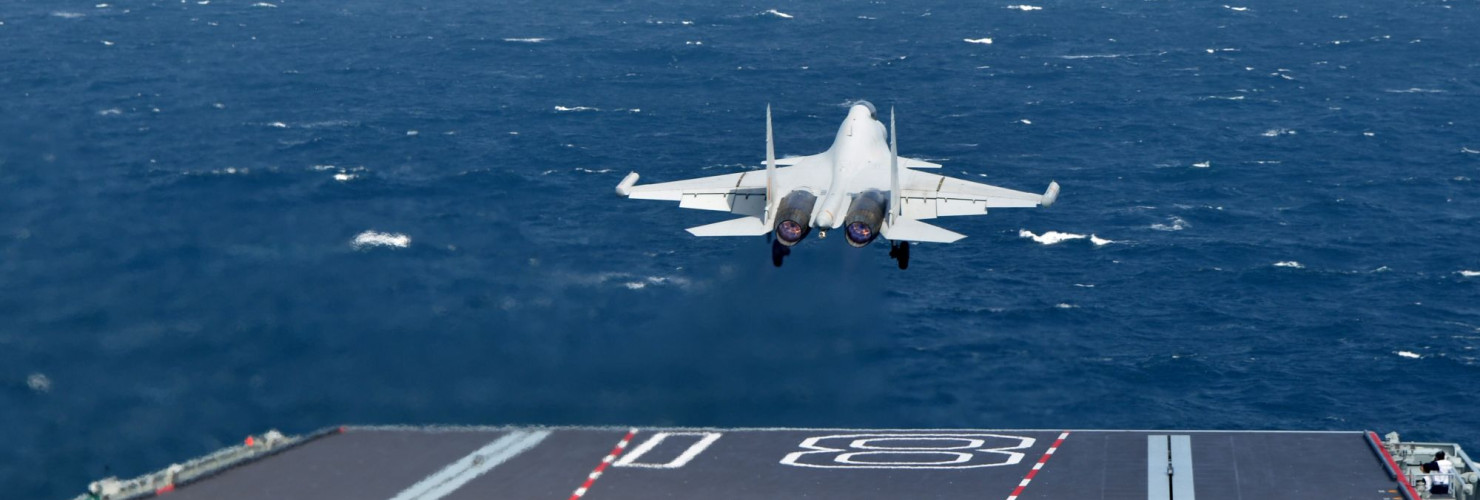
No one knows how well Xi’s ambitious initiative is faring, since the PLA – comprising the PLA Air Force, PLA Navy, PLA Ground Force, PLA Rocket Force, and other specialized services – has yet to wage war in the 21st century, warfighting being the acid test of any military. Modernization has transformed a low-tech, light infantry-centric military with an antiquated air force and a small brown-water navy into a mechanized ground force, with a sizeable airpower inventory of fourth- and fifth-generation fighter jets, and the world’s largest blue-water naval fleet. Moreover, today’s PLA units engage in more realistic combat training and, for the past two decades, have participated in numerous, albeit largely small-scale, multinational field exercises.
China’s armed forces have become increasingly activist and aggressive around the PRC’s periphery. In the far west, ground forces have deployed in ever greater numbers, engaging in occasional bloody small-scale clashes with India’s army along the two countries’ disputed Himalayan border. In the South China Sea, the PLA Navy, PRC Coast Guard and People’s Maritime Militia have stepped up harassment of naval ships, coast guard cutters and fishing boats, notably those of the Philippines and Vietnam. In the East China Sea, PRC maritime forces have conducted similar operations against Japanese and South Korean vessels. Perhaps most alarming is the dramatic escalation of so-called gray zone provocations around Taiwan.
Modernization has strengthened the PLA
PLA formations are also operating further and further from China’s borders. Ground force units have served on United Nations peacekeeping missions around the world, while some air formations have also operated overseas. In 2026, the PLA acknowledged its first air installation outside of the PRC in Laos. Yet the most routinely deployed service overseas has been the PLA Navy. Its vessels have operated continuously in the Gulf of Aden since late 2008 and have been more active across the Western Pacific, Indian Ocean and Mediterranean, and even making appearances in the Atlantic, Arctic and Baltic seas. The PLA Navy has operated a support base in Djibouti on the Red Sea since 2017 and opened a naval base in Ream, Cambodia, in 2025.
But increased peacetime operational experience and tempo do not guarantee wartime successes. While PLA drills and deployments do not seem to have been impacted by the unprecedented waves of purges continuing across all echelons of China’s military, their effects could be different under actual combat conditions. The PLA has not fought a major war since China’s conflict with Vietnam in 1979. Muscular and intimidating shows of force around the PRC’s periphery and the periodic spectacle of smartly turned-out troops with gleaming military hardware on parade in Beijing are not incontrovertible proof of combat readiness.
Nevertheless, as a former US defense chief famously remarked, “You go to war with the army you have.” In the event of conflict, the leaders of the PRC – just as much as those of other great powers – will have no choice but to send their militaries into battle irrespective of their condition or level of combat readiness – and their armed forces will salute and follow orders, executing operations as best they can. The PLA will remain something of a puzzle for a while, but it is likely to make a credible account of itself in any conflict. Its combat record over the decades has shown that it can fight effectively, absorb heavy casualties and adapt under fire.
The views expressed in this piece are those of the author.
Author(s)

Senior Associate Fellow
Author(s)
Senior Associate Fellow