picture alliance / AP Photo/Dmitri Lovetsky
Comment
Why Xi may have his own reasons to avert a US-Russia-China summit
Europe and Ukraine may find a surprising ally in the Chinese president, says Eva Seiwert. A formal trilateral could raise strategic questions awkward for Brussels – and Beijing. This analysis is part of the China-Russia Dashboard.
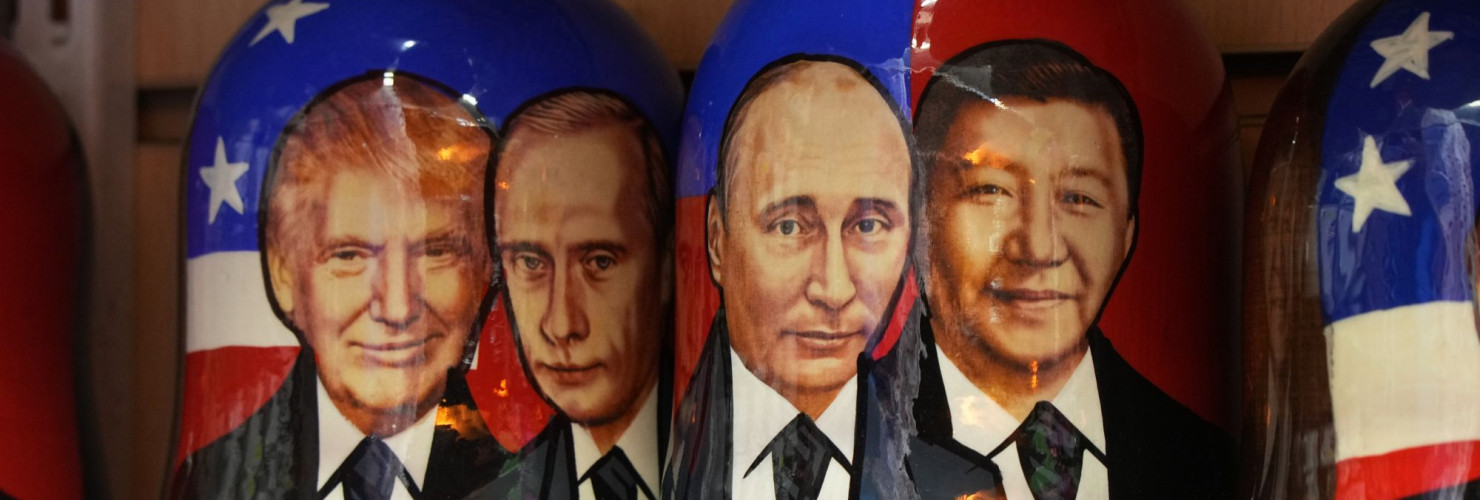
US President Donald Trump and Russian President Vladimir Putin have put Xi Jinping in an unusual position by expressing interest in a trilateral summit with the Chinese leader at the Asia-Pacific Economic Cooperation (APEC) summit in Shenzhen mid-November. Xi’s cautious response so far – Moscow and Washington have confirmed discussion, while Beijing has yet to commit publicly – could help Europe and Ukraine avoid the worst: Major powers making decisions about the region being taken in their absence.
The idea for a meeting came from Russia and it’s not hard to see why. Moscow’s ideal outcome would reportedly be a “Yalta-style” agreement on Ukraine, echoing the 1945 conference at which the US, the UK and the Soviet Union discussed the post-war order in Europe. But even much more modest results would count as a success: Simply taking part in such a summit would elevate Russia’s status alongside the US and China, help break its diplomatic isolation, potentially drive a further wedge between the US and Europe, and provide an important platform for its narrative of Western threats to Russia.
A three-way meeting would play to Trump’s self-regard as a dealmaker and peacemaker – and quite possibly his appetite for economic gain. The US recently eased sanctions on Russian diesel-fuel exports, with an initial shipment of 40,000 tonnes reportedly on its way to the US. Moscow has also offered to increase fertilizer exports amid shortages caused by the Middle East crisis. But Trump may also have a larger strategic motivation: He has said that nuclear disarmament, not Ukraine, should be at the top of the agenda.
China has benefited from dealing with Washington and Moscow separately
With the APEC summit in China being discussed as the venue, Xi would surely welcome the huge symbolic win of being seen as the world leader capable of hosting such an important gathering – while possibly helping to widen the divide between the US and Europe. But Xi also has very good reasons to avoid such a meeting. China has benefited from dealing with Washington and Moscow separately, and it has in the past insisted that both Russia and Ukraine must be involved in any peace process. A China-US-Russia summit to discuss Ukraine’s future without Kyiv would undermine both those positions.
If Xi and his guests reached no substantive agreements, a high-profile trilateral could overshadow the APEC summit, which Beijing wants to use to showcase its economic leadership and promote openness, innovation and cooperation. A highly publicized gathering of three major powers also would sit uneasily with Beijing's repeated calls for inclusive multilateralism, particularly at a forum intended to promote regional economic cooperation. A successful trilateral might make the risk worthwhile. But such an outcome is uncertain – not least because of the unpredictability of Trump and Putin – and the meeting could end up dominating APEC at the expense of Beijing’s economic agenda.
Lastly, while Putin and Trump have major strategic incentives to meet, Xi has a strategic reason to avoid doing so. Trump’s insistence on putting nuclear-arms reduction at the top of the agenda is problematic for China. Beijing has long said that its nuclear arsenal is far smaller than those of the US and Russia – and that Washington and Moscow must make substantial reductions before China joins any talks. Abandoning this position would risk China being bound by the same rules before the gap in nuclear capabilities has narrowed.
Chinese diplomats have reportedly indicated that they would not rule out a trilateral
But even Xi may recognize that he cannot dismiss the idea of a meeting altogether. Chinese diplomats have reportedly indicated that they would not rule out a trilateral. If Xi cannot prevent such a meeting, he could at least use his position as host to shape it – a less prominent, more informal encounter with a loose agenda focused on major-power relations or the global economy, rather than a formal summit focused on Ukraine or nuclear-arms control that would raise public expectations. Xi could even cast himself as the host of a Trump–Putin meeting rather than participate in three-way talks.
Such stage-management would not protect Europe and Ukraine from the US, Russia and China talking about them behind their backs. But it would allow European governments to frame such a meeting as nothing more than an exchange of views. A formal summit explicitly devoted to Ukraine, by contrast, would risk signaling to the world that the three leaders are entitled – by right or by force – to make strategic decisions about Europe in Europe’s absence. That alone would send a terrible precedent for the continent.
Much can still happen until the APEC summit next month. Another round of US-mediated talks between Ukraine and Russia in Abu Dhabi are reportedly under discussion, while Trump’s views on Ukraine and President Volodymir Zelenskyy continue to shift. But whatever format emerges in Shenzhen, European governments must continue to insist on Ukrainian participation in any talks about the country’s future. Apart from pressing Washington to take them into account, Kyiv and European capitals should also appeal to Xi’s own reservations about a trilateral summit that also carries many risks for Beijing.
This article was first published by our partner publication The Diplomat on October 23, 2026.
Author(s)

Senior Analyst
Partners

Author(s)
Senior Analyst