picture alliance / NurPhoto | Daniel Gnap
MERICS Briefs
MERICS Europe China 360°
China’s export surge + Huawei’s Tau Scaling Law + Sino-German trade
In this issue of Europe-China 360° we cover the following topics:
- Chinese experts claim Europe’s own problems are causing China’s export surge
- Huawei’s Tau Scaling Law: No real revolution, but a key messaging tool
- SOAPBOX-MERICS Data Highlight: Sino-German trade
By Grzegorz Stec
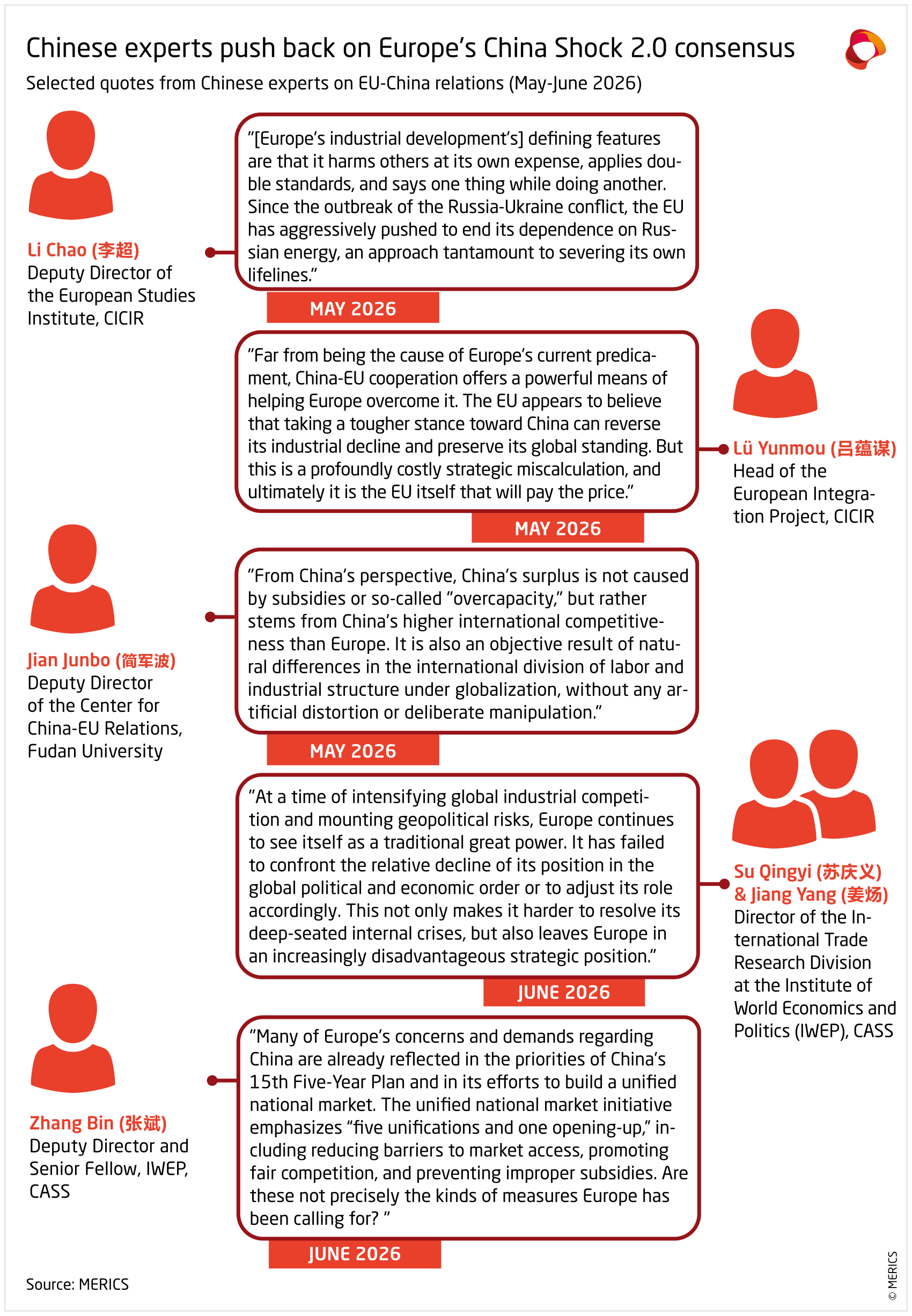
As the EU develops more cross-sectoral responses to Chinese competition and strategic dependencies, Beijing is not only preparing policy countermeasures but also promoting the narrative that China’s flood of exports is more an issue of European competitiveness than a threat from Chinese overproduction.
At their June European Council summit, EU heads of state and government signaled agreement that Europe must respond to China’s onslaught of exports resulting from its highly subsidized industrial overcapacity. Leaders are concerned that this is further eroding European manufacturing capacity in sectors central to the green and digital transitions. They point to a daily goods trade deficit with China of around EUR 1 billion and the loss of roughly 500 manufacturing jobs per day across the EU. Volkswagen, for example, recently announced cost-saving measures that could lead to 100,000 job cuts in Europe.
The central message emerging from Chinese experts is straightforward: Europe is misdiagnosing its own competitiveness crisis as a China problem and, by responding with restrictions, risks inflicting greater damage on itself than on China. This assessment appears to form the core of an emerging Chinese counter-narrative aimed at challenging the EU’s diagnosis before it turns into a durable policy consensus and coordinated action.
Beijing’s unease over the EU’s China pushback
In recent months, the EU has been moving toward a more systemic approach to the challenges from China. The European Commission and European Council both held meetings dedicated to China topics in May and June.
Some of the key discussed actions include:
- adding “Buy European” clauses and conditions on foreign direct investments through the Industrial Accelerator Act, proposed in March;
- creating a pan-EU high-risk supplier list limiting access to the European single market through the update of the Cybersecurity Act, proposed in January;
- developing a diversification instrument that would impose limits on single-supplier dependence;
- developing a solidarity instrument that could help spread the costs of Beijing’s retaliations and coercion across the member states.
If developed and implemented in an ambitious way, those measures could change the landscape of EU-China economic relations. They could also help Europe prepare for the next wave of Chinese industrial overcapacity, already heralded by the priority areas specified in China’s next Five-Year Plan.