
picture alliance / KCNA via KNS via AP | Uncredited
Comment
Xi visits Pyongyang and China rehabilitates North Korea
Russia’s renewed standing in northeast Asia and continued US strength in the region have encouraged Beijing to set aside reservations about its only official ally, says Andrew Scobell.
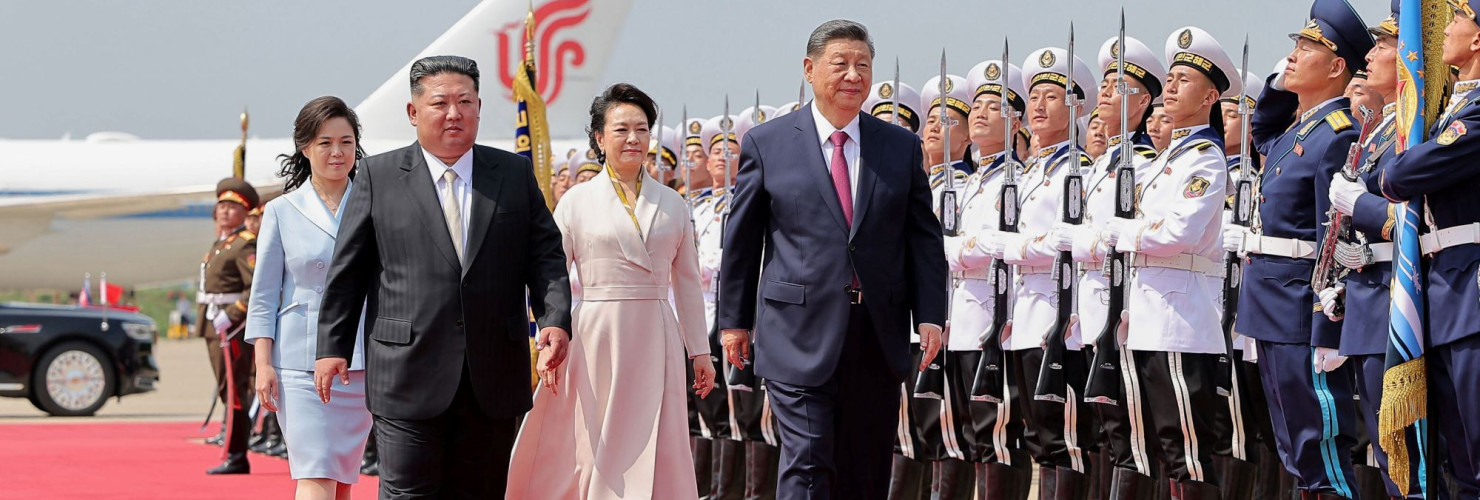
Xi Jinping’s June 2026 two-day state visit to North Korea is an unmistakable sign that Beijing is working hard to bolster its typically tortuous relationship with Pyongyang. China’s ties with its sole official ally have changed remarkably – from fractured to friendly in less than ten years.
The trip made Xi the first leader of the People’s Republic of China (PRC) in forty years to make two official trips to North Korea – his first, in 2019, correlated with a significant thaw in bilateral relations. Only one other Chinese leader had traveled to Pyongyang twice during his tenure: Deng Xiaoping visited North Korea in 1978 and 1982. Xi’s predecessors, Jiang Zemin and Hu Jintao, made only one trip each, while founding leader Mao Zedong made none, despite his momentous decisions to send Chinese troops to support a Pyongyang regime on the verge of collapse in 1950 and to sign a mutual defense treaty in 1961. (This list of travels does not include the many visits to China made by North Korean leaders.)
Kim goes from “fatty” to friend
For China, where symbolism and showing up matter tremendously and overseas travel is meticulously planned, Xi’s 2026 appearance in Pyongyang was steeped in significance. It was not only a carefully staged spectacle, but also the Chinese leader’s first foreign trip of the year. Moreover, it followed quickly on the heels of back-to-back visits to Beijing by US President Donald Trump and Russian strongman Vladimir Putin.
The significance of the Xi-Kim summit is best understood by recalling that less than a decade ago, China-North Korea relations were in a dark place. Pyongyang routinely conducted nuclear tests and missile launches without consulting with or even notifying Beijing ahead of time. Such behavior was deemed unbecoming for a formal ally, angering and embarrassing North Korea’s most important patron and far and away its most significant economic partner.
A joke posted on the Chinese social media platform Weibo in 2015 captured popular frustration with Pyongyang’s provocative behavior and Beijing’s inability to rein in its small neighbor:
North Korea said to China: “Older brother, I have something to discuss, I’d like to launch a nuclear missile!” China [responded]: “Huh, when?” North Korea: “3!” China: “Three months?” North Korea: “2!” China: “Two months?” North Korea: “1! It’s launched!” China: “Your mother.”
Many Chinese perceived North Korea as an ingrate: China had sacrificed blood and treasure in the 1950s to save the Kim family regime, yet Pyongyang now seemed to display no gratitude and instead repeatedly humiliated China. Xi reportedly despised Kim Jong-un, and Chinese netizens made off-color online jokes about “Fatty Kim the Third.” (金三胖).
As Beijing moved to rehabilitate Pyongyang, PRC censors in the late 2010s blocked netizens from using this derogatory name. Chinese public sentiment towards North Korea subsequently shifted, with a 2025 opinion poll finding that 76 percent of respondents identified Pyongyang as friend of China, placing North Korea second only to Russia.
Xi needs Kim for Asian regional balance
Xi’s visit to Pyongyang was meant to demonstrate China’s respect for North Korea and give Kim “face.” Barely a month after Beijing hosted back-to-back visits by Donald Trump and Vladimir Putin, Xi brought an entourage that included his wife, Peng Liyuan, and also cabinet ministers.
Second, China needs North Korea so Beijing can hold its ground in a tricky power-balance game in northeast Asia. Beijing views the regional balance as tilting heavily in favor of Washington. Although it is not geographically a northeast Asian power, the US functions as one because of two major allies, Japan and South Korea, both of which possess large, dynamic economies and substantial armed forces. By contrast, North Korea remains an economic basket case with a large but dubious conventional military force. Although it has a noteworthy nuclear arsenal, Pyongyang does not coordinate defense or economic policies with Beijing. But despite these limitations, North Korea remains a strategically indispensable asset for Beijing.
China counters Putin’s Pyongyang gambit
Lastly, Xi’s visit was also intended to solidify and expand Beijing’s influence in Pyongyang in the face of Moscow’s rising standing. North Korea’s support for Russia’s war against Ukraine has given Moscow a renewed foothold in northeast Asia after years of limited engagement. Beijing considers the region, and the Korean Peninsula, in particular, within its sphere of influence and views Russia’s shift as unwanted interference.
Pyongyang has supplied Moscow with desperately needed munitions and at least ten thousand North Korean soldiers – and Russian dictator Vladimir Putin has returned the favor in the form of military technology and money. Putin visited Pyongyang for a summit with Kim in June 2024, where the two signed the North Korea-Russia Treaty on Comprehensive Strategic Partnership. It was Putin’s first visit to North Korea in twenty-four years, a deeply symbolic expression of the new ties between the two countries.
But Xi wanted to persuade Kim that while Moscow may be a useful friend, Beijing is an irreplaceable ally. An estimated 90 percent of North Korea’s trade is with China, including essential and sizeable imports of petroleum and food, and China is by far North Korea’s most important source of foreign visitors and foreign exchange. Moreover, if Pyongyang were ever threatened militarily, China would always be best positioned to defend the Kim family regime.
A dangerous liability becomes a critical asset
For China, North Korea has shifted from dangerous liability to critical asset. Beijing is again viewing Pyongyang in a more favorable light and is eager to comprehensively strengthen bilateral ties, driven in part by alarm over Russia’s burgeoning friendship with North Korea and the prospect – however remote – of another US-North Korea summit, given Donald Trump’s peculiar fascination with Kim Jong-un. This possibility should not be quickly dismissed from Beijing’s calculus – Xi’s sudden sense of urgency for a first-ever meeting with Kim in May 2018 was triggered by the impending Trump-Kim summit in Singapore the following month.
From Beijing’s discomfiting perspective, Pyongyang appears to be very much geopolitically “in play” – and Xi has decided to take action.
The views expressed in this piece are those of the author.
Author(s)

Senior Associate Fellow
Author(s)
Senior Associate Fellow