
picture alliance / CFOTO
Content
MERICS Briefs
MERICS China Industries
Digitalization of China’s auto industry + Concentrated solar power + Innovation points system
In this issue of MERICS China Industries Brief, we cover the following topics:
- Digitalization of China’s auto industry held back by parts suppliers
- After photovoltaics, China now wants to lead in concentrated solar power
- Innovation points system reflects shift towards performance-based funding
- AI+ may result in more competitive pressure for European companies
- Counting Carbon: MIIT accelerates rollout of carbon footprint system for batteries
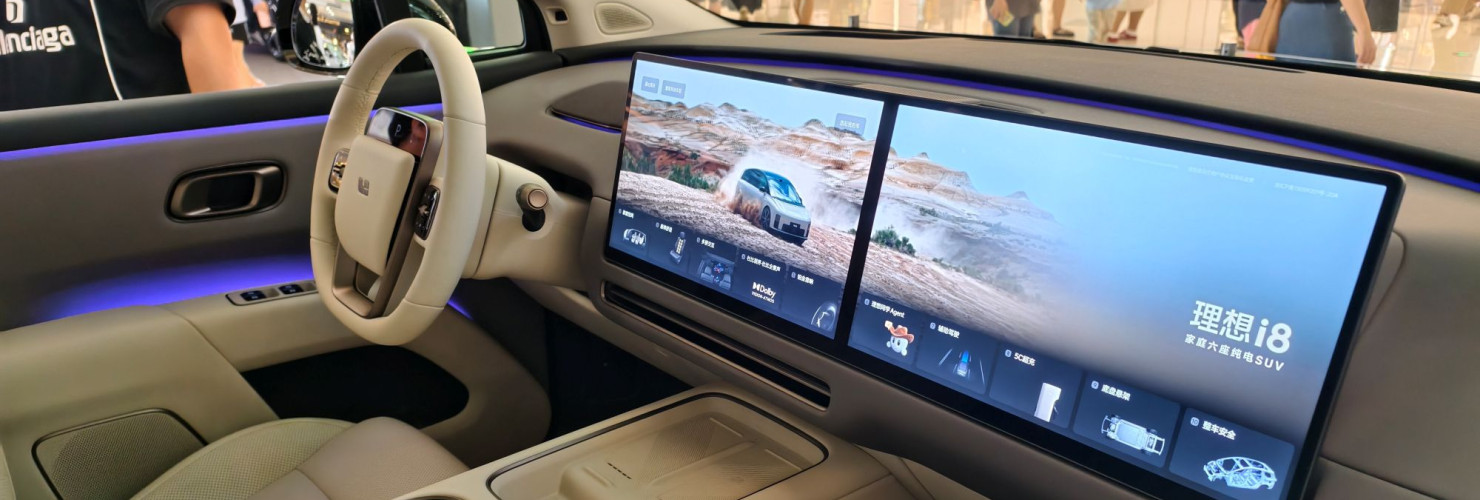
At a glance: The Ministry of Industry and Information Technology (MIIT) and other agencies issued a plan for the digitalization of China’s automotive industry. While recognizing progress made, the plan sets out the following goals and features:
- Raise the smart manufacturing capabilities of vehicle manufacturers by one level, increase industry-wide labor productivity by 10 percent compared to 2025, and shorten product research and development (R&D) and delivery cycles by 20 percent until 2027
- Advance the digitalization of small- and medium-sized component manufacturers (SMEs) and expand the use of Artificial Intelligence (AI) across R&D and manufacturing
- A list of typical scenarios such as smart collaborative R&D, digital twin factories, smart supply chain collaboration and data-driven marketing
MERICS comment: MIIT’s focus on the automotive industry seems surprising at first glance, as the sector is already a leader in the drive to upgrade China’s industries. For example, SAIC-GM-Wuling’s Liuzhou factory is one of only 15 flagship-level smart factories nationwide, according to state media. These are the cream of China’s smart factories, and tasked with exploring new manufacturing models and standard setting. Across the auto industry, the computerized numerical control rate of key processes, vital for high-precision and fast production, exceeded 65 percent in 2025, more or less on par with China’s manufacturing sector overall.
However, there is room for improvement. Data silos between companies prevent synergies from the concerted usage of data across the automotive supply chain. Additionally, digitalization at SME component manufacturers lags behind larger suppliers and vehicle manufacturers. Many possess only basic communication capabilities and use “dumb equipment” (哑设备) that cannot process complex data. Yet, even BYD has space for further gains; so far, it has only reached the third of five levels within China’s smart manufacturing capability assessment system.
Although the plan does not contain punitive provisions, weak companies could come under strain over time, as central policy support will likely go to firms which digitalize and join the data-driven integrated automotive supply chain envisaged by the MIIT. Alongside the goal of shortening Chinese carmakers’ already short delivery cycles, this latest plan could provide additional incentives for Western carmakers to integrate yet more deeply into China’s automotive production ecosystem to keep up. They would be forced to weigh the risks of sharing data against the opportunities, such as possible efficiency gains.
Article: Implementation Plan for the Digital Transformation of the Automotive Industry (工业和信息化部等四部门关于印发《汽车行业数字化转型实施方案》的通知) (Link)
Issuing bodies: MIIT, MOE, SAMR, NDA
Date: December 30, 2025
At a glance: The National Development and Reform Commission (NDRC) and the National Energy Administration (NEA) released opinions to promote the development of concentrated solar power (CSP), a form of solar power that uses mirrors to focus sunlight onto a receiver, generating heat and electricity. Key aspects include:
- Install 15 gigawatts (GW) of CSP capacity, bring its cost per kilowatt hour (kWh) down to that of coal power and lead internationally in CSP technology by 2030
- Deploy CSP in various ways, including CSP power stations and using CSP as the basic power source in integrated source, grid, load and storage systems
- Achieve R&D breakthroughs in heat absorption and exchange, low-cost heat-storage materials, intelligent control systems and advanced turbines
- Foster a competitive CSP industry by building CSP industrial parks and clusters and exposing CSP to market forces
MERICS comment: Unlike other sources of renewable energy like wind or photovoltaics, China does not yet lead in CSP. In 2026, the global CSP market is projected to be worth USD 90 billion (rising to USD 191 billion by 2034) with China’s share in the current year worth only USD 5 billion. Global installed CSP capacity totaled 7.2 GW in 2024, including 2.3 GW in Spain, 1.5 GW in the United States, and 0.8 GW in China. Most leading companies such as Abengoa, SENER Energía, or BrightSource Energy hail from Western countries.
Author(s)



Author(s)
Content