

Worksheets and guides
Communication & Advocacy
Translating research into outcomes (and impact, hopefully)
During the Think Tank School 2025, we visited the Brussels-based think tank ECDPM and met with their Outreach and Impacts Team. We questioned traditional think tank communication methods and explored new approaches to planning and implementing outreach strategies. Virginia Mucchi and Jonathan Hunter summarized the core principles of translating research into outreach to improve its impact on debates and policymaking for the Think Tank Lab Toolbox.
How have think tanks traditionally disseminated their work?
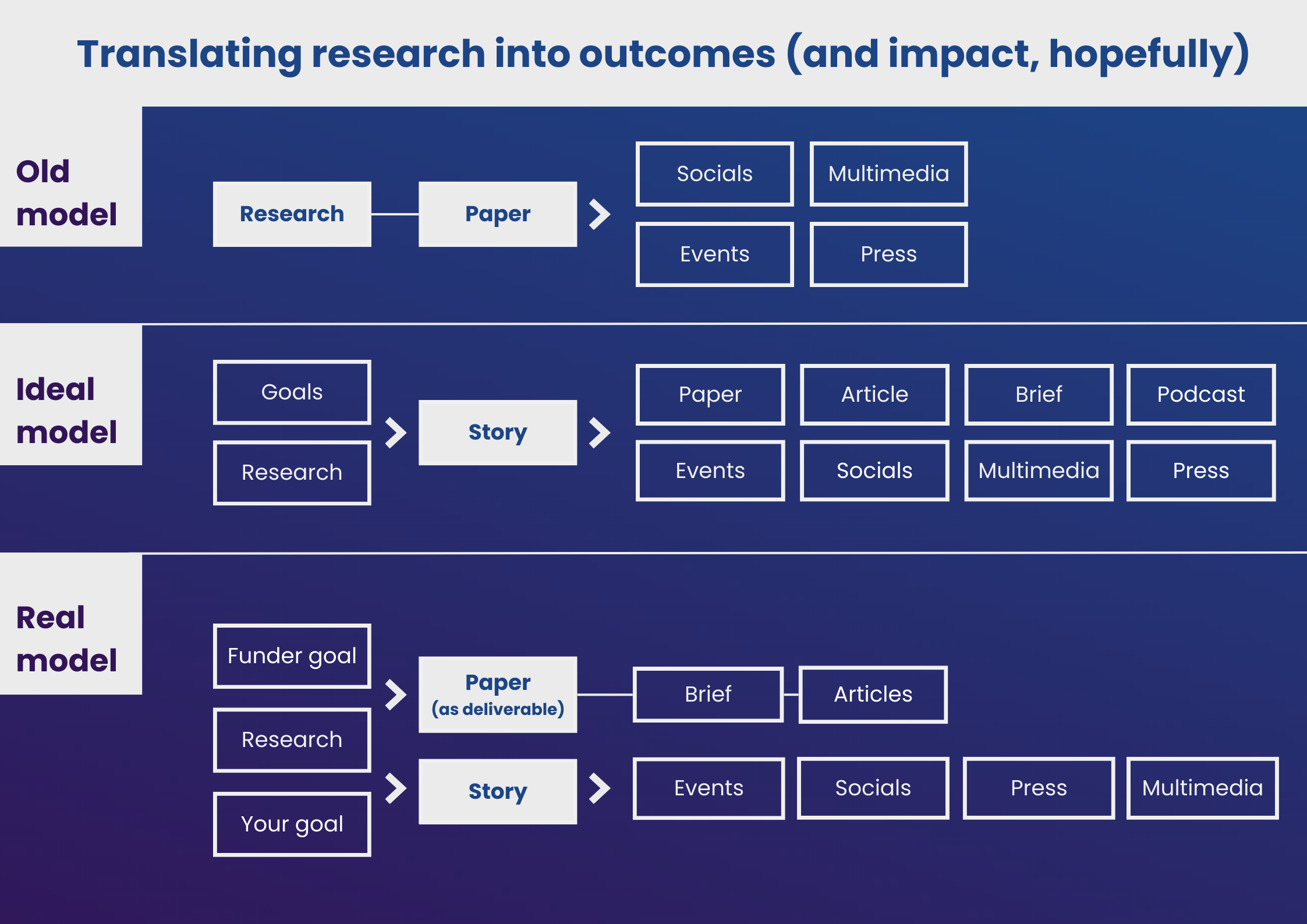
A paper is typically written as the final outcome of the research process. Communication comes last, trying to spread the paper.
But who reads papers?
Policymakers are busy and rarely academics: they are not in the habit of reading papers for ideas; nor, to be clear, is anyone else. But even if they do read an academic paper, it is unlikely to motivate them to change their mind on policy.
If the aim is to produce impact, writing a paper is a bad strategy to achieve it. The past century of public relations teaches us that the key to reaching and motivating an audience is a compelling story. The story motivates impact, and it will emerge from a combination of your goals and research. It is told in a form tailored to your audience. Multiple forms reinforce each other through repetition and diverse perspectives.
But does this line up with funder demands?
Funders will rarely request a story, but often specific outputs, such as papers. Some extra work is needed to have impact as well as fulfil funder requirements. While the deliverable for a project will often be a direct result of funder requirements or a paper by necessity, the research can also lead to a story more likely to inspire impact.
Using work already done for the deliverable, you can start to tell the story in diverse forms: shortening to a brief, applying research to new developments for an article etc.
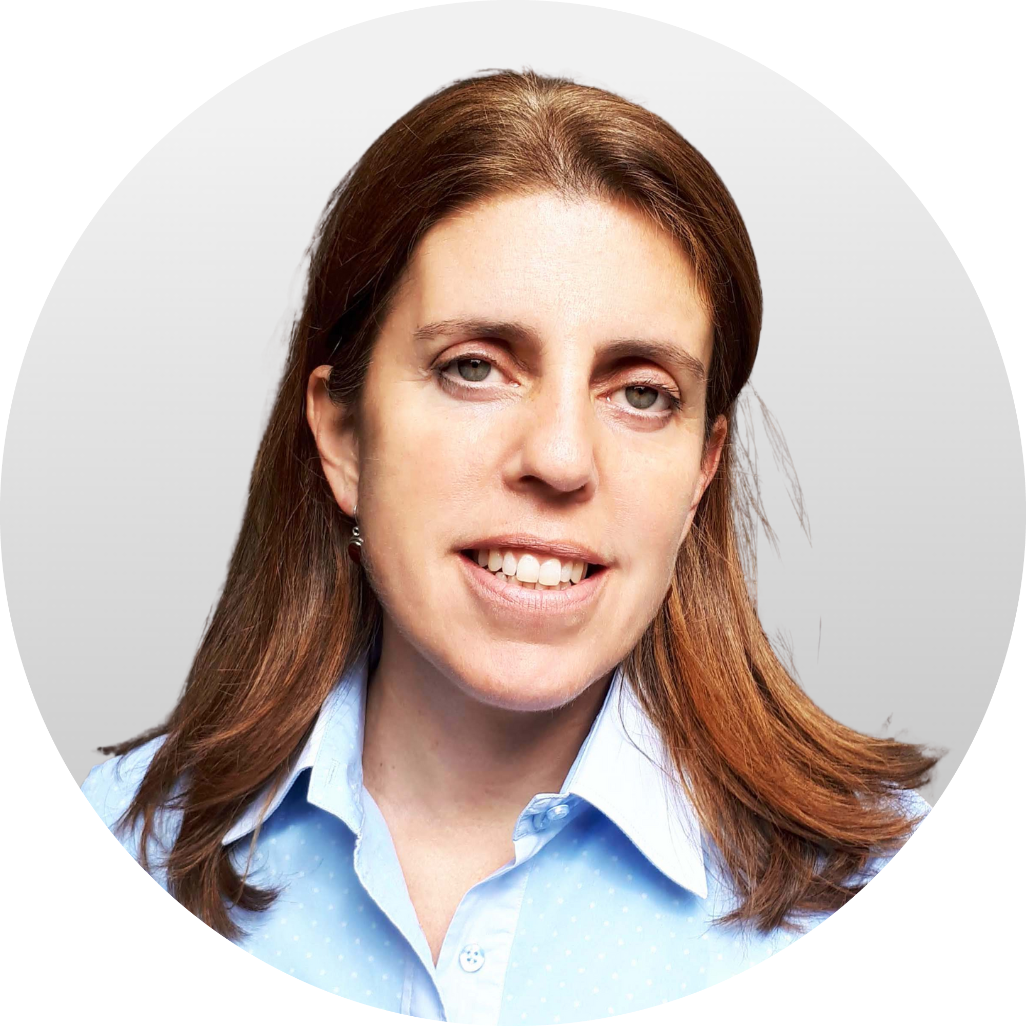
Virginia Mucchi is the head of ECDPM's outreach and impact department. She leads the outreach and impact team and is responsible for centre-wide communications and media relations. She is also a member of the management team and the gender task force.
Virginia has a background in communications, journalism and EU politics. Prior to joining ECDPM, she was a communications adviser to the Permanent Representation of Italy to the EU. Virginia also served as media and communications director at Burson-Marsteller in Brussels and worked as a journalist for the BBC for more than ten years.

Jonathan Hunter is a communications officer in ECDPM's outreach and impact department. He is responsible for ECDPM's multimedia output and social media channels.
Jonathan has a background in documentary film, featured on ORF, YLE and Das Erste, as well as campaigning with NGOs in Brussels. He has since edited environmental and social video campaigns for European multinationals, as well as worked as a video communications consultant for education start-ups. He holds a Masters degree in Philosophy from Central European University.