picture alliance / via REUTERS | SUO TAKEKUMA
Comment
Iran's first-ever SCO military exercise solidifies ties with China and Russia
Eva Seiwert says “Sahand-2025” marks a major milestone in Tehran’s integration into the Shanghai Cooperation Organization – and in its pursuit of greater international recognition.
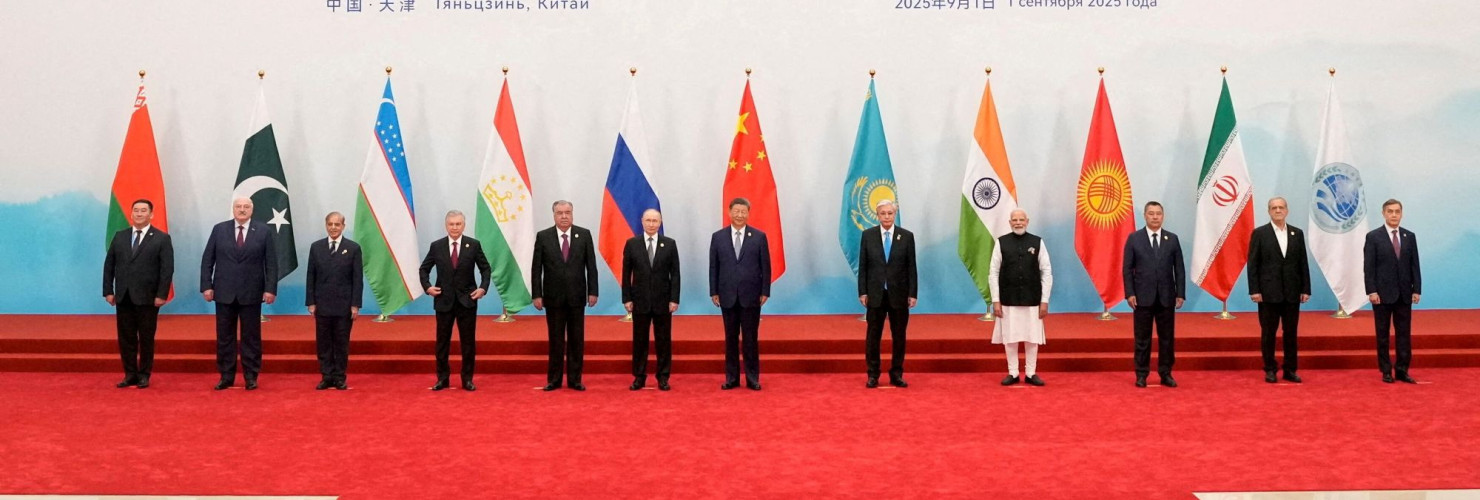
Iran recently hosted militaries from China, India, Russia, and six other countries for the first-ever Shanghai Cooperation Organization (SCO) military exercise on Iranian soil. The five-day “Sahand-2025” exercise in the northwest of the country was more than a counter-terrorism drill. It sent a clear geopolitical signal of Tehran’s full integration into the multilateral partnership led by China and Russia, illustrating how Beijing and Moscow now see Iran as a valuable participant in their broader regional projects that sit alongside Western formats.
China is no longer worried about being seen as too closely aligned with Iran
China, for its part, remains wary of unconditionally backing Tehran for fear of unwanted conflicts or disrupted oil flows as a result of Iran’s predilections – expanding its role across the Middle East, engaging in hostile actions against Israel, and, perhaps most crucially, maintaining a nuclear program that could encourage Tehran to ignore its nuclear non-proliferation obligations.
But the recent military field operations, tactical maneuvers and joint command exercises from December 1 to 5 were an achievement for a country long isolated by UN sanctions and reflect China’s decisive shift in posture: Beijing is no longer worried about being seen as too closely aligned with Iran and now sees value in upgrading ties on several fronts.
Until the mid-2010s, Beijing was reluctant to engage more deeply with the Islamic Republic of Iran politically and militarily. At a time when it was still much keener on good relations with both the US and Europe, China’s caution stemmed from concerns over Tehran’s global reputation as a pariah state, ongoing international sanctions, and its strong anti-American posture. Iran’s long-standing rivalry with Saudi Arabia further complicated matters, as Beijing worried that any conflict could endanger oil shipments from two of its largest suppliers.
China is Tehran’s largest trading partner and intent on expanding ties
But Iran’s willingness to limit its nuclear program under the 2015 Joint Comprehensive Plan of Action (JCPOA), which China helped negotiate, the intensifying US-China rivalry and Beijing’s need to diversify its energy had increased the benefits of strengthening ties with Tehran. China’s success in easing Iran-Saudi tensions in 2023 further lowered perceived risks. According to Chinese commentators, US President Donald Trump’s withdrawal from the JCPOA in 2018 and his more adversarial stance towards China, Russia and Iran were decisive factors leading to the deepening ties among the three states. This culminated in Iran joining the SCO, in 2023 and the BRICS grouping a year later. China is today not only Tehran’s largest trading partner – accounting for some 90 percent of Iran’s oil exports – but also intent on expanding ties.
At the same time, Russia – China’s close partner and the other driving force of both the SCO and BRICS – appears to have become an even more important security partner for Iran. Moscow has reportedly sold attack helicopters, air defense systems and fighter jets to Tehran, while Iran has supplied weapons and ammunition – including artillery shells, drones, and anti-tank missiles – for Russia’s war in Ukraine. The three countries together regularly engage in trilateral naval drills as well as broader security coordination, including nuclear consultations. Sahand-2025 has solidified Iran’s relations with China and Russia by showing Iran can play a useful role within SCO security structures, opening the way for deepening security cooperation.
Iran’s entry into the SCO and BRICS strengthened its geopolitical standing
Iran’s entry into the SCO and BRICS added a new institutional dimension to its partnerships with Beijing and Moscow. It allows Tehran to act as a full-fledged member of the world’s largest regional organization and benefit from political legitimacy, expanded diplomatic networks, intelligence sharing – including access to the SCO Regional Anti-Terrorist Structure’s (RATS) anti-terror database, as well as exchanges on cyber threats, border security, and counter-terrorism practices – and to participate in high-level economic and security discussions.
This strengthens Iran’s geopolitical standing, signaling to both regional rivals and global powers that Tehran is integrated into alternative international frameworks beyond Western-dominated institutions. For Europe, the nuclear implications are particularly important: Iran’s closer integration with China and Russia gives it diplomatic backing and economic buffers that reduce the effectiveness of Western pressure. While Beijing is keen for Iran not to escalate its nuclear activities towards weaponization, China’s strategic priorities mean it is unlikely to exert the kind of sustained pressure Europe prefers. The result is a geopolitical environment in which Iran feels less isolated – and may therefore be less inclined to rein in its nuclear program.
This article was also published by our partner publication The Diplomat on December 18, 2025.
This analysis is part of the China-Russia Dashboard, a collaborative research effort of the Centre for Eastern Studies (OSW), MERICS, and the Swedish National China Centre (NKK) and Stockholm Centre for Eastern European Studies (SCEEUS) at the Swedish Institute of International Affairs (UI). Explore the project here.
Author(s)

Senior Analyst
Author(s)
Senior Analyst