
picture alliance/dpa/HPIC | Hu Qingming
Content
MERICS Briefs
MERICS China Essentials
China-Japan relations + Hacking attack + Clean energy boom
Top story
Japan elections: Support for counterbalancing China’s ambitions in the region
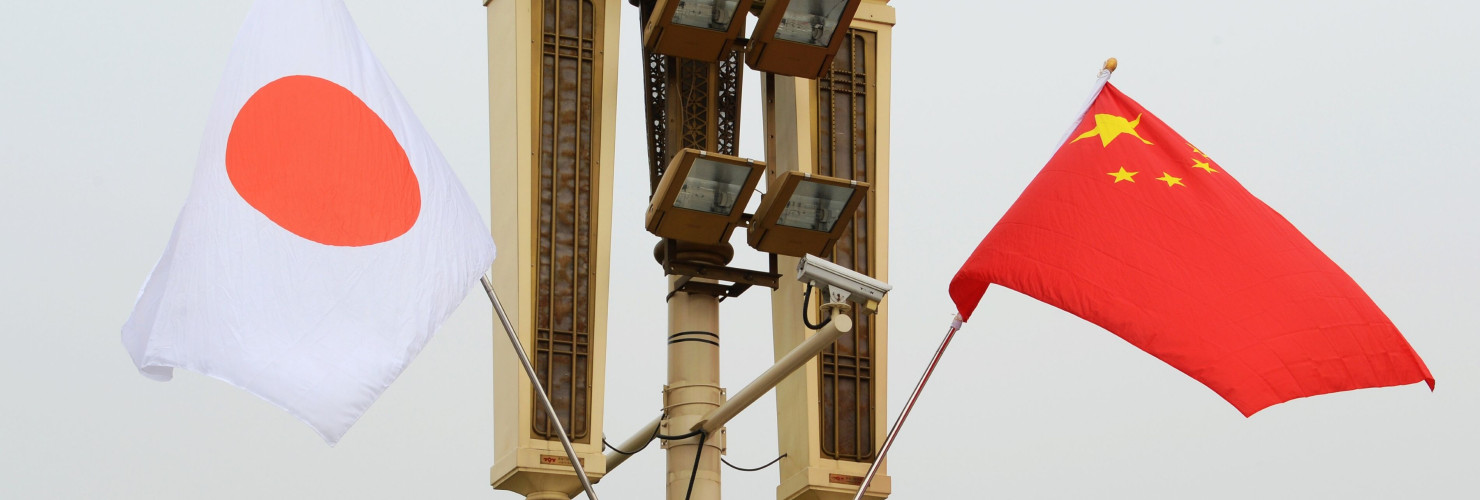
Japanese Prime Minister Sanae Takaichi’s landslide victory in Sunday’s election signals strong popular support for counterbalancing China’s ambitions in East Asia and may offer a lesson for other democracies in dealing with China. Takaichi now has strong backing for her more critical stance toward China – something Beijing does not want to see after rebuking her for remarks last year against escalation vis-à-vis Taiwan. In fact, with a two-thirds “supermajority” in parliament, Takaichi could even venture a change in Japan’s pacifist constitution, allowing it to deploy its military with fewer restrictions.
In November, Takaichi told parliament that if China were to attack Taiwan militarily, it could trigger a Japanese response involving military actions. But Beijing’s imposition of tourism and export restrictions along with diplomatic tensions appear to have backfired, agitating Japanese voters to cast their ballots for Takaichi’s Liberal Democratic Party whose coalition nearly collapsed in October. Beijing must now decide whether and when to de-escalate with Tokyo. Commenting on the election, a Chinese Foreign Ministry spokesperson said that “China’s policy toward Japan will not change because of any single election in Japan.”
Takaichi’s party won 316 of the 465 seats, the largest result since the founding of the LDP after World War II. The ruling coalition raised its total to 352 seats from 232 before the election, securing the two-thirds supermajority required to initiate amendments to the constitution. This could allow Japan to enhance its military posture to counter China’s growing assertiveness in the region, particularly regarding a heightened threat to Taiwan.
Takaichi’s remarks in a parliamentary debate came in response to a question on whether such a military threat would constitute an “existential crisis situation” under Japanese law – one that could justify collective self-defense. For Japan, a country highly dependent on maritime trade and sea-lane security, a Chinese blockade of the Taiwan Strait would pose a serious threat to national survival, even if China did not attack Japan directly.
Takaichi’s victory is likely to keep her in office for the long term and make a major shift in her position politically difficult. Now Beijing must decide whether to sustain confrontation and keep Sino-Japanese relations frozen for years or deescalate without appearing to back down. A more militarily self-reliant Japan would be a significant strategic burden for China. It would further change the regional balance toward the US and reduce Japan’s self-restraint, enabling a more capable Japan to counter China’s activities along the First Island Chain.
Unlike a recalibration of relations with China, as many of Takaichi’s Western counterparts are seeking to hedge against US retrenchment and the “America First” agenda, her policy of strength could be a model for responding to coercive measures from Beijing.
“Even amid deep economic interdependence, maintaining a firm stance from a position of strength is necessary to safeguard strategic autonomy and avoid being overpowered by a stronger actor that does not share the same views.”
Claus Soong, Analyst, MERICS
Media coverage and sources:
- Asahi Shinbum: Big election win would give Takaichi clout to counter China
- BBC: Japanese stocks surge as Takaichi secures historic election victory
- CNN: She’s one of the world’s most powerful conservative leaders – and she just won again
- Sankei Shinbum (JP): China on alert over constitutional revision after Takaichi administration’s landslide victory
- The New York Times: Japan’s leader wins in a landslide, clearing way for hard-line agenda
METRIX
9.5 billion
…is the record number of trips expected across China during this year’s Spring Festival, according to the National Development and Reform Commission (NDRC). The festival runs from Feb. 15 to Feb. 23, with the government hoping to boost domestic consumption by extending the Lunar New Year holiday week to nine days from the usual seven. The Spring Festival travel rush lasts around 40 days – from February 2 until March 13, during which time people traditionally return home for the holidays. (Source: Reuters)
Topics
China-linked hackers exploit trusted open-source software for targeted attacks
Hackers presumed to be Chinese have once again demonstrated the sophistication of the country’s cyber community by manipulating the update mechanism of Notepad++, a widely used open-source Windows program popular with corporate IT administrators for writing and managing source code. US cybersecurity company R7 described the “sophisticated campaign” it uncovered as bearing the hallmarks of a group called Lotus Blossom, whose targets, techniques and procedures (TTP) had previously led Western analysts to link it to Chinese state interests.
The hackers reportedly had access to the sole Notepad++ update server for at least four months, in which time they replaced legitimate software with a malicious version in uploads to a small number of targets in Vietnam, El Salvador, Australia and the Philippines. Because Notepad++ is often used by IT administrators with advanced system privileges, the attackers were able to obtain broad control over the computers they infected. They gained access via a hidden “backdoor” and funneled data back to a server disguised to look like a Deepseek chat service.
This so-called supply-chain attack – which targeted a trusted software source rather than corporate end-users directly – demonstrates the risks of relying on open-source software maintained by a single developer. Notepad++ is managed by one individual, who is known for his support of Taiwanese independence and his wariness of the Chinese Communist Party. But it is unclear if his views played a role in the attack, or how the hackers gained access to his hosting infrastructure before starting their attacks last June.
“This supply chain attack demonstrates the sophistication of China’s hacking scene and shows how state-sponsored hackers can prioritize stealth and long-term, pin-point access over more indiscriminate and obtrusive high-volume data theft.”
Antonia Hmaidi, Senior Analyst in the Program Science, Technology and Innovation, MERICS
Media coverage and sources:
Techno-solutionism for rural development will miss its mark without structural reforms
Beijing is touting advances in technology as the key to agricultural modernization and rural development this year – and shying away from addressing less glamorous and more difficult tasks like land reform, farmland consolidation and rural social-security funding. As has been the case for several decades, the first document of the year published by the Chinese Communist Party’s (CCP) Central Committee and the State Council covered agriculture, rural affairs, as well as the situation of rural workers.
Aside from its traditional emphasis on food security, rural development and incomes, and high-quality village construction, Document 1 of 2026 focused heavily on supporting the adoption of advanced technologies to support agricultural production – better equipment for planting and harvesting, as well as drones, robots, and AI applications.
But it is hard to see how technology alone can turn China’s fragmented plots into the large-scale farms needed for mechanized agriculture. Farming is still mostly conducted at the household level by an aging workforce – young people continue to migrate to cities for better incomes but also hold on to their hometown land rights as a security for retirement.
With its emphasis on technology, Document 1 aims to improve productivity by reducing labor intensity (but perhaps boosting the incomes of the workers that remain). But it hardly touches on the question of land consolidation, which is an issue as mechanized agriculture is efficient only if many small plots can be worked as a single large one – and that requires land reform.
“Beijing is turning to techno-solutionism to provide a silver bullet for China’s agricultural problems. But it will first have to untangle a Gordian Knot of structural problems to boost social security guarantees for rural residents and allow migrant workers access to urban welfare systems. Only then will these groups be in a position to sell their rural land rights, enabling the long-overdue consolidation of farmland. Advanced equipment is of no use on tiny plots – and too expensive for the farmers who work them.”
Jacob Gunter, Head of Program Economy and Industry, MERICS
Media coverage and sources:
- Xinhua: Opinions of the CPC Central Committee and the State Council on Anchoring Agricultural and Rural Modernization and Solidly Advancing the Comprehensive Revitalization of Rural Areas
- China Daily: Tech cultivating China's rural vitalization
- Dutch Ministry of Agriculture: Rural Revitalization in China: Highlights of the No. 1 Central Document (2024)
Green is gold: China’s clean energy boom is driving its economy
China’s clean energy sector has emerged as the primary engine of its economy in 2025 – a sector now so large it would rank as the 8th-largest economy in the world if it were its own nation. Although subsidies to the industry have produced massive overcapacity, China’s industrial strategy has also been highly effective in establishing it as the dominant global player in the energy transition.
Valued at CNY 15.4 trillion (USD 2.1 trillion), the sector’s share of China’s GDP rose to 11.4 percent in 2025, driving over one-third of all GDP growth and 90 percent of rise in investments. Without these green industries, China would have missed its 5 percent growth target, expanding by only 3.5 percent instead.
The scale of China’s efforts continues to dwarf global benchmarks. In 2025, China installed 315 GW of solar and 119 GW of wind capacity, adding more wind power than the rest of the world combined. In a single record-breaking month, the nation installed an average of 100 solar panels per second. To put this in perspective, China’s solar additions in the first three months of 2025 alone surpassed the entire United States' record capacity for all of 2024.
China maintains its stranglehold on global supply chains, controlling 98 percent of solar wafer production and 70 percent of wind turbines. Its "New Three" sectors (EVs, batteries, and solar) generated two-thirds of this clean-energy value. While this "chaotic" revolution has led to industrial overcapacity or so-called involution – fierce domestic competition, overproduction and tumbling prices that is slashing corporate profits, China dominates global supply, and there are no international competitors in sight. China’s industrial strategy toward becoming an “electro-state” – one that uses clean electricity as an energy source rather than fossil fuels – may be inefficient but it has been effective.
“China shows that the green transition is not only good news for the climate, but even better for its economy. However, green tech dominance was bought by wasteful industrial policy, and the challenge now is to make the sector as such operate in an economically sustainable way.”
Nis Grünberg, Lead Analyst, MERICS
Media coverage and sources:
Profile
Hong Kong: 78-year-old Jimmy Lai could spend the rest of his life in prison
By Daria Impiombato, Senior Analyst, MERICS
One of the fiercest critics of the Chinese Communist Party (CCP) and an iconic figure in Hong Kong’s pro-democracy movement, Jimmy Lai, was sentenced to 20 years in prison after the High Court found him guilty of “conspiracy to commit collusion” with foreign forces and other offences. The sentence is the harshest judges have handed down under the controversial National Security Law (NSL) imposed by Beijing in 2020, which criminalizes broadly defined acts deemed subversive or secessionist and has been widely criticized outside of China for cementing the erosion of freedom in Hong Kong.
Jimmy Chee-ying Lai was born in Guangzhou in 1947 to a wealthy business family that lost its fortune after the CCP came to power two years later. At 12, Lai fled to Hong Kong as a stowaway on a fishing boat and began working in a factory. In 1981, he founded the clothing retailer Giordano, which became a success across Asia. After the 1989 Tiananmen Square protests in Beijing and the Chinese government’s crackdown, Lai became an advocate of democracy and an increasingly outspoken critic of the CCP.
After gaining British citizenship and selling his retail business in 1996, Lai focused on his media interests, which became influential platforms for Hongkongers championing democracy and freedom. His Next Magazine and Apple Daily publications were driving forces in the movement that blocked a proposed extradition bill in 2019 and 2020. Lai’s activism and international ties put him at odds with mainland Chinese authorities, especially as they intensified their crackdown on Hong Kong. He was arrested in August 2020 and has been behind bars since December that year.
The 78-year-old Lai could now be in prison for at least 18 years until 2044. While two years of time remaining from fraud and other convictions in 2022 will count toward the sentence, early release for good behavior is effectively unknown under the NSL. Lai, whose health is deteriorating, could appeal to what is in effect a life sentence, but he has so far declined to comment on his intentions. Foreign governments – including the US and the EU – as well as international human rights and press freedom groups have condemned the court’s decision as politically motivated and contrary to the rule of law.
Media coverage and sources:
- The Little Red Podcast: Hong Kong: Anything we say could be a crime
- The Economist: Tycoon troublemaker: the rise and fall of Jimmy Lai
- Hong Kong Free Press: HK mogul's ex-workers 'broke down in tears' as they watched sentencing
- BBC: Jimmy Lai: Hong Kong pro-democracy tycoon gets 20 years' jail under national security law
- The Witness (CN): 實時更新|黎智英案判刑日 黎智英判囚20年 妻庭上抹眼角
- BBC (CN): 橫跨五年、囚逾1800日,黎智英涉勾結外國勢力案明裁決
MERICS China Digest
French advisers urge EU tariffs or weaker euro to counter China (Reuters)
A French government strategy report calls on the EU to consider either an unprecedented 30 percent across-the-board tariff on Chinese goods or a 30 percent depreciation of the euro against the renminbi to counter a flood of cheap imports. The analysis found that sectors central to Europe's industrial base, including cars, machine tools, chemicals and batteries, are now under direct threat. (02/09/26)
Xi makes rare public reference to recent military purges (Reuters)
"The People's Army has undergone revolutionary forging in the fight against corruption," Xi told the military in a virtual address. China’s supreme military body, the Central Military Commission, has been cut down to two members – Xi and recently promoted Zhang Shengmin – after the five other members were purged, most recently general Zhang Youxia in late January. (02/11/26)
Xi calls Trump hours after holding call with Putin (AP News)
In a video call, Xi Jinping and Vladimir Putin discussed their countries’ close economic and political relations and their relationship with the US. Putin accepted an invitation from Xi to visit China twice this year. A few hours later, Xi held a call with Donald Trump in which they talked about US-China relations, the situation in Iran, and Taiwan. Trump is expected to visit China in April. (02/05/26)
EU lifts duties on China-made EVs for VW's Cupra Tavascan (Reuters)
The European Commission has approved a request by Volkswagen's Cupra brand to free its China-made Tavascan SUV coupe from import tariffs in exchange for a so far undisclosed minimum price and quota model, following months of intense discussions. It is the first such undertaking accepted by the EU. (02/10/26)
Michelle Tse, intern in the Politics and Society program at MERICS, contributed to this Essentials brief.
Content