picture alliance / Xinhua News Agency | Shan Yuqi
Content
MERICS Briefs
MERICS China Essentials
Outbound investment protections + Expanded export controls + Xi in Pyongyang
Top Story
China challenges EU de-risking by boosting outbound investment protections
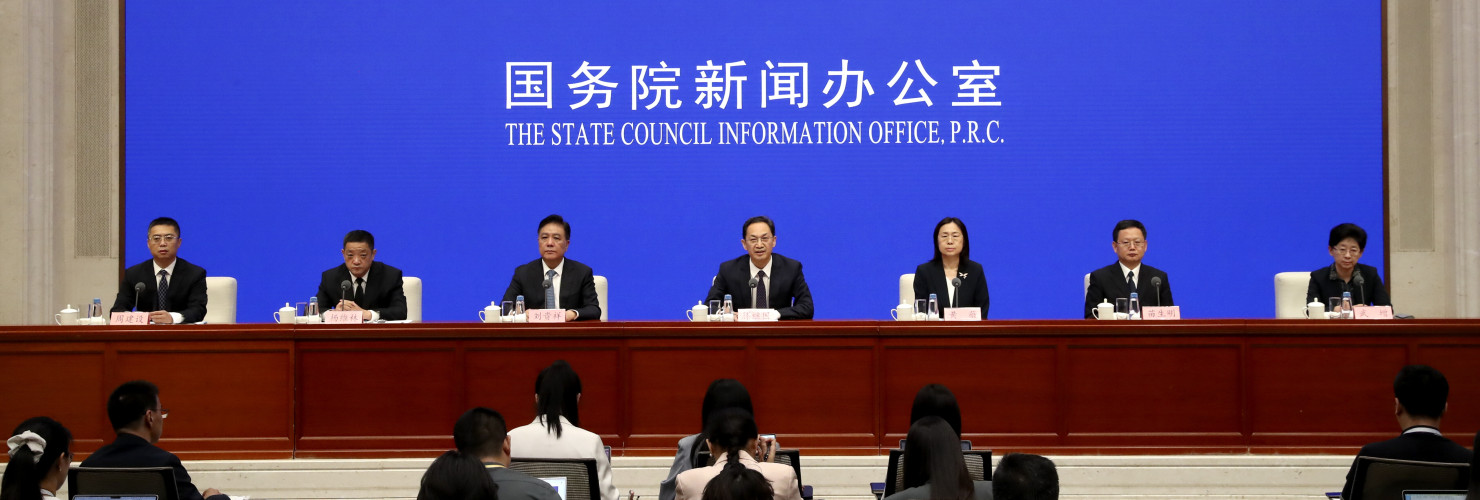
Beijing has taken steps to better protect Chinese overseas investments and deter foreign governments from imposing restrictions on Chinese investors – just as the EU mulls a tougher de-risking approach that could lead to greater scrutiny of Chinese projects in Europe. The State Council’s new regulations on outbound investment, which will come into force on July 1, cover Chinese companies and individuals, and a wide range of investment activity beyond initial investment. They reinforce existing export controls on goods, technology, services and related data, and formalize Chinese countermeasures that can be used in response to foreign trade and investment barriers, including blacklisting foreign individuals or organizations, and trade and investment bans.
By placing these measures on a firmer legal footing and embedding them within institutionalized security review, monitoring, and investigation processes, China is creating a framework with major implications for the EU and its companies. Not only do the new regulations limit the EU’s ability to challenge Chinese retaliation as unlawful, they also enable Chinese authorities to respond to trade and investment restrictions in a more systematic and efficient manner, rather than through ad hoc measures. As a result, EU policymakers and business leaders will increasingly need to assess and incorporate the risk of Chinese retaliation into decisions about Chinese investment plans. Restricting or rejecting projects could now trigger a coordinated response from Beijing.
Against the backdrop of intensifying global competition and geopolitical risks, Chinese officials described the regulations as a “milestone” in the development of China’s outbound investment regime. Chinese companies are, for example, investing in electric vehicle and battery production across the EU, while Brussels and national governments are debating the imposition of conditions to ensure the use of local labor and content, or to secure technology transfer. Beijing is not making European efforts to balance the economic benefits of inward investment from China with concerns over economic security, industrial competitiveness and strategic dependencies any easier.
“China’s institutionalization of retaliatory and coercive tools in the outbound investment regulations formalizes and regularizes its actions. It also consolidates Beijing’s ability to counter Europe’s de-risking efforts. While the wording of the regulations gives Chinese authorities flexibility in implementation, the importance of protecting China’s economic security interests will remain paramount.”
Sophia Pradels, Analyst, MERICS
Media coverage and sources:
- Chinese government website (CN): 国务院关于对外投资的规定 (State Council Regulations on Outbound Investment)
- Chinese government website (CN): 司法部、国家发展改革委、商务部负责人就《国务院关于对外投资的规定》答记者问 (Briefing by the Chinese Ministry of Justice, National Development and Reform Commission and Ministry of Commerce on the State Council Regulations on Outbound Investment)
- State Council: China unveils regulation on outbound investment
- Bloomberg: China Tightens Outbound Investment Rules in US Tech Rivalry
METRIX
11,300
This is the number of German-developed patents registered between 2000 and 2022 that are controlled by Chinese entities, according to a study by the German Economic Institute (IW) commissioned by the Bertelsmann Foundation. This represents only about 6% of the 189,000 patents now in the hands of foreign organizations or individuals, well below the 30% controlled by the United States and the 11% held by Switzerland. But with the IW noting that China held “almost no” German-developed patents in 2000, the findings do show the speed with which China has become a major holder of German intellectual property, narrowing the gap with longer-established trading partners. Around a third of Germany’s 650,000 patents from the period are in foreign hands. (Source: IW)
TOPICS
China’s export control researchers eye technology as they move on from rare earths
The vulnerability of European efforts to encourage high-technology transfer from China has been highlighted by a proposal from Chinese government advisors to expand Beijing’s export controls. A recent paper in the Bulletin of the Chinese Academy of Sciences (CAS) names 23 technologies as requiring restrictions most urgently, including several that Brussels wants Chinese firms to bring to Europe in exchange for market access: core solar-cell technology for next-generation photovoltaics; high-grade silicon steel production for electric motors; cerium-based magnets and 3D printing for advanced manufacturing; satellite quantum communication for ultra-secure data transmission; and synthetic biology techniques to develop innovative medicines.
Ominously for Europe, the recommendations from Xianke Peng of the Institute for Chinese Development Strategy of Engineering & Technology and five other experts from state-sponsored think tanks capture the mood in Beijing. Peng has downplayed the paper as nothing more than an academic exploration, but the Chinese government already has the regulatory architecture needed to broaden export licensing requirements and has shown an increasing willingness to translate expert recommendations into policy. Several other papers published in CAS Bulletin helped lay the groundwork for China’s 2025 restrictions of rare-earth exports. Peng’s paper – no longer publicly accessible – belongs to a cluster of advisory publications now focusing on technology.
“Beijing policy circles see global innovation networks as instruments of national power and are exploring ways of managing them accordingly. Europeans that still assume technology cooperation with China is primarily a commercial question would do well to get hold of the papers Beijing's policymakers are reading.”
Jeroen Groenewegen-Lau, Lead Analyst, MERICS
Media coverage and sources:
- CAS: Selection framework and empirical research of restricted export technology
- SCMP: China team drafts ‘comprehensive’ sanctions list on 63 sectors to preserve technology
- Andersen Institute: China’s Critical Mineral Export Controls
- MOFCOM (CN): 公布对部分中重稀土相关物项实施出口管制的决定 (Decision on the Implementation of Export Controls on Certain Medium- and Heavy-Rare-Earth-Related Items)
- CAS (CN): China’s rare earths trade flow analysis: Trade patterns and strategic insights
Xi grants North Korea his first official visit in 2026 – while high-level meetings with the EU are being cancelled
In an effort to rebalance relations with North Korea in response to closer ties between Pyongyang and Moscow, Xi Jinping met Supreme Leader Kim Jong Un in the North Korean capital on 8-9 June. This was Xi’s first foreign trip this year, his first visit to Pyongyang in seven years – and an all-too apparent attempt to reaffirm North Korea’s unique status. Meanwhile, China cancelled two high-level diplomatic meetings with EU officials, according to a report – a clear signal that, while China wants to demonstrate its alliance with North Korea, it sees relations with the EU set to become more strained.
Beijing’s official readout emphasized China’s unwavering support for its neighbor North Korea, the close ties between the two countries’ leaders, political parties and citizens, as well as the mutual commitment to expanding "pragmatic cooperation in trade, agriculture, construction, science and technology and healthcare."
Since signing the North Korean-Russian Treaty on Comprehensive Strategic Partnership in 2024, the long-isolated Kim regime has been able to project new strength, buoyed by expansion of its heavy industry linked to military cooperation with Russia and an international environment less constraining than in recent years. Having rejected US President Donald Trump’s overtures for new negotiations over denuclearization in late 2025, Kim announced on 4 June that the regime would enhance "the state's nuclear forces at an exponential rate". But the symbolic value of Xi’s visit should not be underestimated. Despite his newfound confidence, Kim still needs the support of China.
“North Korea’s nuclear weapons and relations with Russia are the cornerstones of Pyongyang’s ‘strategic autonomy.’ But Xi’s visit to North Korea is a reminder that the Kim regime still needs China as an economic and security partner even as ties between Moscow and Pyongyang are strengthening further.”
Aurelio Insisa, Senior Analyst, MERICS
Media coverage and sources:
Beijing’s hukou reform ambitions rise as China’s gaokao numbers drop
One reason for the Chinese government’s new sense of urgency about hukou reform – to provide migrant workers and their families access to schools and other public services in their current place of residence rather than in their hometowns – has become apparent amid a significant decline in the number of high-school students taking the national college entrance exam. According to the Ministry of Education, the number of “gaokao” candidates decreased by 450,000 to 12.9 million in 2026, a stark reminder of how demographic pressure – and grim job prospects – threaten the steady stream of university graduates that has underpinned China’s economic success in recent decades.
With the 2025 birth cohort only about half the size of the group of 16 million Chinese now reaching university age, keeping the supply of graduates flowing is a key challenge for Beijing. One obvious source of students is China’s rural-urban migrant population of 358 million. The State Council’s May guidelines are meant to put more pressure on cities to implement hukou reform, for example by expanding primary and junior high school places for migrant children and easing their access to senior high schools. But it remains unclear whether in practice they will also get the right to sit the gaokao where they live.
“The recent hukou guidelines are ambitious. With gaokao numbers falling, Beijing sees a major job-market problem rapidly approaching. If hukou reform works out, it could help ease China’s looming shortage of highly qualified labor.”
Alexander Davey, Analyst, MERICS
Media coverage and sources:
- Reuters: Fewer Chinese teenagers register for tough university entry exam
- National Bureau of Statistics: Statistical communiqué of the PRC on the 2025 national economic and social development
- Chinese government website: State Council on Promoting the Provision of Basic Public Services in Places of Permanent Residence Implementation Opinions
MERICS CHINA DIGEST
China bans four New Zealand MPs over Taiwan visit (BBC)
Following their trip to Taiwan in May, four New Zealand Members of Parliament were banned to travel to China for one year. This is the first time that Beijing retaliates beyond rhetoric against New Zealand’s regular exchanges with Taiwan. According to the Chinese embassy, an official apology would lift the restrictions. The MPs in question, however, consider the ban as foreign interference and refuse to apologize. (2026/06/04)
China restructures Taiwan Affairs Office (AsiaToday)
The government in Beijing recently restructured the State Council’s Taiwan Affairs Office by renaming the 12 functional bureaus and establishing one additional department. The new 10th Bureau is exclusively designated for overseeing education and employment for Taiwanese residents in mainland China. It is part of a larger effort to attract young talent and skilled professionals to the mainland. (2026/05/29)
Young Chinese are learning about the Tiananmen protest in unexpected ways (Washington Post)
Despite China’s highly sophisticated internet censorship, traces of the Tiananmen massacre still surface from time to time in unexpected ways and trigger discussions, particularly among younger Chinese. A recent example are reports about US figure skater Alysa Liu and her Chinese parents who fled to the US after the 1989 protests. The case sparked renewed interest in the crackdown of the protests among young netizens on the mainland who learned about the incident for the first time. (2026/06/04)
Xi Jinping’s right hand man Cai Qi becomes head of Central Party School (Reuters)
Cai Qi’s appointment as head of the Central Party School suggests that he might be Xi’s most trusted ally among the current top leadership. As member of the Politburo Standing Committee and Xi’s de facto chief of staff, Cai is one of the most powerful officials in China. The position as head of the Central Party School had served as a stepping stone to both Xi Jinping and Hu Jintao in the past. While 70-year-old Cai will probably not climb up much further in the hierarchy due to his age, the appointment signals the level of trust in him by the top leadership. (2026/06/05)
Chinese researchers develop autonomous drone swarms (SCMP)
A team of Chinese scientists has developed a new algorithm that allows drones to act autonomously even when communication to drone pilots or vision is blocked. Unlike conventional drones, the new algorithm can allegedly distinguish between friend, enemy or terrain. Large drone swarms could therefore independently scan vast areas and eliminate targets within seconds. (2026/05/30)
US companies prefer China’s DeepSeek over pricey Silicon Valley AI (SCMP)
Chinese artificial intelligence start-up DeepSeek replaced its more expensive US rivals OpenAI and Anthropic at the top of a major US business spending index. DeepSeek’s rising popularity is part of a broader trend among US companies to use more affordable open-source models that offer services at a fraction of the cost compared to proprietary models. (2026/06/04)
Li Qiang warns against excessive investment in future industries (Trivium)
At a State Council meeting on China’s future industries initiative, Premier Li Qiang encouraged local governments to invest into future industries. At the same time, he voiced concerns about herd-like investment behavior and warned against excessive investment into just a small number of industries, which leads to overcapacities and waste in sectors including EVs, solar, and embodied AI. However, issuing warnings might not be enough to solve structural issues in investment incentives for local governments. (2026/06/08)
Companies in China receive eight times more subsidies than OECD average (Financial Times)
A new OECD report finds that Chinese companies in key sectors such as automotive, shipbuilding and solar receive eight times more state support on average than their competitors in OECD countries. The report also attributes around 60 percent of Chinese companies’ gains in global market share during the past 20 years to these subsidies. The researchers’ concerns about unfair competition might fuel further defensive measures by the EU as well as retaliation by Beijing. (2026/06/01)
First female becomes financial regulator’s Party Secretary (Reuters)
Veteran banker Ding Xiangqun is the first female to be appointed Party Secretary of the National Financial Regulatory Administration (NFRA). After several high-ranking financial officials were removed from their positions in recent months based on corruption charges, Ding’s appointment is meant to stabilize the NFRA. China’s top financial regulatory body overseas a financial sector worth $79 trillion. (2026/05/29)
Acknowledgements
We would like to thank MERICS interns Pau Garcia and Clara Groth for their contributions to this issue of MERICS China Essentials.
Content