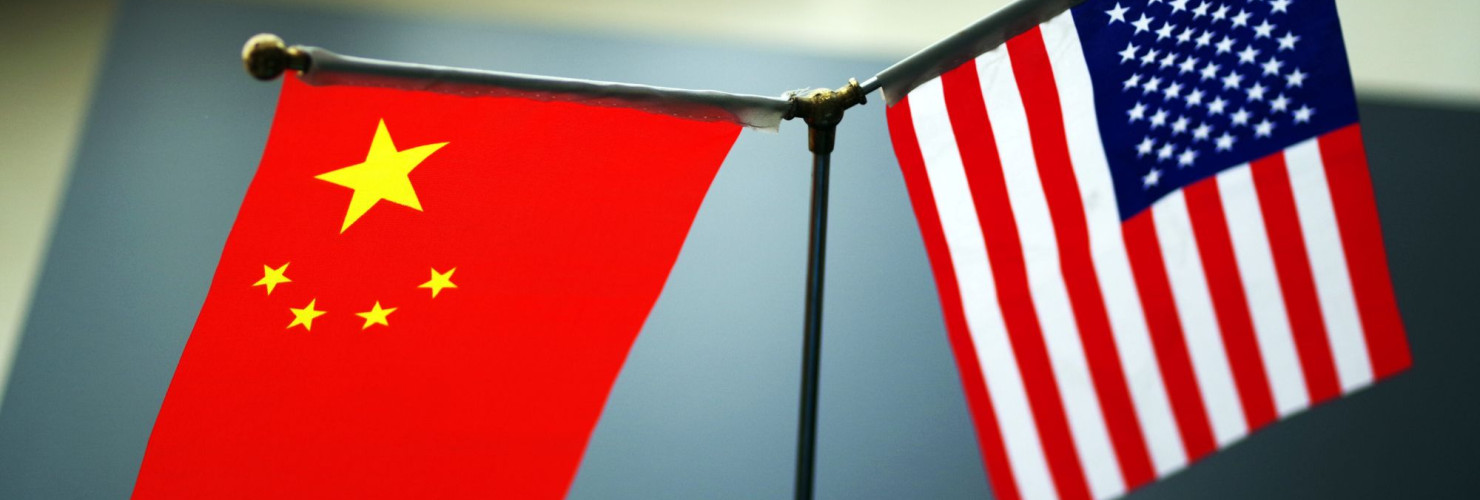
picture alliance/dpa/HPIC | Da Qing
Kommentar
Complicating security in Asia, Trumps sees China as a contingent, not a constant competitor
Washington now sees military strength primarily as a way to underpin dealmaking with Beijing. Claus Soong argues China is already exploiting the regional space this new restraint provides.
The second Trump administration wants to narrow US-China relations from an expansive geopolitical rivalry to a primarily economic one – and seems willing to accept that doing so entails Washington’s retrenchment from the liberal global order it built on multilateralism and a network of close allies. With Trump’s “Donroe Doctrine” extending “America First” to US domination of the Western Hemisphere, US commitments elsewhere are now far from certain, having become negotiable with the right “deal” on offer, especially one on economic terms.
Trump 2.0’s National Security Strategy (NSS) of November 2025 and National Defense Strategy (NDS) of January 2026 have created openings for challengers outside of the Western Hemisphere, arguably giving China space to pursue regional hegemony in Asia. There are signs that Beijing is already testing the boundaries of Washington’s new stance – and that US allies in the region are taking note. At the very least, the shift will allow China to advance its “G2” narrative, which envisions a world led by China and the US as the two equal Great Powers.
The US’ new National Security Strategy strikes a noticeably less severe tone towards China
The new NSS strikes a noticeably less severe tone towards China than its predecessor, published by US President Joe Biden, with Beijing no longer framed as the main strategic competitor in the way it once was. The NSS of 2026 pledges that the Trump administration “will rebalance America’s economic relationship with China” – very different from NSS of 2022, in which the country was described as “the only competitor with both the intent to reshape the international order” and as “seeking to erode US alliances in the region and around the world.”
The tone of US strategic goals under Trump 2.0 has shifted from an active approach aimed at geopolitically containing China to a more reactive approach focused on competing with China economically. Rather than stressing China’s role in challenging the American-led global order, the new NSS states that economics is “the ultimate stakes” for the US in the Indo-Pacific and in its competition with China. Washington now sees China as no more than a contingent competitor in Asia – one the US can safely choose to challenge selectively, should the need ever arise.
This shift from an active to a more reactive role was reinforced by the NDS at the start of 2026. It states that the goal of military strategy under Trump 2.0 is not to confront China in the Indo-Pacific, but to “establish a position of military strength from which President Trump can negotiate favorable terms for our nation.” The NDS does not specify in which areas the president might seek advantage, or what concessions he might be willing to offer. But this does not rule out that US commitments to Taiwan, Japan or even South Korea could be put on the table.
Trump 2.0 wants to move away from outright competition
True, the NDS is clear about the need for US “military strength” to deter China. But it also talks of the need to avoid “unnecessary conflict”, a clear signal that Trump 2.0 wants to move away from outright competition. This complicates deterrence by blurring the thresholds China must respect to avoid provoking the US action in support of its allies in Asia. But some of Beijing’s recent moves suggest that China is already exploiting the openings created by this lack of clarity – and testing the boundaries of how broadly the US defines “unnecessary conflict.”
China is already signaling that its army could operate well into the Pacific and challenge US dominance there. Its military exercises “Justice 2025” at the end of last year was one of the People’s Liberation Army’s (PLA) largest Taiwan-centered military drills since 2022 – and the first one to fire missiles that landed close to the 24-nautical-mile zone at which Taiwan’s jurisdiction begins. While the live-fire exercise was meant to demonstrate the PLA’s ability to blockade and force the surrender of the contested island, Trump downplayed it as “nothing” to worry about.
Similarly, China was able to use a spat to test Trump 2.0’s support of Japan. Tensions between Beijing and Tokyo spiraled after Japanese Prime Minister Sanae Takaichi said in November that any conflict over Taiwan could constitute a "survival-threatening situation" for Japan, triggering a military response. Beijing condemned her “interfering in China’s domestic affairs” and retaliated by cutting commercial flights and increasing the screening of rare-earth exports. Washington voiced only general support of US-Japan ties and Trump reportedly told Takaichi to de-escalate the dispute.
Washington’s muted support for Taiwan and Japan in the face of pressure from Beijing suggests that China is successfully exploiting recent openings to advance a narrative of a more equal US–China relationship. Given Trump’s desire for deals on “favorable terms”, Beijing also appears emboldened to weaken Washington’s resistance to its regional goals. it is testing whether Washington’s new strategic restraint might indeed translate into reduced military responsiveness, opening up new space for China to assert its power to reshape the international order.
Autor(en)

Ehemaliger Analyst
Autor(en)
Ehemaliger Analyst