
picture alliance/dpa | Matthias Balk
Comment
Towards a conditioning of Chinese greenfield investments in the EU
Imported parts and labor limit jobs, technology spillovers and supplier opportunities. Andreas Mischer says stronger EU-wide conditions are needed to guarantee real economic gains.
Chinese greenfield investment in the EU tripled to EUR 5.9 billion between 2019 and 2024, as an increasing number of electric vehicle (EV) and EV-battery makers from China set up production facilities across the region to serve the European market. Companies that build facilities from scratch on “empty ground” are usually credited with boosting local economies and spreading technologies. But recent Chinese projects show that these benefits cannot be taken for granted – and that the EU needs to act to make sure that investments from China in European production facilities truly benefit the region.
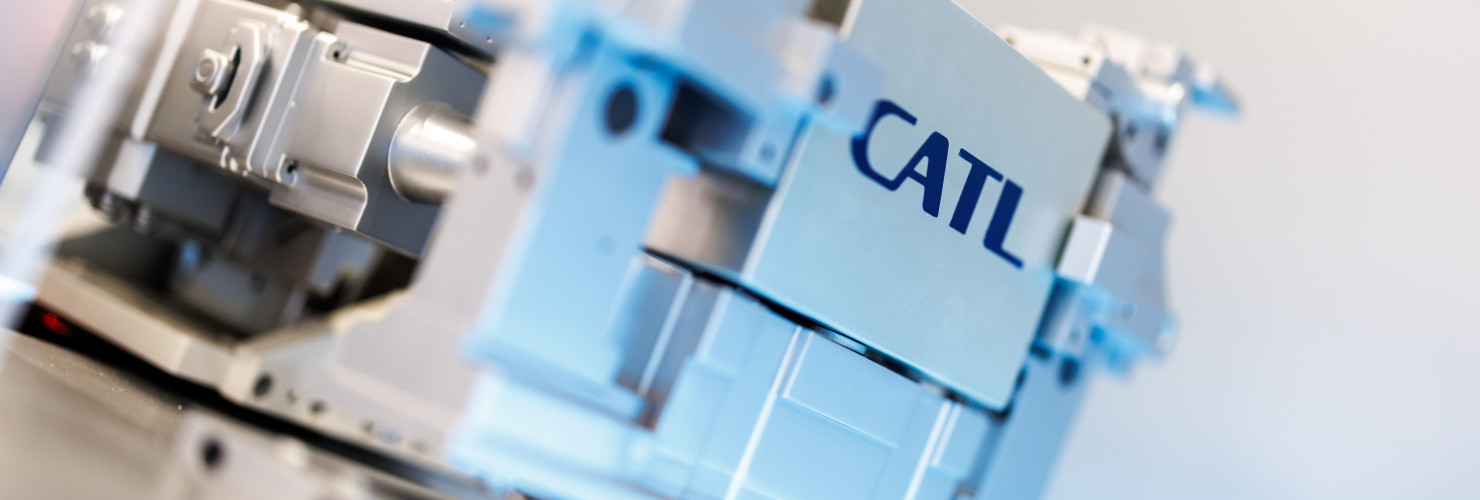
Chinese EV makers Chery and Leapmotor, for example, don’t build cars from scratch at their respective plants in Spain and Poland, instead importing “semi-knockdown kits” of partly assembled products that just require final assembly locally. And battery maker CATL is planning to bring in 2,000 staff from China to construct its new plant in Spain, with local officials saying CATL has been unwilling to share information. With components and manpower coming from outside the EU, these factories may not create much local value in terms of jobs or so-called technology spillovers or give many opportunities to local suppliers. Also, dire working conditions in some EV battery factories are an underappreciated problem.
Economic security: the EU is upping its game
The EU already has some powerful tools to prevent such risks by regulating foreign direct investment (FDI). But as each member state makes its own decisions as it competes for foreign investors, their application is uneven. The EU’s FDI screening regulation establishes a legal framework for examining projects and member states can attach conditions to tools like state-aid, multi-country Important Projects of Common European Interest (IPCEI) and public procurement, but are not required to. A study recently found that CATL and South Korean LG Energy received EUR 900 million in state aid from Hungary and Poland with no strings attached.
But there are signs that the EU will up its game. EU Trade Commissioner Maros Sefcovic and Danish Foreign Minister Lars Rasmussen in October suggested making Chinese investment conditional on things like technology transfer. While the latter remains a non-starter for several member states, their remarks did signal a further shift towards ensuring investments benefit Europe more. In early December, the European Commission presented a new joint communication on strengthening the EU’s economic security, shifting the EU from identifying risks to actively reducing them. Looking ahead, the EU is set to present its Industrial Accelerator Act, which will likely include some form of local content rules.
Conditioning of greenfield FDI is key to creating business opportunities for local suppliers
Stronger conditions and EU-wide minimum requirements for greenfield FDI are crucial. First, concrete local-content targets in strategic segments like the EV value chain are necessary to create business opportunities for local suppliers. These targets may be more useful at the supplier than the original equipment manufacturer (OEM) level, as they would otherwise be too easy to reach through the localization of a few high value-added components like batteries. By focusing on the supplier level, the EU would be able to ensure a broader range of products in the OEM’s supply chain are made locally, creating more widespread economic benefits.
Second, requiring Chinese OEMs to co-fund local research partnerships or to observe minimum local research and development (R&D) spending could generate technology spillovers – the kind that CATL’s new project in Spain could easily generate. Third, social conditionalities could include requirements to strengthen worker rights, ensure local hiring, and create local dividend funds, earmarked for spending on local infrastructure and housing, education and training. Such measures could, for example, improve working conditions in Hungary’s battery industry, in which companies often take advantage of loose labor rules.
These conditions could be implemented in two ways. The moderate option would be to apply them as minimum EU-wide requirements for access to public support like state aid from one member state or IPCEI funding from several. But if this were to prove insufficient to secure local benefits, the EU could consider converting them into binding conditions for allowing investments. This would be politically more difficult and would likely require – among other things – a more comprehensive reform of FDI screening than currently underway.
Cars, high-end machine tools, or aerospace: China still needs the EU market for growth
Either way, China’s government and Chinese companies would not be happy. Beijing recently imposed export control rules requiring domestic industry to apply for licenses to move batteries and battery production technologies out of China, making the sharing of technology with foreign partners even more delicate. But the EU need not be fainthearted in placing more stringent conditions on FDI and facing the ire of China. The EU’s automotive market is the third largest in the world – and this fact gives the EU leverage that it should make use of.
With the US car market essentially closed off, Chinese EV makers cannot afford to forgo the EU market if they want to keep growing. In addition, if China were to respond aggressively to Europe’s conditioning of greenfield investment with stricter export controls, the EU could take a page from the playbooks of China and the US. In sectors like high-end machine tools or aerospace supply chains, Europe retains a leadership position in manufacturing strategically crucial advanced goods that China would be loath to lose access to. Europe needs to step up.
Author(s)

Analyst
Author(s)
Analyst