
picture alliance / CFOTO
Comment
China’s overcapacity threatens to reshuffle global industrial bases
China’s overcapacity is the result of its own long-running industrial policies – a situation that is unsustainable in the long run and far bigger than Beijing acknowledges. And China’s strategy of exporting excess goods at bargain basement prices to make up for a lack of demand at home is a huge source of friction between China and its major trading partners. A laissez-faire response risks industrial erosion worldwide. This analysis is part of the MERICS China Overcapacities Monitor. Explore the project here.
China’s overcapacity has been a focus of trade tensions in recent years even though it is the result of more than a decade of industrial policies. Chinese firms are increasingly turning to exports to sell goods that the saturated Chinese market cannot absorb. But instead of focusing on policies to boost domestic demand, Beijing is relying on supply-side measures that support China’s industrial dominance. Sending excess goods abroad means Beijing can continue to ignore its demand-side problems. China’s policies threaten to undercut both developed and developing countries’ industrial bases – huge job losses in the EU are already one result and other areas like ASEAN are even more concerned. To prevent further damage to their industrial bases, governments need to rely even more on trade defense instruments and to develop more domestic capacity in critical sectors.
Overcapacity is a result of long-running policies aimed at establishing China as a global industrial leader. Policies such as Made in China 2025, launched in 2015, have accelerated capacity growth. This industrial push intensified during the US–China trade and technology war, initiated the end of Trump’s first presidency, and again during the Covid pandemic, as fixed-asset investment surged while household consumption weakened sharply.
To achieve its objective, Beijing relies on a broad set of policy tools that in several cases have been found to contravene international trade rules. These include vast subsidies—estimated at around 4.5 percent of GDP by the IMF, as well as preferential loans, tax breaks, land concessions, and other tariff and non-tariff measures. In parallel, China has invested heavily in logistics, digital infrastructure, and transport networks, creating an ecosystem designed for industrial expansion.
Vicious price wars have driven many Chinese firms to make losses
Yet these supply side measures have not addressed the persistent pessimism among consumers. Unlike business confidence, consumer confidence has not rebounded from the collapse experienced during Covid. Worried by the poor economic outlook, consumers have opted to save rather than spend, and household borrowing remained particularly weak in 2025 despite stimulus from Beijing.
In China, ever-growing supply met with stagnant demand has set the stage for vicious price wars that have driven many firms to make losses – in 2025, 24% of industrial firms. In a market economy, loss-making companies would typically exit the market. In China, however, provincial governors are evaluated in part on their ability to maintain employment and growth, and these firms are kept afloat through easy access to credit. The share of medium- to long-term loans flowing to industrial firms reached around 30 percent in 2024, twice that of the previous decade, highlighting the role of the financial system in sustaining production.
Chinese companies then export their overcapacities at a very low price
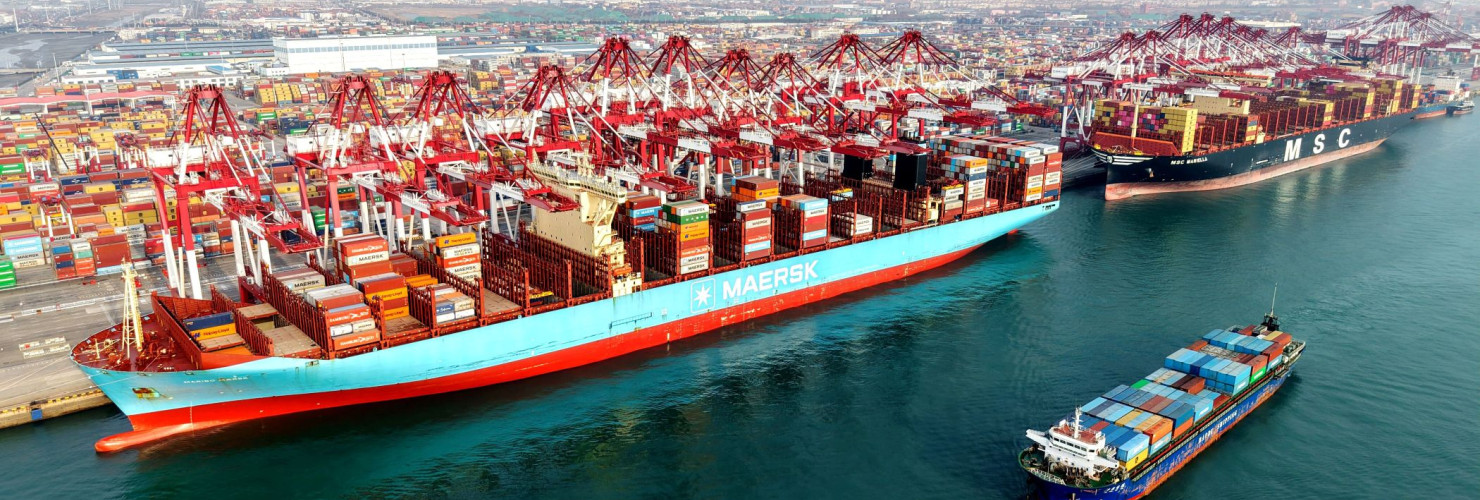
Exports have become one way out of the predicament for China. China’s global trade surplus hit a new record in 2025 at USD 1.2 trillion, a rise of 5.5 percent over 2024. Growing inventories have pushed its firms to redirect excess supply abroad, transmitting domestic price pressure into global markets and driving margins lower. These exports are unevenly distributed across markets. As access to the US market has declined due to tariffs, trade restrictions, and broader decoupling trends (after an 11 percent year-on-year increase in Q4 2024, exports contracted by 28 percent on the year in Q4 2025), China has redirected shipments toward more open markets, particularly ASEAN economies and, to a lesser extent, Latin America and the European Union. The rise in China’s exports has already contributed to significant job losses, with the EU alone losing up to 500 manufacturing jobs per day.
Job losses aside, isn't access to cheap goods an advantage?
Critics of the "overcapacity" narrative raise fair questions: Aren't cheap Chinese goods beneficial for consumers? Wouldn’t Chinese green technologies accelerate the climate transition? Isn't China simply reproducing what Germany and Japan did before?
Each of these arguments has merit, but none fully captures the problem:
- Lower prices do benefit consumers in the short term. But the picture is more complex than a simple flood of cheap goods: In several sectors, including electric vehicles, Chinese firms operate on margins made possible only by state support. It allows them to outlast competitors who face harder financial constraints, or a fiduciary responsibility to shareholders, but which lack the kind of government support that Chinese firms benefit from.
- The world does need green technology at scale. But rising demand does not eliminate overcapacity. Chinese solar manufacturers recorded losses in 2024-25 despite record exports, a clear sign that supply exceeded what even global markets can absorb. More broadly, the energy transition requires innovation, and excessive market concentration reduces competition and leads firms to rely on their short-term dominant position, reducing incentives to make long-term investments, such as in R&D.
- Export-led growth itself is not the issue. Large economies produce and export more. The difference lies in economic structure: in market economies, unprofitable capacity is shut down and capital reallocates. In China, state-directed lending and an ideology that treats productive capacity as strategic power, or even just as a source of jobs, prevents this adjustment.
Beijing's response will not lead to sufficient results
To tackle these issues, including the fiscal burden of negative returns on investment due to ever smaller profit margins and the weakening of incentives for innovation - Beijing has launched an "anti-involution" campaign. Far from signaling a retreat from industrial policy, however, the campaign seeks to manage overcapacity while preserving China's strategic dominance. While the approach varies by sector, it remains supply-driven: price floors and capacity cuts in solar, export controls in batteries to limit “technology leakage,” forced consolidation in electric vehicles, and tighter capacity replacement rules in steel and chemicals. Despite these efforts, local government behavior, notably, continues to reinforce overcapacity. In metals, chemicals, and automotive manufacturing for example, margins remain low and volatile, and profitability has failed to recover despite repeated policy campaigns.
In the absence of demand-side reforms supporting household consumption, supply-side measures alone are unlikely to deliver lasting adjustment. Moreover, as long as excess output can be redirected abroad, Beijing faces limited pressure to absorb the social costs of adjustment. The record trade surplus in 2025 illustrates how external markets continue to act as a release valve for domestic imbalances.
For advanced economies, the stakes are high. High levels of loss making were bad news for China when it made up a very small share of global manufacturing. Now that China is 28% of global manufacturing value added, this is a problem for the rest of the world too. If countries fail to respond effectively, the result will be lasting damage to industrial bases built over decades. Developing economies face the same threat: being undercut before their industries can mature.
Addressing this challenge requires bold and targeted policy action: timely deployed trade defense instruments to protect from distortions at home, industrial strategies that strengthen domestic capacity in critical sectors, and coordinated approaches among like-minded partners. The objective is not to replicate China’s state-led model, but to enable firms to compete on a level playing field. Fragmented responses remain inadequate against a challenge that is systemic in nature.
Author(s)

Visiting Fellow

Head of Program
Author(s)
Visiting Fellow
Head of Program