China Overcapacities Monitor

China Overcapacities Monitor

China’s industrial overcapacity is showing up first at home, then abroad. Investment in sectors that the government has deemed a priority, such as electric vehicles, machinery and pharmaceuticals, remains high relative to demand, pushing prices down, compressing margins, and raising the share of loss-making firms. Beijing supports these sectors as part of its pursuit of industrial self-reliance and global leadership in strategic industries. Credit support and local government incentives often promote excess capacity even when demand is low. 

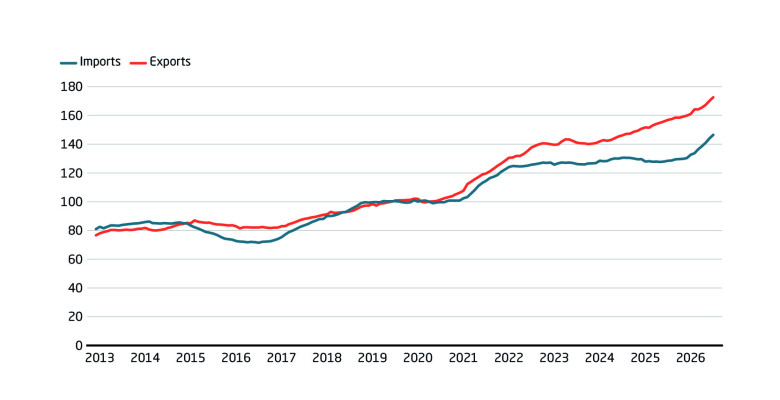
Short of domestic buyers, producers increasingly rely on exports to soak up output, intensifying competitive pressure on producers in the rest of the world. Since 2021, Chinese exports have increased by 40 percent, while imports have grown by only 22 percent. Third countries cannot match the level of public support and domestic competition that stems from China. This widening trade surplus, combined with the closing of the US market, is then threatening their companies’ sales domestically and abroad. A laissez-faire approach could lead to the reshaping of the industry landscape worldwide.  

This dashboard tracks these dynamics across sectors. It is designed to help policymakers and businesses monitor which sectors are most exposed by this excessive competition from Chinese companies and how trade patterns are changing. Along with the analyses published with each update, readers can select a graphic to open the related explanation.
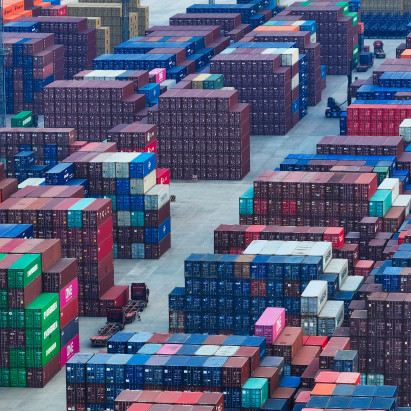
Containers are seen at the Port of Nanjing in Nanjing, Jiangsu province, China, Aug 6, 2024.

Evolution of investments

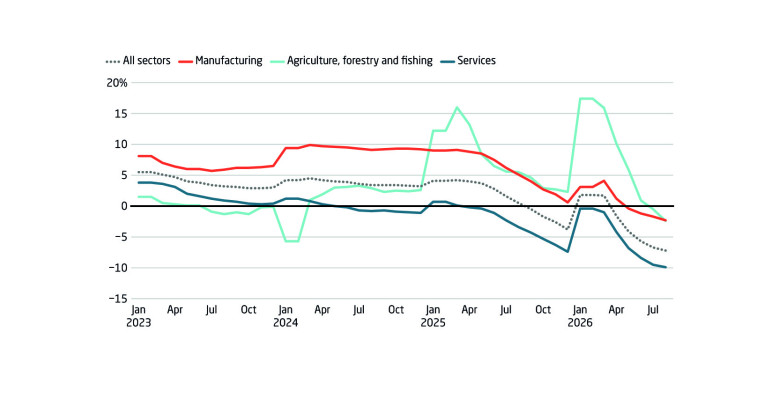
After leading investment growth, investment in manufacturing has turned negative

General pessimism is affecting investment in China’s manufacturing sector, which until recently has been largely protected from the domestic slowdown. After a strong and temporary rebound in investment supported by public spending in January and February 2026, investment in all categories is now below that of 2025. This shows that companies have cut investment due to the domestic economic slowdown, driven notably by the real estate crisis. In parallel, local governments have been limiting support to firms as high debt constrains their finances. Beyond the overall decline in manufacturing FAI, investment is increasingly concentrated in a few strategic manufacturing sectors such as high tech and IT, rail, aerospace and aircraft.

Last update: October 1, 2026

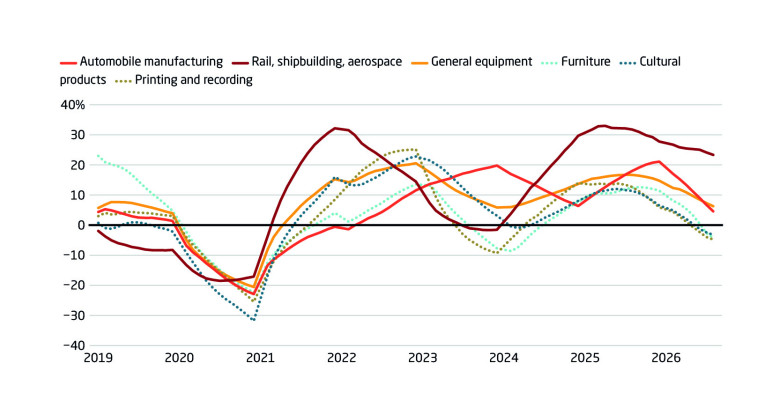
The investment gap between high-priority and low-priority sectors is widening

Despite the overall drop in fixed-asset investment, investment in high-priority sectors has continued to grow year on year since 2021. Beijing has heavily promoted investment in industries such as the auto sector, machinery and rail and shipping sectors. The goal is to foster innovation-driven growth, technological self-reliance and industrial modernization,  key priorities cited in the 15th Five-Year Plan (2026 – 2030), adopted in March. In parallel, increased investment in traditional sectors like textiles reflects that Beijing does not intend to abandon traditional industries, as maintaining employment remains central to Beijing’s social contract with citizens. It also complies with the national security doctrine, which in the name of economic security aims to keep entire supply chains within China.

Last updated: October 1, 2026

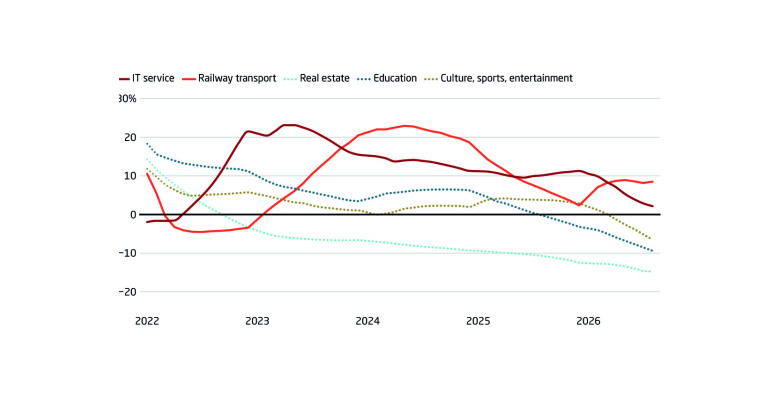
Industry-related services remain a priority for investment support

Within a weak services sector, Beijing is prioritizing investment for services that support industry. This strategy is backed by the 15th Five-Year Plan (2026-2030), which includes the service sector in its section on “building a modern industrial system.” Consumer services, such as education or real estate, have seen a continuous reduction in investment as their domestic prospects remain limited.

Last update: October 1, 2026

Capacity growth

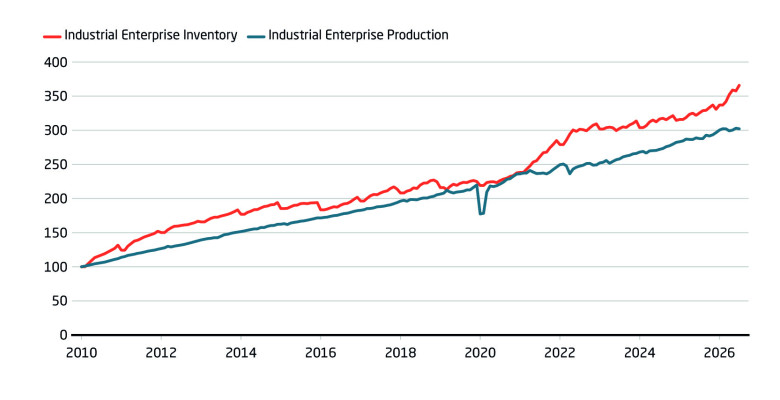
The supply and demand mismatch is becoming acute in 2026

Companies are not reining in excess production. The gap between industrial inventories and production surged in the first half of 2026 despite booming exports. This indicates that China’s industrial production cannot be sold abroad and even less at home. Domestic consumption remains subdued, and overinvestment is still prominent, ratcheting up inventories. Given that companies in China can sustain much longer periods of excessive competition, price wars and loss-making thanks to various forms of state support, their rising inventories and inability to sell will not dampen their exports, but will make exports even more important and further drive down export prices. 

Last update: October 5, 2026

Industrial capacity utilization rate has dropped since Covid

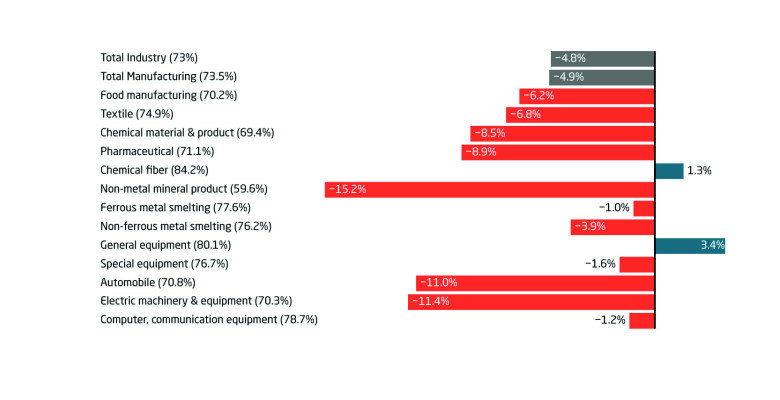
China's industrial and manufacturing capacity utilization rate has yet to recover to its pre-pandemic level. Some of the steepest declines in capacity utilization rates – the percentage that an industry's total potential output is being realized – occurred in the automobile and electric machinery and equipment sectors (11% for both). This is due to overcapacity in China's "new three" industries – electric vehicles, solar panels and batteries – which benefited from substantial state support and have now reached production levels that cannot be absorbed at home. Capacity utilization also declined in the non-metal mineral production and chemical production sectors. These sectors include cement, glass and basic chemical manufacturing, which took a hit following the real estate crisis in 2021-22 that caused demand to plummet.

Last update: October 1, 2026

The latest producer price rise stems from the Strait of Hormuz crisis

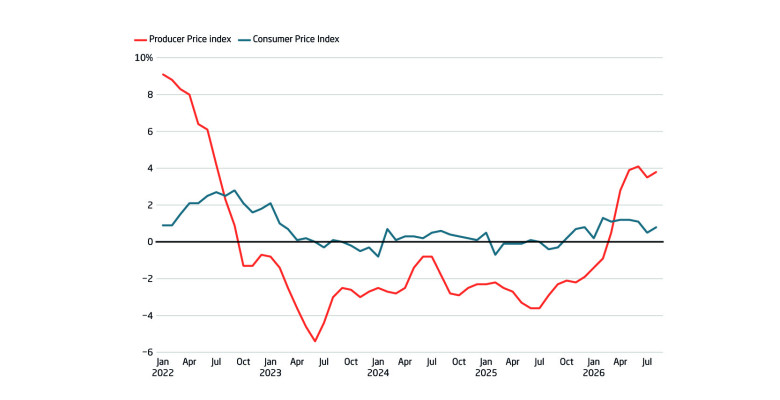
The recent producer-price inflation reflects the increase in commodity prices after the Strait of Hormuz crisis that began in spring 2026. Price increases in oil and gas extraction, fuel processing and chemical raw materials, as well as recent AI-related chip shortages, have been the main drivers of the return to producer price inflation. Such external drivers, however, have nothing to do with China’s domestic economic policy and are not expected to have the more lasting effects of a successful campaign to tackle overcapacities. The same external drivers have also pushed up consumer prices, but this has been offset by an overall decline in food and housing prices, which constitute half of the CPI basket.

Last update: October 1, 2026

Impact on companies’ profits and losses

Loss-making has become common for many Chinese firms

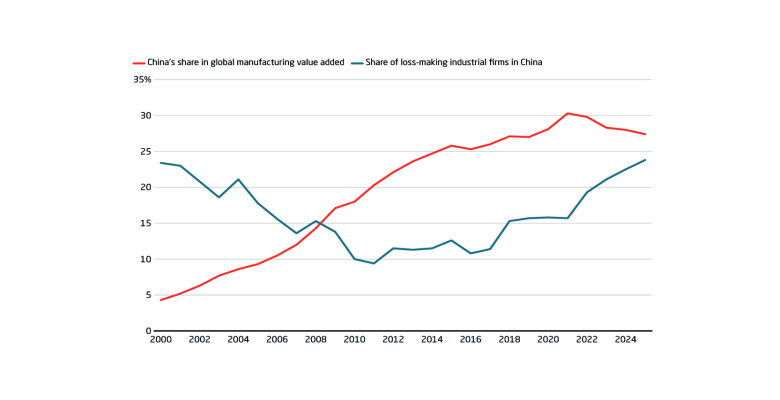
The share of loss-making firms is now higher than in 2000, the year before China’s accession to the WTO.  At a record 23.8 percent, the share of loss-making firms is worsening due to excessive domestic competition – also known as “involution.” This vicious cycle is being fueled by the survival of unprofitable firms propped up by government support, which delays market exits, maintains redundant assets and capacity, and triggers price wars. Affected companies end up producing more without creating real growth. This degree of unprofitability and lack of operational efficiency is breaking regular business cycles and undoing the liberalization reforms of the early 2000s following China’s accession to the WTO and that enabled a trimming down and marketization of the state economy.

Last update: October 1, 2026

Growth in loans to companies did not recede after the Covid influx

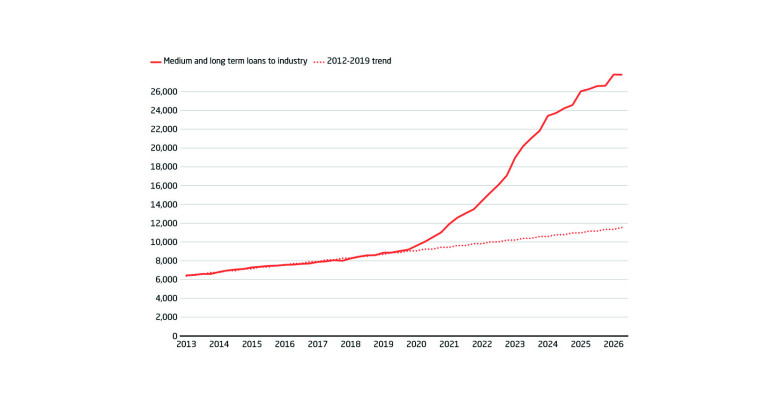
Lending to companies increased during the Covid pandemic, when exceptional support was needed, but continued to increase rather than normalizing afterward. This trend contrasts with the broader slowdown of the domestic economy. In sectors suffering from overcapacity and companies making losses, this sustained increase in loans could delay a much-needed consolidation. On the other hand, if the government were to successfully tackle overcapacity, the loss-makers would have to close without paying back their loans, which could lead to financial instability in China.

Last update: October 1, 2026

Industrial profit margins remain suppressed by overcapacity and involution

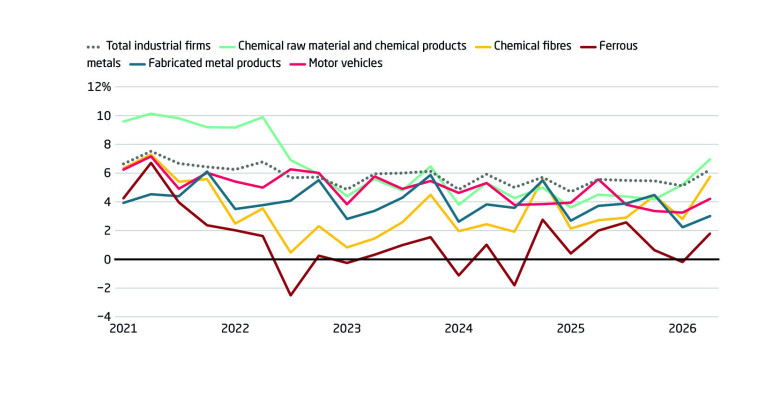
Profit margins are still thin in the chemicals, metals and automotive sectors, despite a slight uptick in the first half of 2026. The improvement is largely due to gains in export- and AI-related sectors, including electronics manufacturing, non-ferrous metals, ships and railways. But this is not a sign of improved demand at home. There was significant decline in consumer sectors and property-related industries, such as furniture, beverages, steel and metals. Even in the auto sector, strong exports of passenger vehicles have not been enough to offset declining domestic sales and increasingly destructive competition.

Last update: October 1, 2026

Domestic consumption and export of overcapacities

Consumer confidence remains depressed

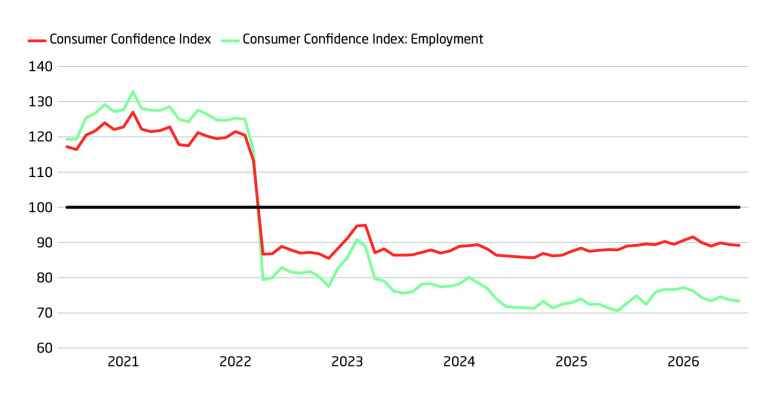
Consumption is not recovering. China’s consumer confidence continues to trend downward, weighing on retail sales. Confidence has been bogged down by the real estate market, whose 2021 crash wiped out household savings. This financial burden restricts household spending and local government budgets. In addition, employment prospects are not improving, especially for urban youth, whose unemployment rate was higher in 2026 than in 2025 and 2024. Together with a weak social safety net, these pressures push confidence down and further incentivize household savings to prepare for hardships.

Last update: October 1, 2026

Trade balance narrows for the first time in three years

The narrowing of China’s trade surplus in H1 2026 reflects the higher price of imports due to international turmoil. After broadly stagnating since 2021, import values rebounded sharply. The increase was concentrated in industrial and technological inputs: machinery and electronics imports rose 28 percent, including a 45.6 percent increase in electronic components, amid surging demand for AI-related hardware. Higher energy prices also inflated the import bill. This therefore does not signal a rebalancing of the economy toward household consumption. The central government has so far shown little willingness to undertake the structural reforms needed to raise household consumption.

Last update: October 1, 2026

Exports of overcapacities are not evenly distributed among regions

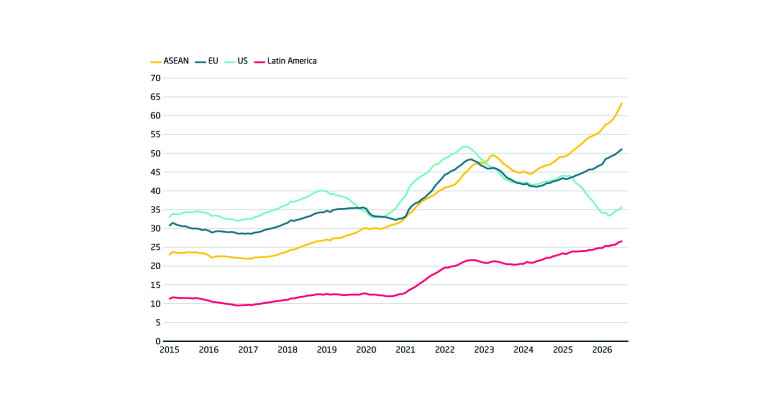
As the US has increasingly closed its market to Chinese goods, China has redirected its exports to other markets. Exports to the EU grew 17 percent in H1 2026 and reached levels unseen since 2022. Exports to ASEAN grew 26 percent, Africa 26 percent and Latin America 13 percent. But China’s relationship with these trade blocs varies. ASEAN’s growing importance reflects deeper regional production networks, with bilateral trade in intermediate goods now accounting for around two-thirds of China–ASEAN trade. Latin America, Brazil and several other regional markets primarily absorb Chinese machinery, electronics and vehicles for domestic consumption and investment, whereas Mexico also imports components for manufacturing and onward export, particularly to the US.

Last update: October 1, 2026


Authors