China Overcapacities Monitor

China Overcapacities Monitor

China’s industrial overcapacity is showing up first at home, then abroad. Investment in priority manufacturing remains high despite weak demand, pushing down prices, compressing margins, and raising the share of loss-making firms. Credit support and local government incentives often keep excess capacity in place.

Short of domestic buyers, producers increasingly rely on exports to sustain output, reshaping the industry landscape worldwide. China’s continuously widening trade surplus shifts pressure onto external markets. With reduced access to the US, China has redirected trade flows to more open markets, including ASEAN and the EU.

This Monitor tracks these dynamics across sectors. It is designed to help policymakers and businesses monitor where price pressure is building, which sectors are most exposed, and how trade patterns are changing. Along with the analyses that will accompany each update, readers can select a graphic to open the related explanation.
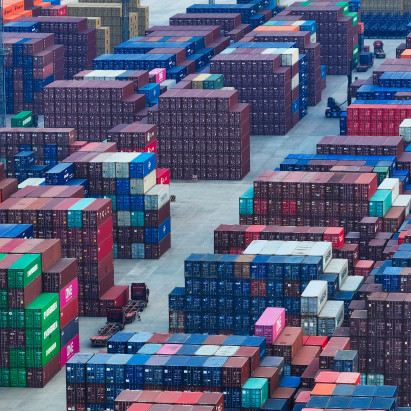
 

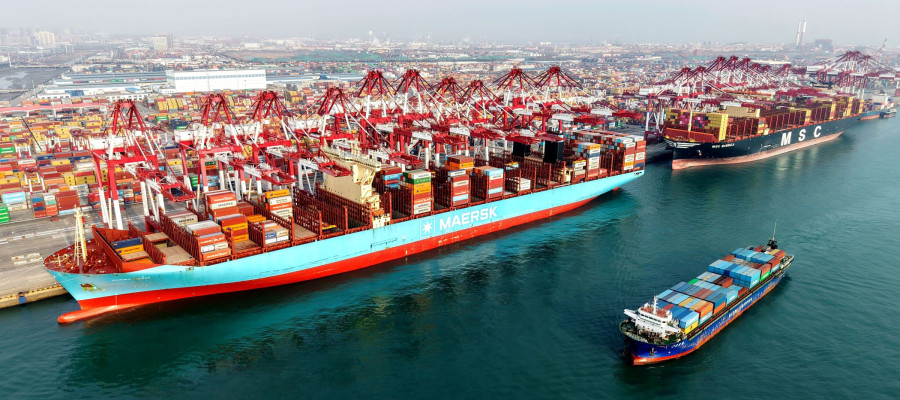
Containers are seen at the Port of Nanjing in Nanjing, Jiangsu province, China, Aug 6, 2024.

Evolution of investments

Investments have remained significantly higher in manufacturing

Hover overHover over/tap the charts to see more details.
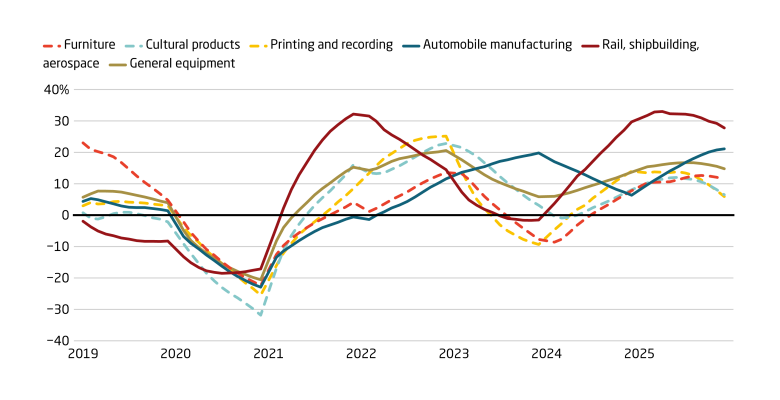
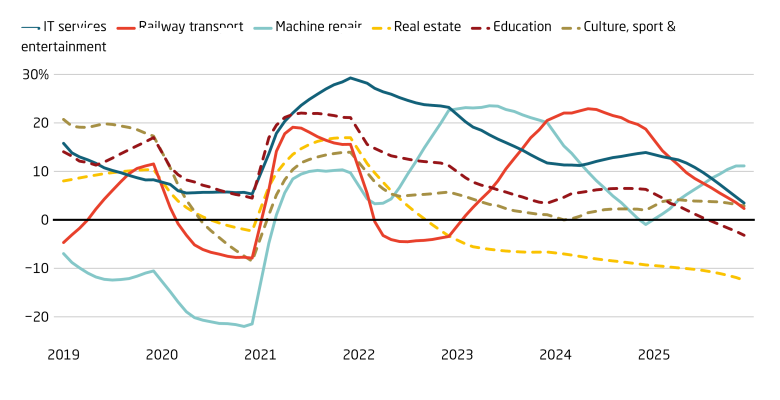
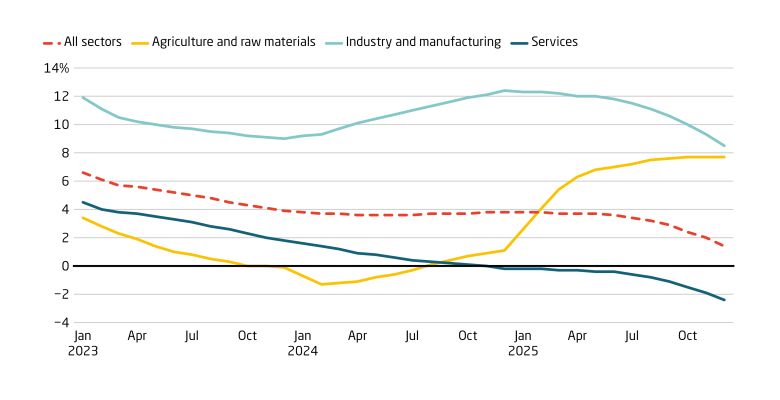
Investments in manufacturing remain significantly higher. Despite the recent sharp slowdown, fixed asset investments have remained significantly higher in industry than in other sectors. This illustrates the emphasis party-state planners place on “the real economy” as they direct more support to manufacturing, even with negative investment growth in services. Overinvestment in manufacturing will mean higher supply while underinvestment in services (and jobs and incomes they generate) spell lagging demand. 

Investment increasingly favors high-priority manufacturing

Hover overHover over/tap the charts to see more details.

Fixed asset investment (FAI) data reveal selective support across sectors, with an emphasis on high-priority industries. China’s industrial policy targets not only high-tech production, but supports more basic industry. Xi Jinping has repeatedly highlighted the importance of “new productive forces” – aimed at technological breakthroughs, industrial transformation, and a more efficient allocation of factors of production – while stressing that this does not mean abandoning traditional industries. In practice, however, recent FAI trends suggest more targeted support for strategic industries like rail, shipbuilding, aerospace or automobile and general equipment over more basic or consumer-oriented manufacturing. 

The state prioritizes investment in services that support industry

Hover overHover over/tap the charts to see more details.

Beijing is directing investment to services that support industry, while others experience disinvestment. Investment in services has been weak in recent years, as manufacturing and the real economy have remained top priorities. But even within services, Beijing draws clear distinctions based on the strategic relevance of a given sector. Those that support the real economy – such as rail services, which sustain demand for train producers, or machinery repair services, needed to upgrade and maintain new production lines – receive more investment, even if growth rates are slowing. In some services, such as for education and real estate, investment has been actively suppressed by recent state policy, including the crackdown on private tutoring and real estate services.

Capacity growth and consumption

The imbalance between supply and demand is growing

Hover overHover over/tap the charts to see more details.

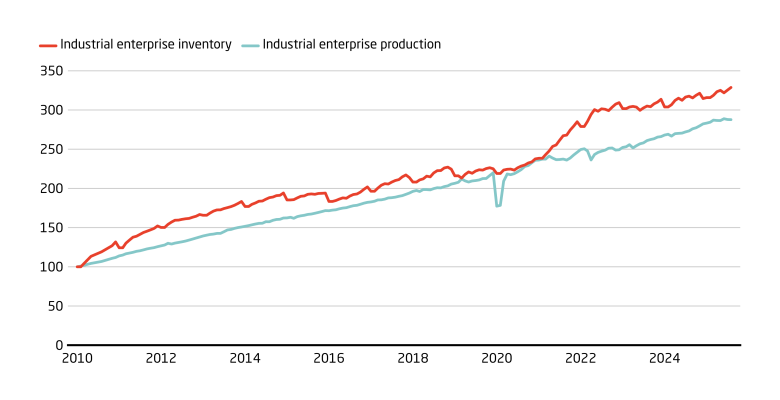
The growing gap between production and inventories illustrates the overcapacity issue. The gap between industrial inventories and production expanded significantly during the pandemic as overinvestment in China continued while consumption growth lagged. Effectively, China’s manufacturers are producing far more than they can sell and are expanding inventories to hold those goods. Due to the excess supply, they suppress prices to seek any customers possible globally, even selling at a loss just to recoup what they can. In a normal market economy, that is part of the business cycle and would lead to market exit by the least efficient players. But in China, such firms are seemingly persisting on cheap financing, subsidies, and other support.

Intense competition between industries has led to deflation

Hover overHover over/tap the charts to see more details.

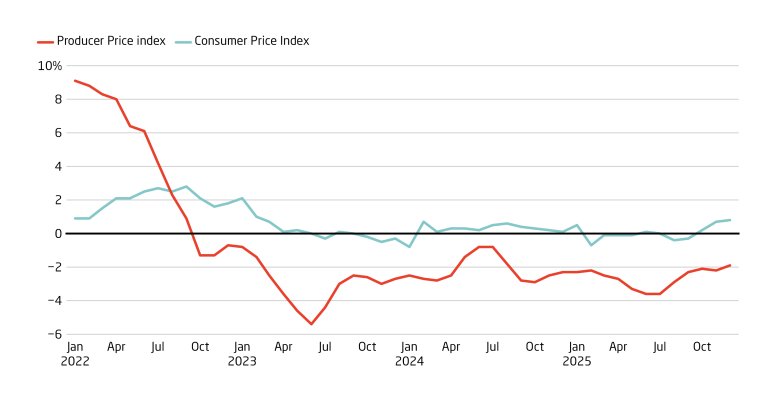
Intense competition between industries and weak consumer demand continue to exert deflationary pressure in China. Consumer prices have been nearly flat, while producer prices have been declining for the third consecutive year, reflecting sustained price competition among firms driven by excess capacity. Government campaigns to fight “involution” – Beijing’s term for excessive competition among companies leading to price wars and declining profitability – have not led to a meaningful rise in prices. Even though the recent easing of deflationary pressures may be partly linked to policies aimed at limiting industrial capacity, these have not yet had a substantial effect on pricing dynamics.

Consumer Confidence Index shows no signs of recovery

Hover overHover over/tap the charts to see more details.

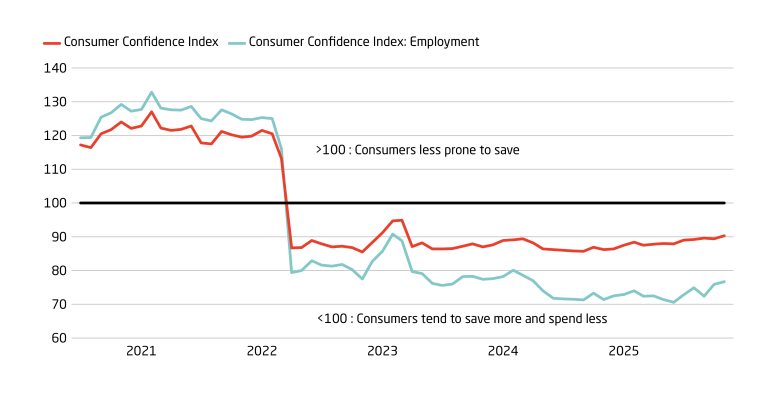
Low consumer confidence is restraining consumption. China’s consumer confidence has collapsed since 2022 and remains persistently weak, reflecting prolonged pessimism about economic prospects. By saving their money, households are preparing for tough times. For those worried about employment, setting aside savings is even more important. As unemployment benefits and the general social safety net are weak and underdeveloped in China, savings are critical for consumers to prepare for difficult periods. 

Impact on companies’ profits and losses
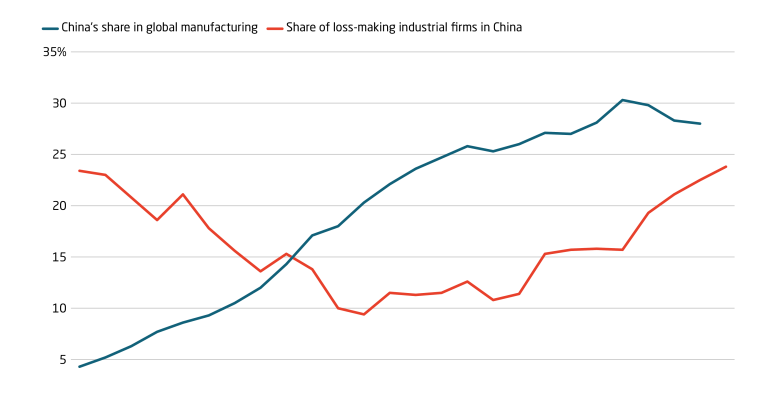
Manufacturing expansion comes with a new rise in loss-making

Hover overHover over/tap the charts to see more details.

While China accounts for almost one third of global manufacturing value added, the share of loss-making firms has been steadily growing. With too many producers in overinvested sectors often locked in fierce price wars, losses have become increasingly common. The rise in loss-making over the last decade has been exacerbated by the US-China Trade War and the pandemic, but it has worsened considerably due to the scale of excess competition. In a market economy, inefficient firms would exit the market, allowing consolidation to restore the balance of supply and demand. In China, however, industrial policy tools deployed both centrally and through local governments have helped keep “zombie” firms alive, perpetuating a vicious cycle. 

Many companies are kept afloat by an increase in loans

Hover overHover over/tap the charts to see more details.

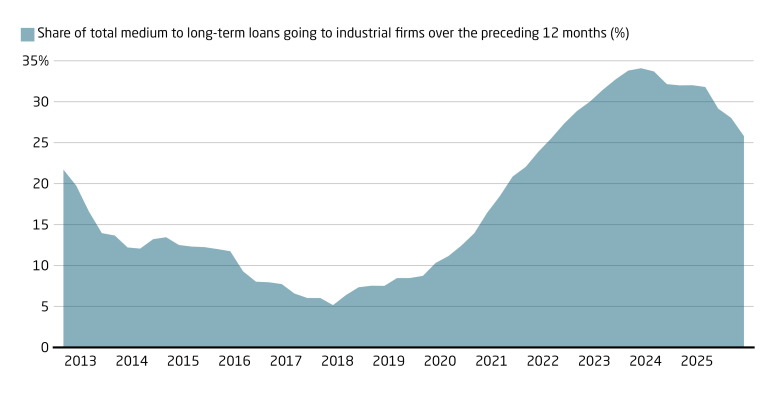
As they struggle to stay profitable, many firms are surviving on credit. Rather than exiting the market, loss-making firms stay afloat through continued access to loans, even as Beijing has begun to acknowledge and address the risks of this. As in other areas, lending growth accelerated during the pandemic, but it remains above pre-pandemic levels, indicating a sustained reliance on credit to support industrial firms.

Metals, automotive and chemicals have seen profits decline

Hover overHover over/tap the charts to see more details.

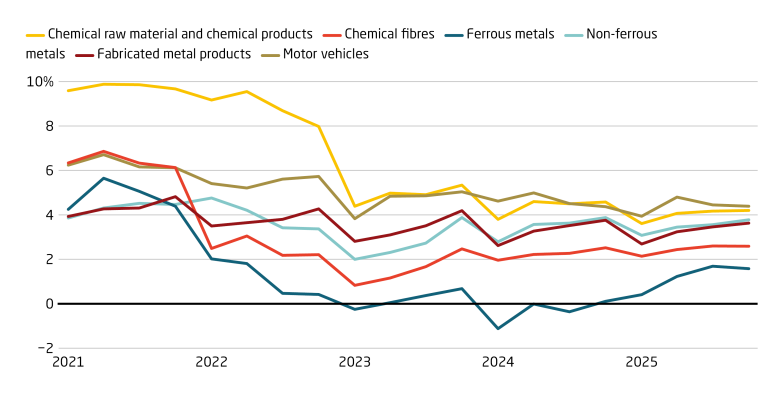
Profit margins remain particularly low in the metal, chemical, and automotive sectors. This is common for sectors where the state has actively promoted consolidation to address overcapacity and involution, but without much success. In chemicals, efforts have been made to freeze basic capacity and encourage firms to upgrade to higher-end products. In steel, consolidation has reduced the number of producers but has had only a marginal impact on overall output. In the automotive sector, Beijing has sought to promote consolidation by abandoning some subsidies, but local governments continue to support their local EV champions.  

Export of overcapacities

Exports have grown significantly faster than imports since the Covid crisis

Hover overHover over/tap the charts to see more details.

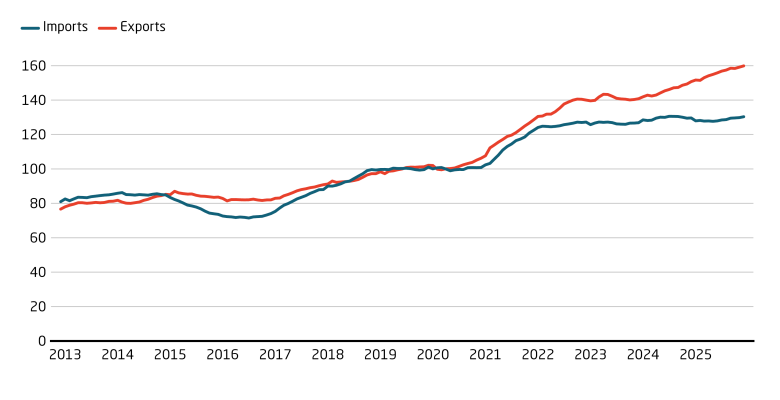
Exports have grown significantly faster than imports, a sign of a sharply widening trade surplus. China ran a trade deficit with around 50 countries in 2024. Other than a few countries like Taiwan and Korea, which run surpluses because of semiconductor exports, and Japan, which only recently netted a tiny surplus due to currency issues, all others are primarily commodity exporters to China, with about 20 in Africa, or, like Australia and Chile, which export vast amounts of iron and copper, respectively. 

As the US market closes, China shifts exports to ASEAN and the EU

Hover overHover over/tap the charts to see more details.

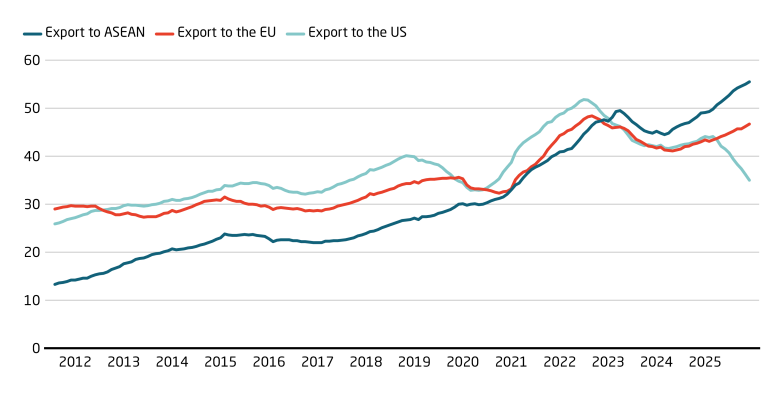
As the US closes its market, China is shifting exports to ASEAN and, to a lesser extent, the EU. Exports to ASEAN and the EU are now well above their 2011-2019 trend, while exports to the US have fallen below this pre-Covid trend. The US-China trade war and decoupling have impeded access to the US market in key areas where China has overcapacity issues, such as the automotive sector. Meanwhile, open markets like the EU and ASEAN have seen Chinese exports bound for the US diverted to their markets. More markets can be expected to raise barriers to Chinese goods, while those that remain open will face growing floods of lower and lower-priced goods seeking buyers. 

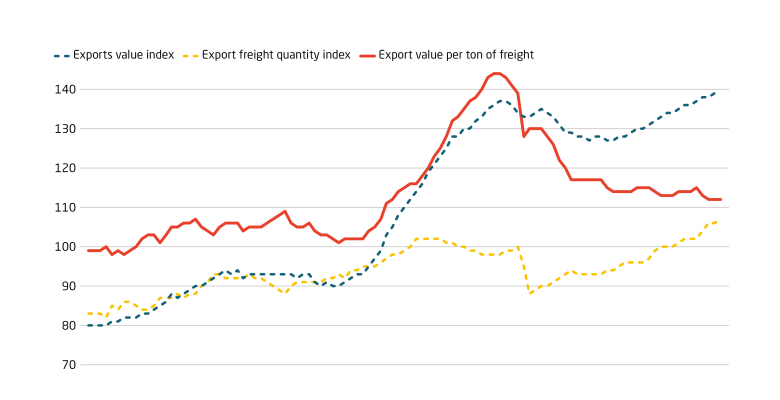
Export prices have stopped rising despite higher export values

Hover overHover over/tap the charts to see more details.

Despite a continued increase in total export values, export prices per ton have stopped rising since 2022. This indicates that recent export value growth has been driven primarily by higher export volumes and not by price increases. This is consistent with companies exporting abroad the price war they are experiencing in China, aggressively looking for new markets to offset losses incurred in their domestic market. This development is also counterintuitive: China is in many areas quickly climbing up the value chain and producing more and more quality goods that should be sold at higher prices, yet export prices relative to volumes remain stagnant as companies rely on the support they obtain from central and local authorities to minimize export prices and gain market shares abroad. Sustained low export pricing would increase further the competitive pressure on producers in importing countries. 

Authors