

picture alliance / CFOTO
Kommentar
China’s new Five-Year Plan upgrades climate objectives while accepting continued role of coal
Johanna Krebs argues that Beijing has now come to see climate and energy as two sides of the same coin. This article is part of our series on China’s 15th Five-Year Plan, which the National People’s Congress is scheduled to adopt in early March.
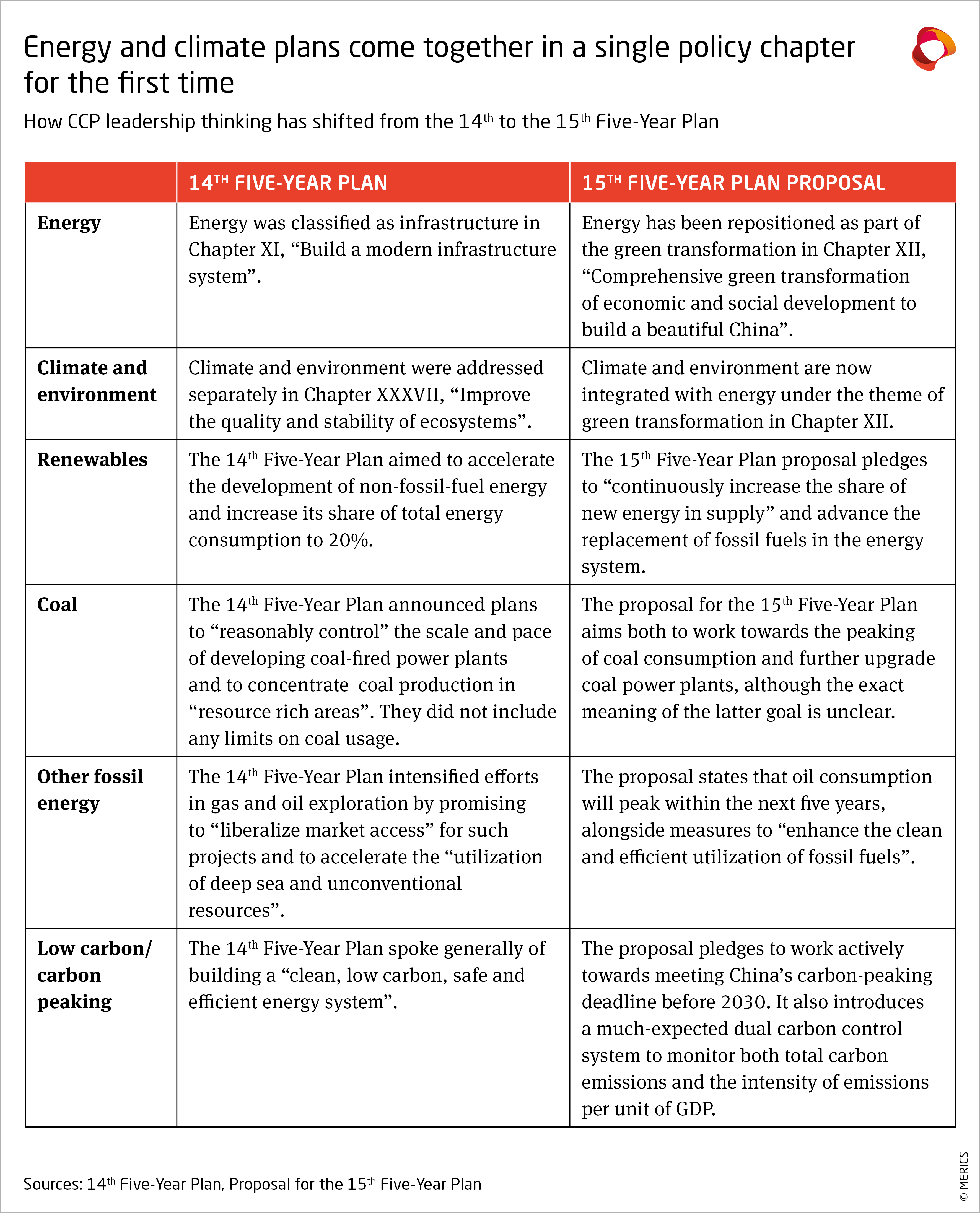
China’s 15th Five Year Plan (FYP) is widely expected to deliver an important upgrade of the country’s climate objectives by integrating them more closely with energy policy than its predecessors. In recommendations published in October 2025 for their key planning document for the years 2026 to 2030, Xi Jinping and the other members of the Chinese Communist Party’s (CCP) Central Committee clearly signaled the elevation of climate goals in a policy area long shaped exclusively by economic and national security concerns (Table 1).
China accounted for just under a third of global greenhouse gas emissions in 2024 – almost three times the USA’s share – and the 15th FYP will be crucial to Beijing’s efforts to reach peak greenhouse gas emissions by 2030. While much of the world debates the tradeoffs between decarbonization and industrial strength, China is framing both issues as two sides of the same coin. With the country’s emissions flat or falling slightly since March 2024, one key question is how far ahead of its outermost deadline China might be able to now reach peak emissions.
China’s ambitious energy-climate synergy is facing real-life challenges
The uncertainty stems from China’s energy-climate synergy looking impressive on paper but being more complicated in practice. During the 14th FYP, from 2021 to 2025, a record number of coal-fired power plants received construction permits, reaching a 10-year high of 112.8 gigawatts (GW) in 2023. Although permitting has since fallen sharply, a slew of plants approved between 2021 and 2025 are expected to come onstream from 2026 to 2030. This stands in stark contrast to Beijing’s plan to introduce new controls on carbon emissions in the first year of the 15th FYP.
But this contradiction is the result of predicament as much as policy. Permitting coal-fired power plants soared after power shortages in 2021 and 2022. Authorities justified most projects as crucial for energy security and grid stability, which means they conceived the plants as backup for China’s growing renewable fleet –even if research has since shown that China does not actually need more coal power to stabilize its more volatile renewable energy inputs.
Crucially, the resulting flood of coal-fired power station capacity – the equivalent of almost one quarter of existing capacity was permitted or under construction at the end of 2025 – has not led to a proportional rise in coal-power generation. According to one analysis, China’s coal-power output even decreased 1.6 percent in 2025, as a surge in renewable-energy production met a 5 percent increase in total power consumption. Coal-fired plants were operating at only roughly 50% of capacity in 2024 – and utilization rates look set to continue falling.
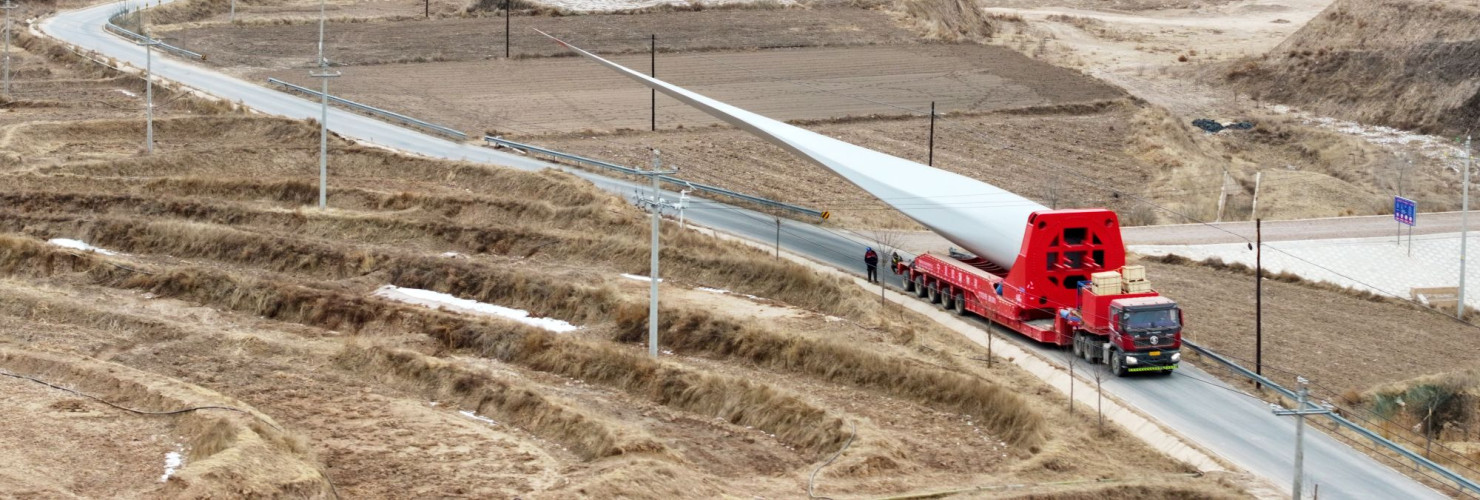
Coal-fired power generation will continue to complicate China’s green transition
The construction boom has been driven by mining companies, energy generators and local authorities in coal-rich localities seeking economic growth, according to an analysis by the Centre for Research on Energy and Clean Air (CREA) and Global Energy Monitor (GEM). The People’s Daily in February reported that coal consumption was not expected to peak until “around 2027” and then “enter a plateau phase” rather than a decline, as rising demand from power generation and chemicals offset declines in steel and building-material production.
While coal-fired power generation will continue to complicate China’s green transition, Beijing appears to view it as politically expedient. Allowing regional governments to permit additional coal capacity bolsters perceptions of energy security, boosts short-term economic growth, and delays job cuts in coal-producing regions. But Beijing’s long-term goal remains the same – to become the world champion in renewable energy and electrification. And if that leaves many coal-fired power plants unable to recover their investment – that is a price worth paying.
Beijing’s focus on renewables reflects their importance in its economic planning. Green energy has become one of the most productive sectors in the economy – maybe the last infrastructure sector that delivers tangible returns. Having added 430 GW in wind and solar capacity in 2025 alone, the renewable-energy sector contributed more than one third of economic growth that year. Unlike underused coal plants, renewable-energy plants cover an increasing proportion of the country’s electricity demand, making them a keystone to Beijing’s industrial strategy.
Ultimately, the tension between the green ambitions of the 15th FYP and the more charcoal-colored reality on the ground holds an important lesson: The energy transition is a challenge even for the mighty Central Committee of the CCP. While Beijing has succeeded in creating a world-leading green-technology sector, it is aware of associated risks. Because in a time when a large part of China’s population is struggling financially, making an entire industry disappear might entail a political cost that Beijing is not yet willing to shoulder.
Autor(en)

Analyst
Autor(en)
Analyst