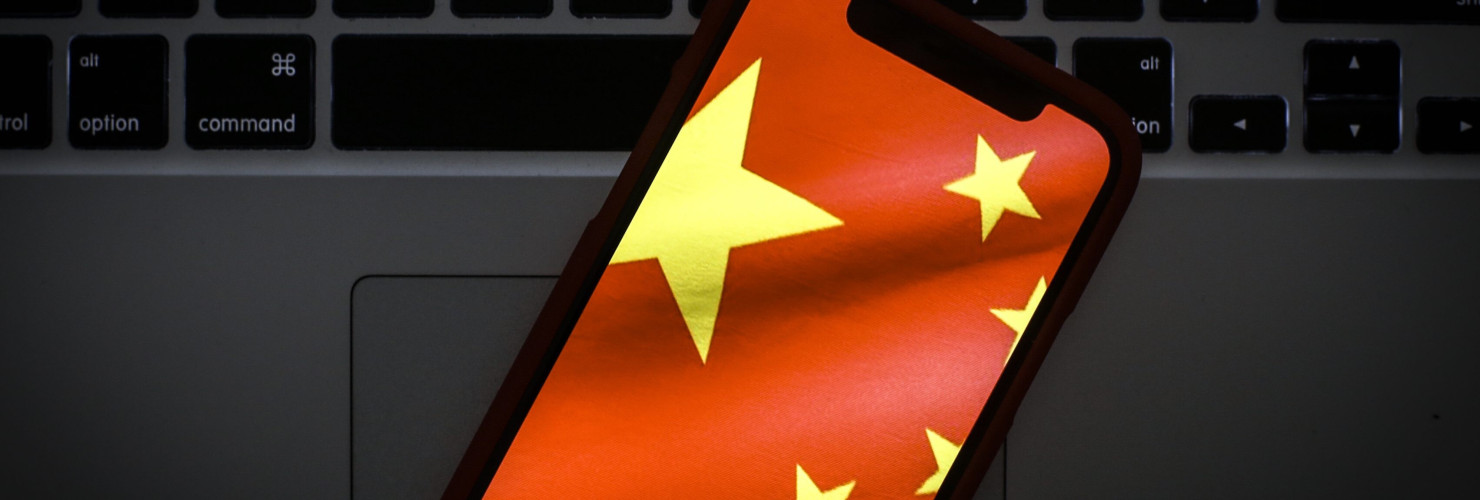
picture alliance / NurPhoto | Jaap Arriens
Kommentar
China’s transnational interference threatens digital rights globally
Beijing’s coercive use of digital tools and economic leverage undermines international efforts to regulate digital technologies, say Daria Impiombato and Wendy Chang.
Signs are mounting that the Chinese government is expanding its transnational repression both in terms of tools and targets. The first half of 2026 has seen evidence of online and offline attempts to silence overseas critics that cross its political red lines. Only in May, an AI-generated harassment campaign against Europe-based human rights researcher Laura Harth, known for her work exposing China’s overseas police stations, was made public. The campaign, which relied on misogynistic and sexualized images, shows how Beijing is incorporating generative AI into its transnational repression efforts, allowing new forms of scalable, personalized attacks aimed at damaging the reputation of critics abroad.
But attempts to silence individuals have also widened to target global civil society collectively. Another recent victim of a reported Chinese government campaign was an entire conference dedicated to advancing digital rights for all – the rights people should enjoy online, including privacy, freedom of expression, access to information and protection from unlawful surveillance. RightsCon, a leading digital rights summit, was scheduled on the first week of May in Zambia. But the Zambian government cancelled it at the last minute, reportedly after being pressured by China – a major investor in Zambian infrastructure and mining – over the participation of Taiwanese civil society groups.
China’s digital authoritarianism was among the key issues that the RightsCon community was set to discuss. According to the organizer, AccessNow, the agenda included more general topics like the dangers of unchecked surveillance technology, freedom of the media, online content censorship – as well as more specific discussions about China-Russia cooperation on information manipulation, and how civil society should “respond to China’s digital authoritarian practices”. While these issues are at odds with the Chinese government’s interests, they are also crucial to advancing digital rights around the world.
While Beijing’s targeting of individual activists is an established practice, its apparent targeting of the global digital-rights movement is a worrying development. Its ability to disrupt such well-established global forums like RightsCon not only undermines international efforts to develop shared norms on digital rights but also creates more space for the authoritarian misuse of technology, as illustrated by the targeting of Laura Harth. Protecting the digital rights of individuals and communities – particularly with regard to hate speech, deepfakes, gender-based violence and privacy – is essential to fostering safety and protecting the space civil society needs to function.
China has over the years developed huge leverage to pursue its interests and extend authoritarian practices abroad. Besides investment, mining and infrastructure development, technology has become a core pillar of this approach. Through the so-called Digital Silk Road, China seeks partners in the Global South to adopt its technologies – and often also its restrictive regulatory and censorship practices. The human-rights group Article19, for instance, says the spread of Chinese digital infrastructure across the Indo-Pacific “has contributed to increasing restrictions on freedom of expression and information, the right to privacy, and other acts of digital repression” in Cambodia, Malaysia, Thailand and elsewhere.
Recipient governments can use Chinese digital infrastructure or capitalize on China’s political pressures campaigns to reinforce their own anti-rights agendas domestically. In the case of Zambia, for example, Beijing’s reported pressure over RightsCon provided plausible cover for an authoritarian-leaning government willing to undermine human rights activism while deflecting blame and accountability. At the same time, the country uses Huawei’s “Safe City” surveillance technologies, which have raised concerns about mass surveillance and other misuse of digital tools. Other examples in the region include Zimbabwe, Kenya and Uganda.
Despite being relatively less dependent on Chinese investment and technological infrastructure than many countries in the Global South, Europe is also vulnerable to Beijing’s political pressure and influence campaigns. Late last year, for example, Sheffield Hallam University in the UK became embroiled in controversy as it reportedly sought to shut down its respected forced-labor research program following months of pressure from Chinese authorities. Meanwhile, in Italy, a prominent Chinese political dissident and social media activist was harassed on- and offline, prompting Italy to deport eight Chinese nationals.
The US’s retreat from global rights governance in the last few years has created a vacuum in which China is attempting to establish norms and influence in the digital sphere – just as the rise of AI produces fresh challenges on protecting digital rights. Europe needs to better support digital norm-setting and protect it against attacks. This includes creating safeguards and ad-hoc channels for reporting abuses, as well as training authorities to respond appropriately online and offline. Civil society needs to be acutely aware of the dangerous intersection of China’s global influence, regional autocratic tendencies and the proliferation of new digital tools, as addressing these issues in isolation will not suffice.
Autor(en)

Senior Analyst

Senior Analyst
Autor(en)
Senior Analyst
Senior Analyst