

picture alliance / CFOTO
Kommentar
Direct renewable power helps China’s industry bypass EU carbon fees
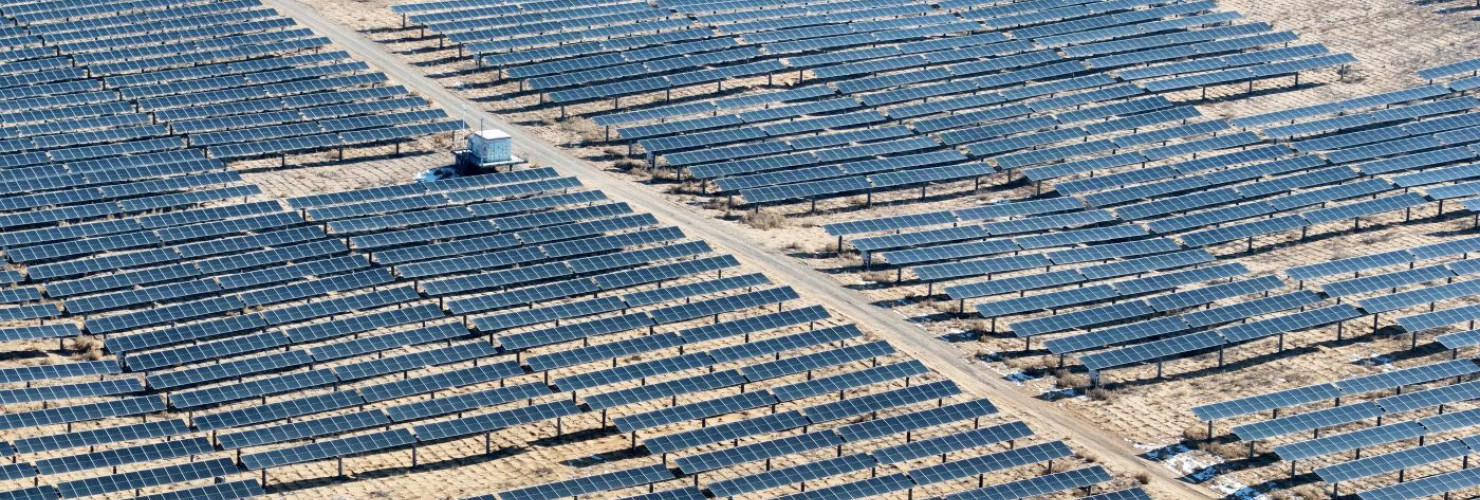
Five Chinese provinces have approved pilot projects that directly link renewable energy plants (solar, wind, biomass) to industrial end users, such as steel and aluminum smelters. As a result, these industrial end users will not have to pay for emission certificates under Europe’s Carbon Border Adjustment Mechanism (CBAM).
Introduced at the start of 2026, CBAM is designed to make foreign producers pay for their emissions when their products are imported into the EU. The direct power projects will heighten the already fierce competition European aluminum and steel producers are facing, especially from China, due to high energy costs in Europe and the need to decarbonize. The fact that Chinese producers are now decarbonizing faster than the Europeans is an added strain.
CBAM offsets disadvantages for European industries created by the EU’s Emissions Trading System (ETS), which raises costs for high emission sectors. It avoids carbon leakage by making third country producers exporting to the EU buy ETS-equivalent CBAM certificates. According the EU Commission, CBAM also aims to “encourage cleaner industrial production in non-EU countries.”
China’s pilot projects are just the start of direct green power link-ups, implementing a policy the National Development and Reform Commission (NDRC) and the National Energy Agency (NEA) introduced last May. And it may just be China’s answer to CBAM, as it allows renewable energy farms to connect to single end users via privately built transmission lines, circumventing the national grid. It reduces net congestion resulting from renewable capacity expanding faster than the grid. At the same time, end users can prove to European authorities that their energy is renewable in origin, and they can decarbonize their industrial operations.
However, strict requirements have limited the number of companies participating in the pilot projects. Factories must consume at least 60 percent of the energy supplied and use it to cover at least 30 percent of their energy consumption. Together with the unpredictability of renewables, this forces them to invest in energy storage. Moreover, some companies complain that they still have to pay the same fixed operational costs as if they were connected to the national grid, resulting in possibly higher costs than without the direct green transmission line. Given these complications, uptake is slow. Once the uptake of China’s policy gains traction, however, it will pose strong competitive pressures for Europe’s green industrial sector.
Johanna Krebs, Analyst, MERICS: “Beijing made this policy with two objectives in mind: relieving pressure on the national grid and offering a way forward for its CBAM-targeted industries to decarbonize. Technically, this is exactly what CBAM was supposed to achieve. Practically, however, it means that Europe needs to find new ways to keep the green transition going for its already bruised heavy industry.”
Autor(en)

Analyst
Autor(en)
Analyst

Topics